‘The most creative and necessary work that humans do is work with the soil as co-producers with nature.’
Vandana Shiva, Soil Not Oil: Environmental Justice in an Age of Climate Crisis (2008).
The fading light of progress
Half a century ago, a group of scientists devised a computational model of how the Earth’s natural and economic systems function—a model that became known as the Club of Rome report.1 The repeatedly verified model2 showed that, regardless of technological choices, the industrial civilisation would, under any growth-oriented scenario, enter a rapid decline in the 21st century.
The extraction of oil, coal, or any other non-renewable natural resource will peak at some point (peak oil), after which its economic and energy returns will begin to decrease. The energy return on investment (EROI) for alternatives such as renewable and nuclear energy is modest compared to that of fossil fuels.3 And beyond that, we are also approaching peak soil, peak (clean) water, peak rain, peak phosphorus,4 peak potassium,5 peak food, peak copper, terbium, yttrium, neodymium, etc.— the so-called peak everything.6
We have arrived in the era of post-sustainability.7,8 We have long since crossed the planetary boundaries; the damage is irreparable. What does that mean? Researcher of sustainability leadership Jem Bendell has said directly that the collapse of industrial societies in our lifetime is either likely, unavoidable, or already happening.9 Professor Bendell does not mince words in stating what that means: ‘You will become malnourished’.
A short history of agriculture
As apex predators, hominids have had a significant effect on the environment for millions of years, and have probably been experimenting with agriculture for as long. Archaeologically identifiable agriculture, however, became possible only in the geological epoch of the Holocene (the last ca. 12,000 years), characterised by an unusually stable climate. The city is an agricultural adaptation of the Holocene—until the 20th century, a minor and temporary phenomenon, since it is based on ‘extracting’ a long-developed and long-accumulated but ultimately finite layer of soil with a finite carrying capacity. The only option for the city is to expand in a predatory way (or, more euphemistically put, through ecologically unequal exchange), constantly appropriating new hinterlands, whether by enclosure, enslaving, proletarianising or by taking over their soil, guano, minerals, etc.
When Germany was cut off from Chile’s nitrate reserves during the First World War, it learned to synthesise nitrogen from the air using the Haber–Bosch process, which was then used in explosives and soon also in synthetic fertilisers. Industrial agriculture based on synthetic fertilisers really took off after the Second World War, when the military–industrial complex rebranded itself as agribusiness. Without these synthetic fertilisers—produced in what were basically gunpowder factories—the current food system and urbanisation would be absolutely unthinkable, since the massive one-way drift of nutrients to the city exhausts the soils. Only by using ever-growing doses of synthetic fertilisers have we so far managed to alleviate or postpone a decline in fertility. Nitrogen capitalism—i.e., the industrial simplification and centralisation of agriculture, chemicalisation, and dumping—has deprived people of their livelihoods on a scale that silicon capitalism could hardly ever match.
Professor Bendell does not mince words in stating what that means: ‘You will become malnourished’.
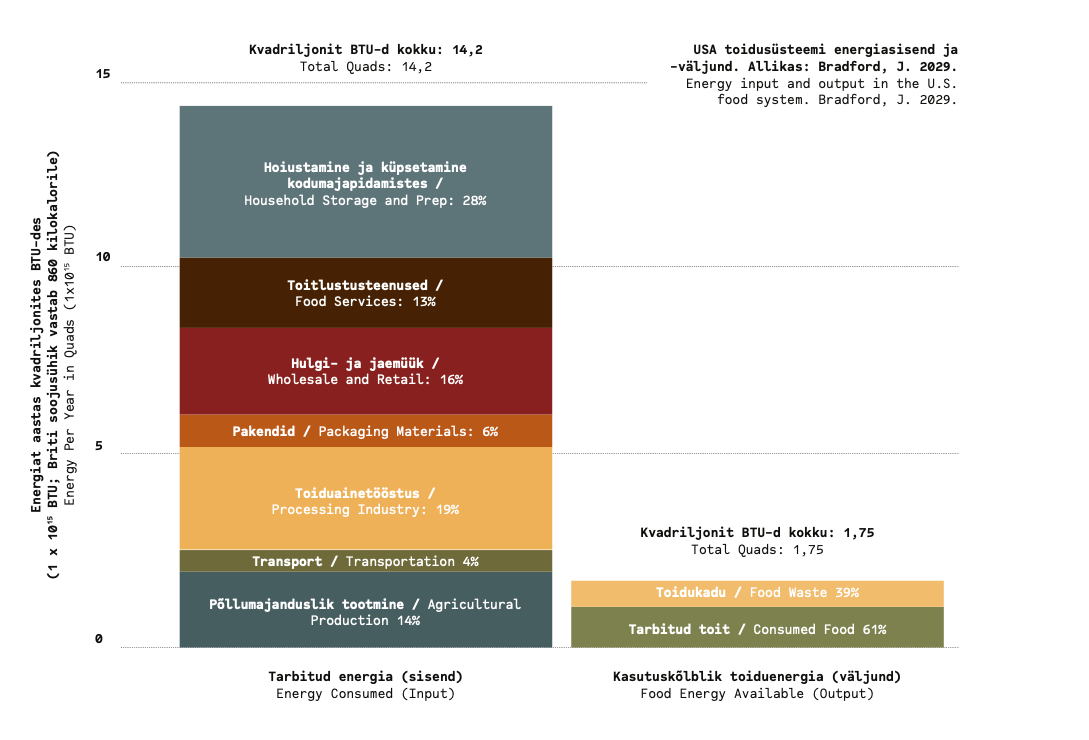
In the fossil fuels-based, industrialised and urbanised system, the growing of food consumes at least as much energy input (fuels, fertilisers, pesticides) as agriculture yields in energy output (food, biofuels).10,11 But the main difficulty with the food economy lies outside the farm gates: the lion’s share of the energy consumed is spent on processing and transporting, wholesale and retail, cooking and freezing the food. In the United States, for example, which is the flagship of energy-intensive agribusiness, off-farm energy use makes up 86% of the total energy consumption of the food system.12 Whether the food is organic or not, plant or animal food, is of secondary importance, as this sort of fine-tuning affects only 14% of the whole energy footprint. The fault lies within the system. The industrialised and urbanised food system is beyond repair.
No one means to create an evolutionary super-accelerator of pathogens when designing an industrial megacomplex that brings together tens of thousands of tons of grain or animals with weakened immune systems. The crises of modernity might not be created knowingly, but mostly they follow the same pattern: a direct or indirect (neo-)colonial power destroys a local food system and then proceeds to sell redemption in the form of addictive agrochemical shots,13 proletarianising and urbanising the rural communities. Yet with each new crisis, more and more rural residents or others involved in food production lose their jobs, and each new crisis leads to the creation of fewer and fewer but increasingly energy- and capital-intensive agribusinesses. Although the core pattern of crisis-making is clear, it is not possible to predict the onset time, the character, and the scope of such events (like in the case of COVID-19, which almost certainly spread from bats to humans via the animal industry).14
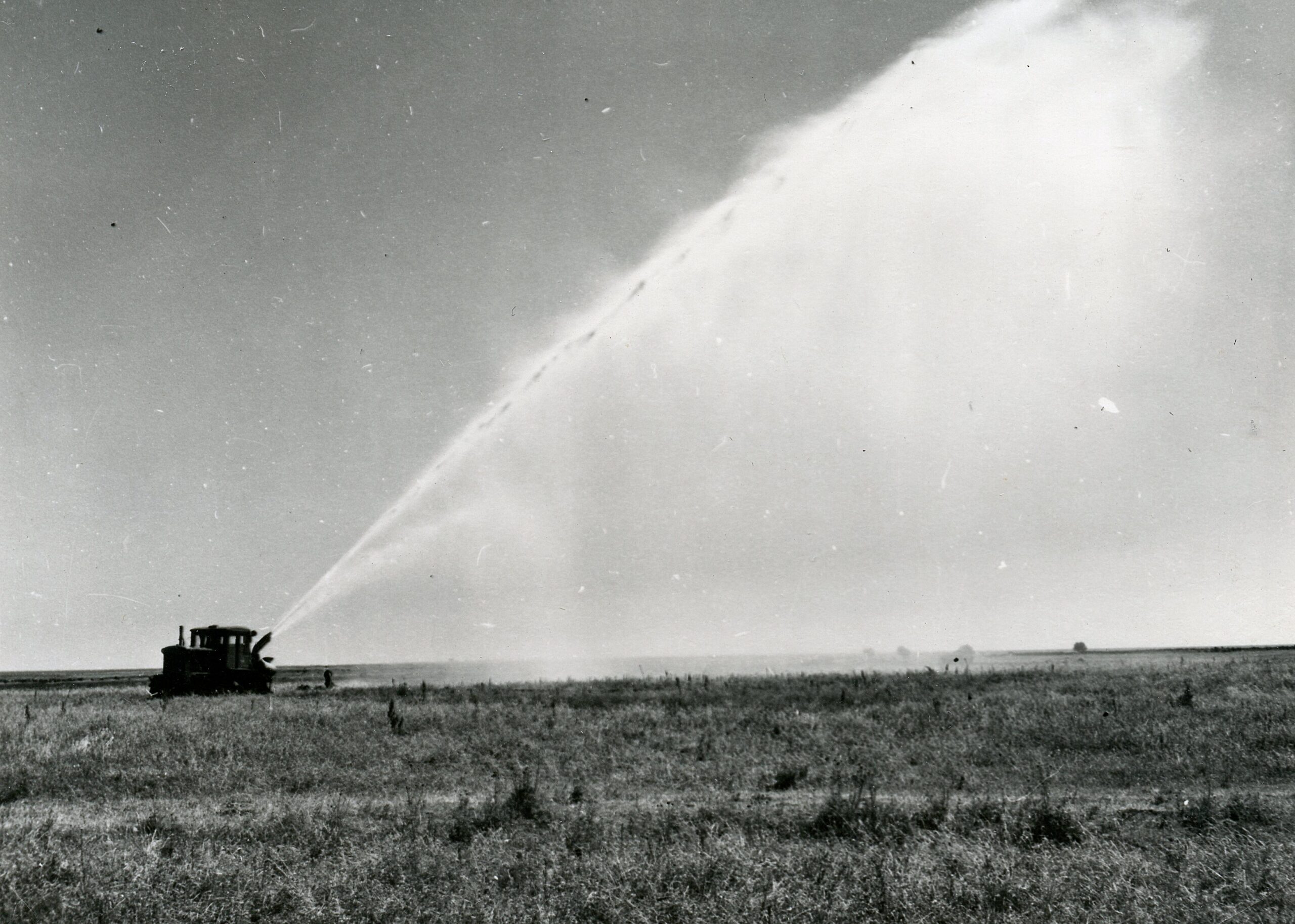
Photo: Eesti Põllumajandusmuuseum, J. Viikholm
Life after the Holocene. Invisible agriculture
Crises related to the industrial food system are becoming more frequent and clustered, as the area of arable land, the availability of fossil energy and synthetic fertilisers, political stability, etc., are all declining.15 The 2006 peak in conventional oil production led to the 2008 financial crisis, the price of mineral fertilisers rose to an all-time high, Russia was hit by a heat wave in 2010–2011, and Syria suffered a drought from 2007 to 2010 that triggered the refugee crisis. Since then, we have also witnessed the coronavirus crisis, the energy crisis, the crisis in Ukraine, the African swine fever currently raging in Estonia, and the wave of foot-and-mouth disease that has broken out in Central Europe and is not likely to spare us either. A permanent state of emergency has become the new normal. Under the covers, scientists whisper about a worst-case scenario in which the planet becomes 5 °C hotter already in the next few years16—meaning that we are about to exit the agriculture-friendly Holocene of the last 12,000 years. It is past high time to start thinking about how to live on a planet unlike anything that the human species has experienced in its evolutionary history.17
In the fossil fuels-based, industrialised and urbanised system, the growing of food consumes at least as much energy input as agriculture yields in energy output.
However, our point of departure is not entirely hopeless. The share of industrial agriculture might not be so large as to rule out alternatives altogether.18 We simply need to recall what a photosynthesis-based economy means in practice. Humanity has plenty of experience with economic contraction. Historical collapses also have a brighter side: they demonstrate that the so-called golden percent—i.e., the elites and their extravagantly expensive services—is actually dispensable.19
Photo: Eesti Meremuuseum
The so-called developed countries require more than one planet to sustain themselves, the U.S. needs as many as five. There is only one small and inconvenient exception that has actually achieved sustainable development as defined in the modernist value system: Cuba.20 How is it possible that a poor country whose GDP shrank by about 35% between 1989 and 1993 after the flow of Soviet minerals stopped, making the population lose an average of ten kilograms of weight, has seen its level of human development slowly but steadily rise, even as it has been declining almost everywhere else in the world since 2019? During the Special Period (from 1991 onwards), family farms were legalised in Cuba; city dwellers were offered the opportunity to go and work in agricultural cooperatives, for which modest workers’ dormitories were built—granted, not much else is built there at all. Still, large farms were not completely abolished. Gardens and small farmers’ kiosks popped up all over the cities; horse-drawn buses appeared on the streets. Old men who still knew how to train oxen for ploughing were sought out from remote villages.
No one means to create an evolutionary super-accelerator of pathogens when designing an industrial megacomplex.
To resolve the planetary crisis, many ecologists consider it essential to work together with agriculture in rewilding the landscape with the ecological equivalents (e.g., camels, elephants, lions, horses)21 of extinct large mammals as well as cattle. Restoring the ecology of grasslands may be our only chance to halt desertification,22 revive industrial wastelands, and even stop the melting of Arctic permafrost.23 This sort of freedom and independence is likely to be granted back to nature only by a much freer, more tolerant, and wilder human being than the current civilised global citizen (although our consent might not matter much in the future world anyway). No wonder, then, that many North American indigenous activists consider the literal de-fencing of the land a fundamental precondition for decolonisation. This would make it possible to restore the wild bison prairies, fenceless buffalo commons, where other kinds of livestock suited to the climate could also graze. The only fences allowed would be around small gardens and crop plots; industry would be reduced to a minimum; dams would be broken down.
Societies have reacted to similar problems in history in very different ways. Like Cuba, North Korea also lost access to Soviet minerals, but the latter clung to the industrial-urban dogmas of scientific Marxism, which resulted in chronic famine. Europe responded to the woes—plagues, famines, tyranny, inequality—brought by the end of the Medieval Warm Period (10th–14th centuries) and the onset of the Little Ice Age (14th–19th centuries) much like today’s North Korea: by doubling down on centralisation and militarisation, and prioritising development through colonial expansion.
Tartu Kunstimuuseum
Europe’s trajectory from hunting and gathering through agriculture to industrial society is still considered in mainstream historical consciousness a universal pattern of development. Yet, although medieval North America had a comparable level of urbanisation to Europe at the time, before the arrival of colonisers it had responded to similar worries by instead developing a diversified food system and an epidemiologically safer and more climate-resilient village-world. The best-known and most studied example is the Cahokia dictatorship (1050–1350 A.D. in what is today Illinois), whose disillusioned citizens and neighbours came to hold a worldview deeply suspicious of urbanisation, inequality, and centralism.24 That world of regenerative economic growth practised a form of so-called invisible agriculture, which engendered biodiversity and treated the ecosystem in indigenous restorative ways.25 This included planting seaweed forests, developing spawning and feeding grounds that encompassed whole watersheds, cultivating vast oak and walnut groves, enriching the soil with carbon and tending to its microbiome through controlled burning and bison herding, as well as much else. But what is perhaps the most thought-provoking aspect today, when the technocapitalist path of development is considered universal: this village world practised a peculiar kind of inverted capitalist political economy, in which the winner was the one who gave away most generously.
PRIIT-KALEV PARTS is a heritage builder, small-scale farmer, and village publisher. He has translated some of the harsher strands of civilisation criticism and published writings on environmental issues, simple technology, crafts, and craftspeople.
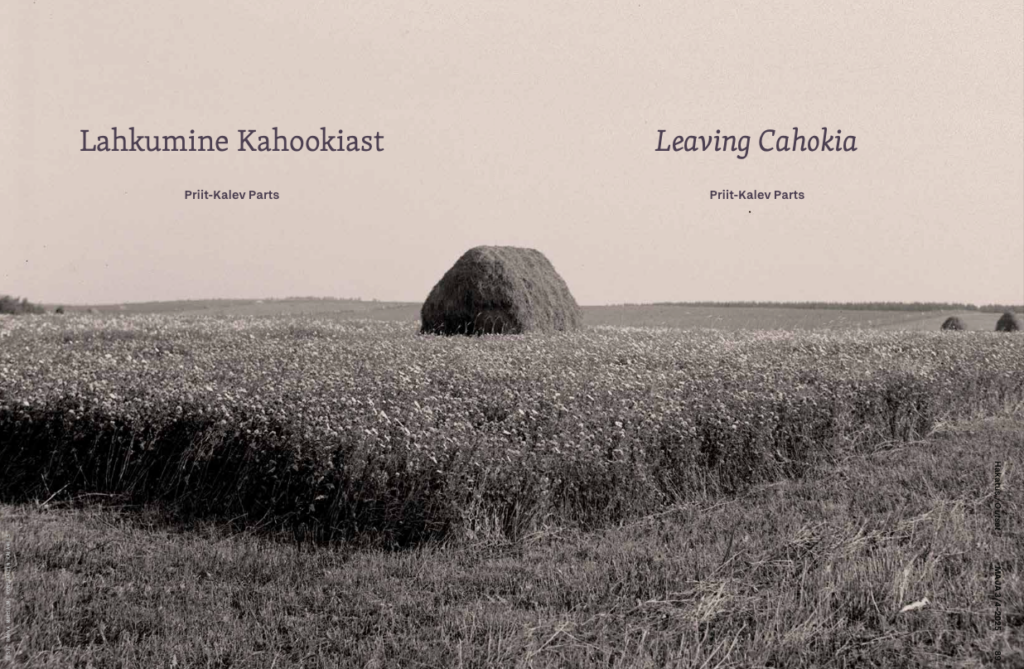
HEADER: Clover field with a haystack and seed clover in Põltsamaa. Eesti Rahva Muuseum, Konstantin Kalamees.
PUBLISHED: MAJA 3/4-2025 (121-122) with main topic WORK AND FOOD
1 Donella Meadows et al., The Limits to Growth. A Report for The Club of Rome’s Project on the Predicament of Mankind (Potomac Associates, 1972).
2 See, e.g., Gaya Herrington, ‘Update to Limits to Growth: Comparing the World3 Model with Empirical Data’, Journal of Industrial Ecology 25 (2021): 614–626.
3 A century ago, the EROI/ERoEI of fossil fuels was 1:100, while today it vacillates between 1:20 and 1:10. It is generally agreed that energy returns below 1:10 is incapable of sustaining a highly specialised technological civilisation.
4 Christopher J. Rhodes, ‘Peak Phosphorus – Peak Food? The Need to Close the Phosphorus Cycle’, Science Progress (June 2013).
5 Rami Al Rawashdeh, ‘World Peak Potash: An Analytical Study’, Resources Policy 69 (December 2020).
6 Richard Heinberg, Peak Everything: Waking Up to the Century of Declines (New Society Publishers, 2007).
7 Melinda Harm Benson & Robin Kundis Craig, ‘End of Sustainability’, Society & Natural Resources 27, no. 7 (2014): 777–782.
8 John Foster, After Sustainability. Denial, Hope, Retrieval (Earthscan/Routledge, 2015).
9 Jem Bendell, ‘Deep Adaptation: A Map for Navigating Climate Tragedy’, 2nd revised ed., www.iflas.info (2020).
10 David Pimentel & Marcia Pimentel, ‘Land, Water And Energy Versus the Ideal U.S. Population’, NPG Forum (January 2005).
11 Dale Allen Pfeiffer, Eating Fossil Fuels: Oil, Food and the Coming Crisis in Agriculture (New Society, 2006).
12 Jason Bradford, The Future is Rural: Food System Adaptations to the Great Simplification (Post Carbon Institute, 2019).
13 Vandana Shiva, The Violence of the Green Revolution: Third World Agriculture, Ecology, and Politics (University Press of Kentucky, 2016).
Vandada Shiva, Who Really Feeds the World? The Failures of Agribusiness and the Promise of Agroecology (North Atlantic Books, 2016).
14 Rob Wallace, Dead Epidemiologists: On the Origins of COVID-19 (Monthly Review Press, 2020).
15 Jem Bendell, Breaking Together: A Freedom-loving Response to Collapse (Good Works, 2023).
16 Natalia Shakhova et al., ‘Extensive Methane Venting to the Atmosphere from the Sediments of the East Siberian Arctic Shelf’, Science 327, no. 5970 (2010): 1246–1250.
17 K. D. Burke et al., ‘Pliocene and Eocene Provide Best Analogs for Near-Future Climates’, PNAS (December 2018).
18 No one really knows the share of the traditional farming economy. The Food and Agriculture Organization of the United Nations estimates that small and family farms, gardens, etc., contribute about 70% of what the whole of humankind eats, which is probably an exaggeration.
19 Luke Kemp, Goliath’s Curse: The History and Future of Societal Collapse (Knopf, 2025).
20 World Wide Fund for Nature, Living Planet Report 2004.
21 Paul Schultz Martin, Twilight of the Mammoths: Ice Age Extinctions and the Rewilding of America (University of California Press, 2005).
22 Allan Savory & Jody Butterfield, Holistic Management: A Commonsense Revolution to Restore Our Environment (Island Press, 2016).
23 Marc Macias-Fauria, Paul Jepson et al., ‘Pleistocene Arctic Megafaunal Ecological Engineering as a Natural Climate Solution?’, Philosophical Transactions of the Royal Society B (January 2020).
24 Kathleen DuVal, Native Nations: A Millennium in North America (Penguin Random House, 2024).
25 Lyla June Johnston, ‘Architects of Abundance: Indigenous Regenerative Land Management and the Excavation of Hidden History’ (PhD diss., University of Alaska Fairbanks, 2022).