PERSONA

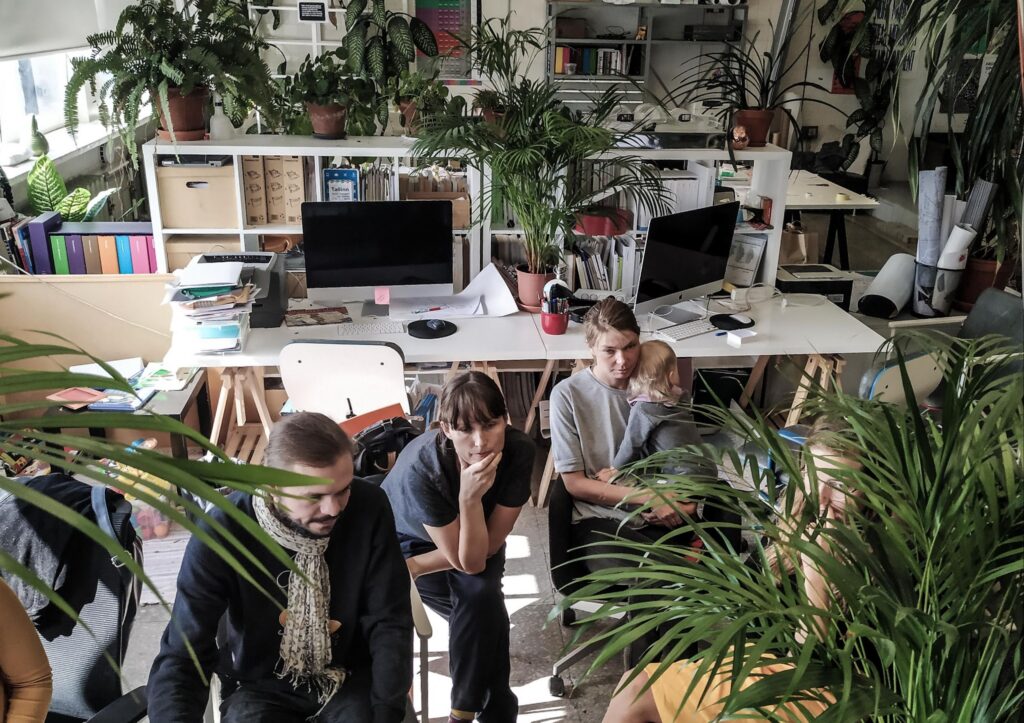
Twelve respondents—offices, architects, and collectives—describe what they take to be the result of an architect’s work. Their answers are accompanied by images of workplaces and moments in which the result is most clearly seen.
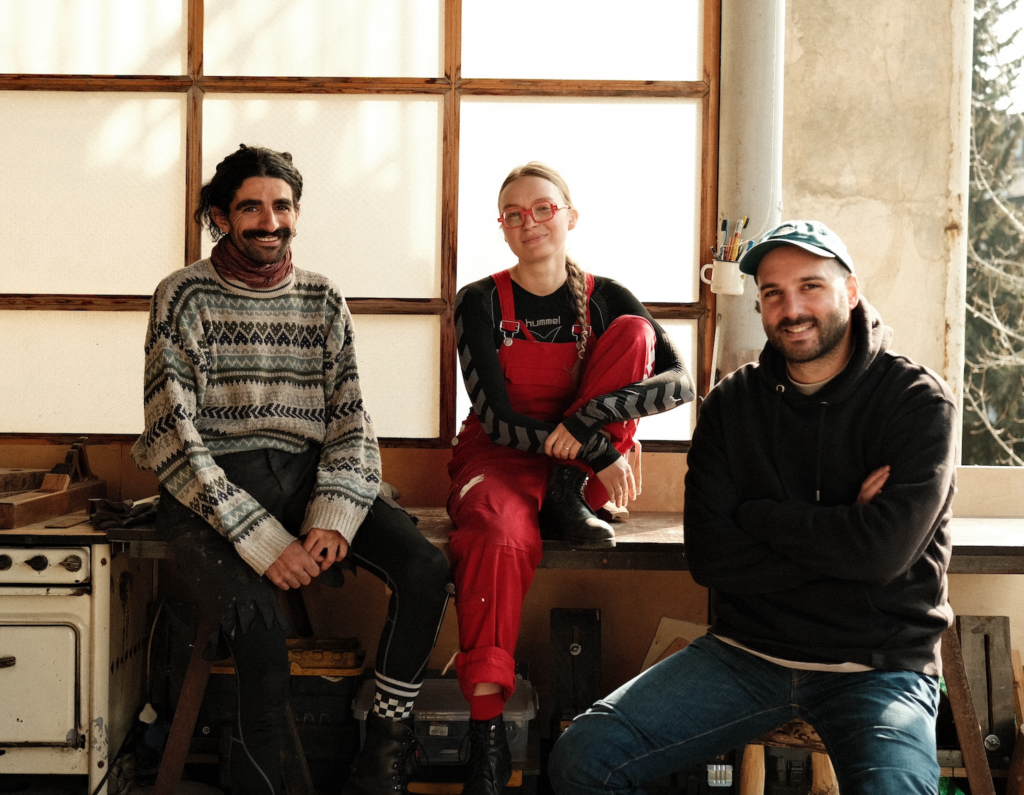
Garbage Kids is a collective of architects-turned-carpenters. The driving force behind their work is their frustration with a society that prioritises growth over sustainability and encourages overconsumption in a world with limited resources. In response, they use traditional craftsmanship and folk wisdom to create objects from found materials such as broken branches, scrap metal, and stones from abandoned quarries. Their practice strives to be intuitive, explorative, and free. Luka Abashidze, Ulla Alla, and Nika Gabiskiria share their thoughts.
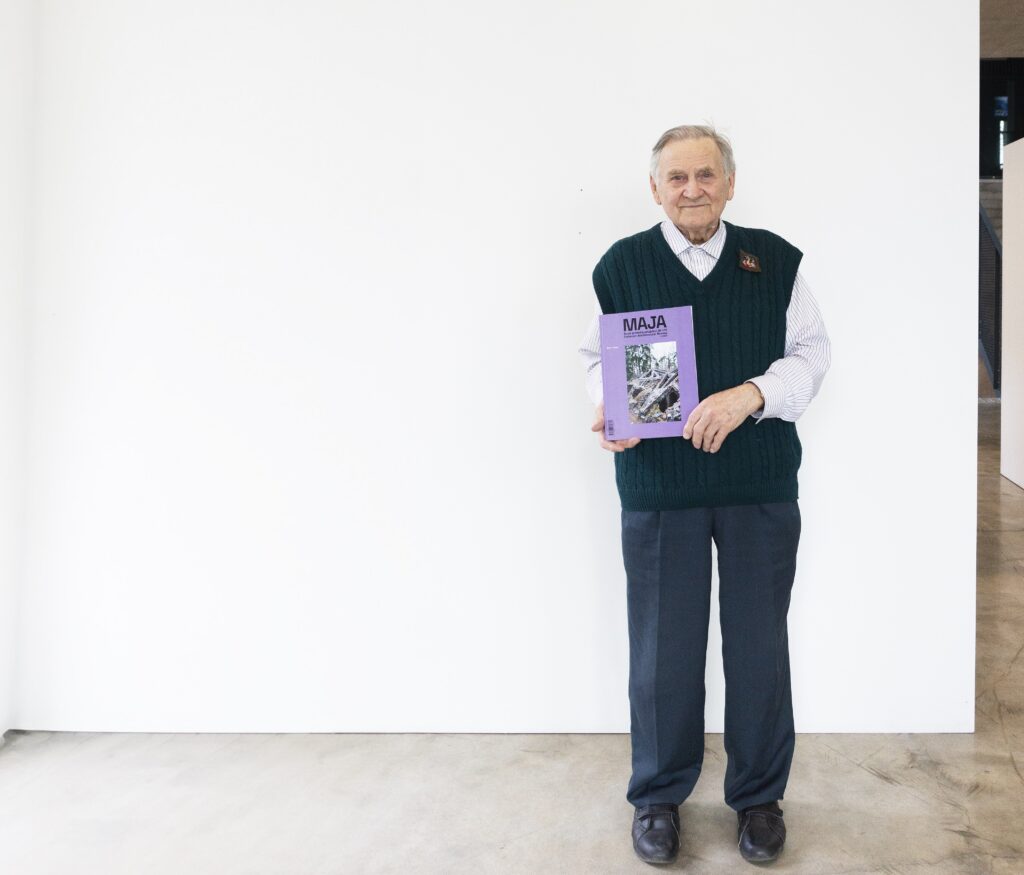
In talking to Rein Einasto, interdisciplinarity shows itself to be something more than calculated collaboration between experts of different fields. It has a cultural rather than project-based meaning, consisting of commonly shared social responsibility, making sense of collective action, or, to use Einasto’s own expression, being in a common spirit.
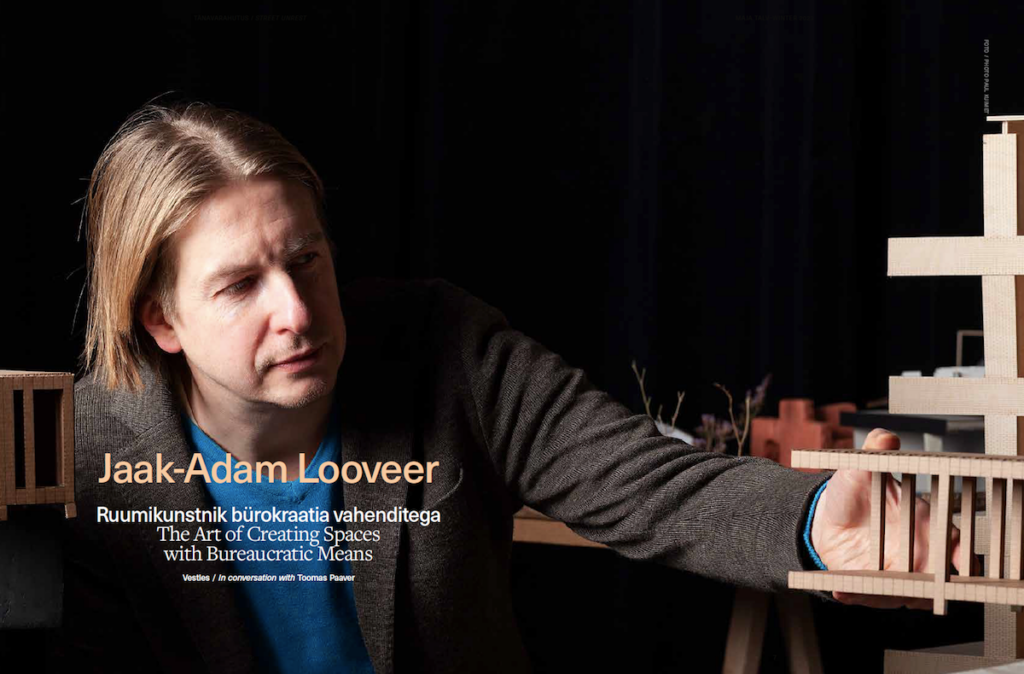
All pioneering and innovative projects need support to prevent them from getting stuck in the old rut under the pressure of red tape.
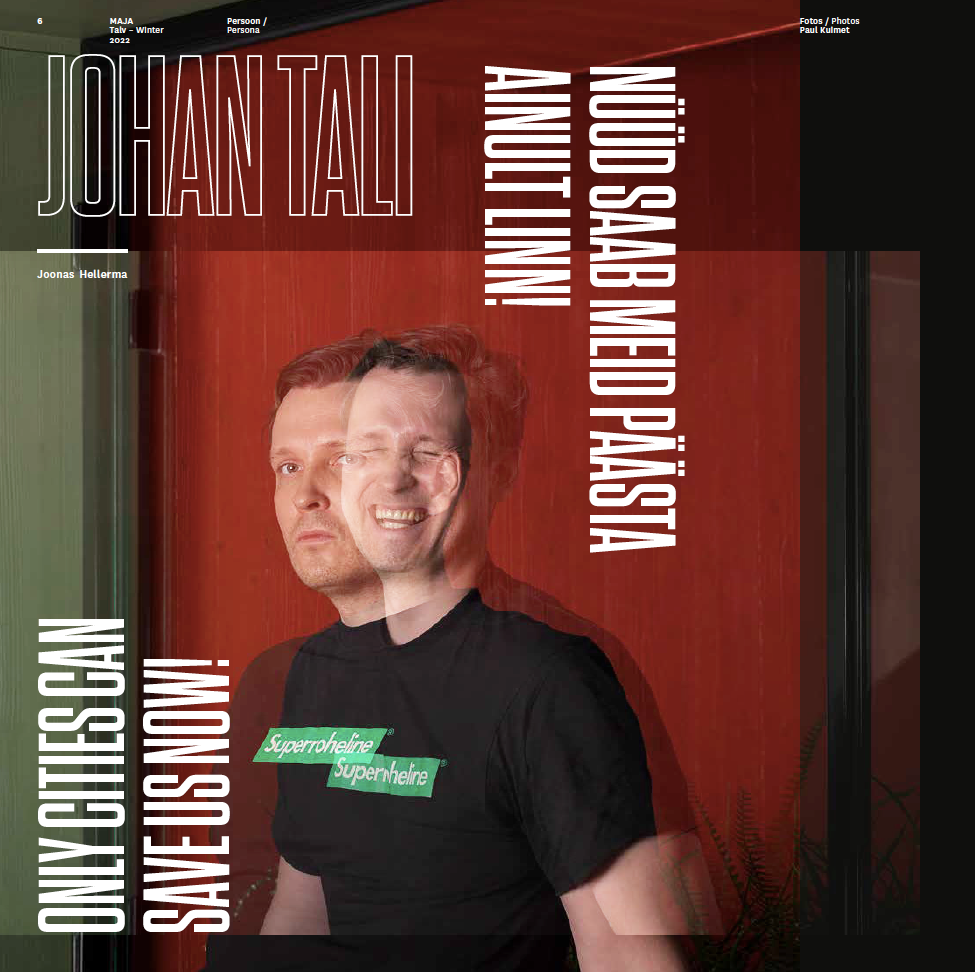
Johan Tali is the winner of the 2021 Young Architect Award from the Estonian Association of Architects. He earned this distinction for his wide-ranging activities as an architect, curator, lecturer and populariser of architectural topics.
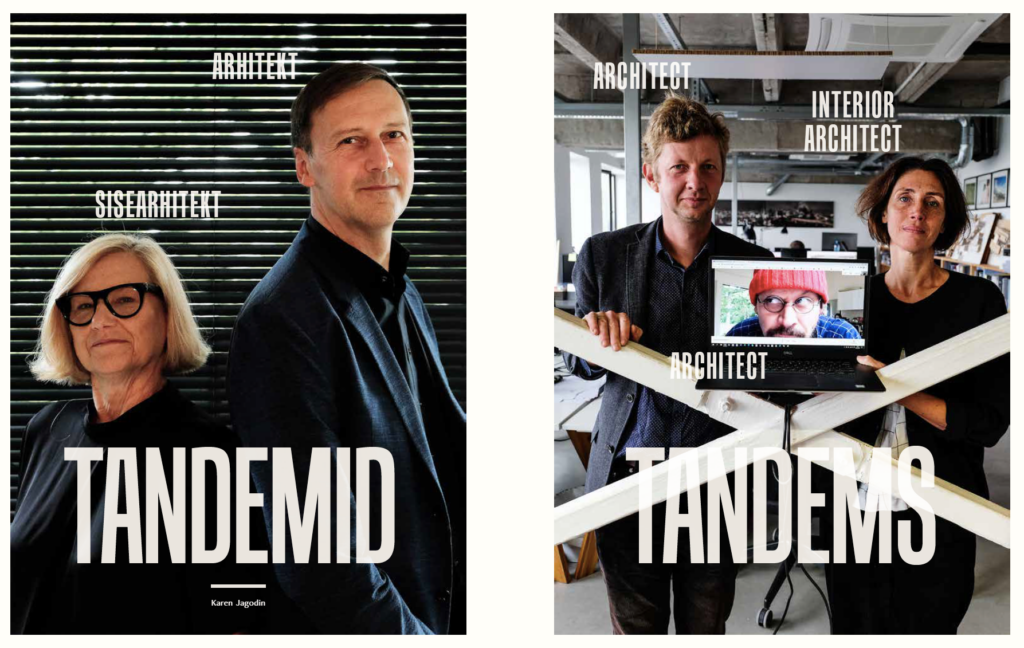
For the current article, I spoke with two architect and interior architect tandems whose cooperation has become their preferred form of creative effort: Kalle Vellevoog and Tiiu Truus as well as Mihkel Tüür, Ott Kadarik and Kadri Tamme.
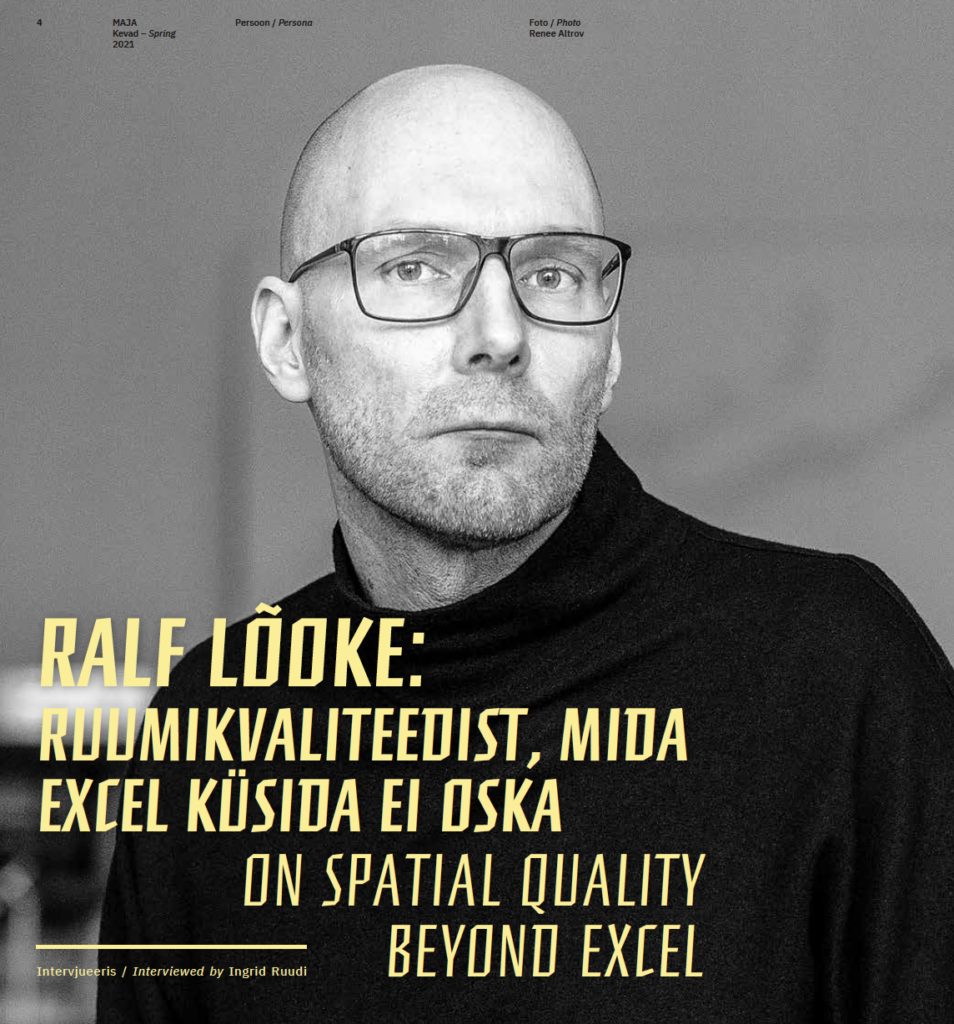
Teist põlve arhitekt Ralf väidab, et tal ei ole eriala suhtes illusioone; seda muljetavaldavama järjekindlusega seisab ta projekteerimisprotsessis arhitektuurse tuumidee säilimise eest. Arhitektiks olemine defineerib Ralfi kogu tegevust ja maailmavaadet töötegemisest reisimiseni – võib-olla ainult muusikal õnnestub hetkiti samavõrdse tähelepanu eest võistelda. Küsis Ingrid Ruudi.
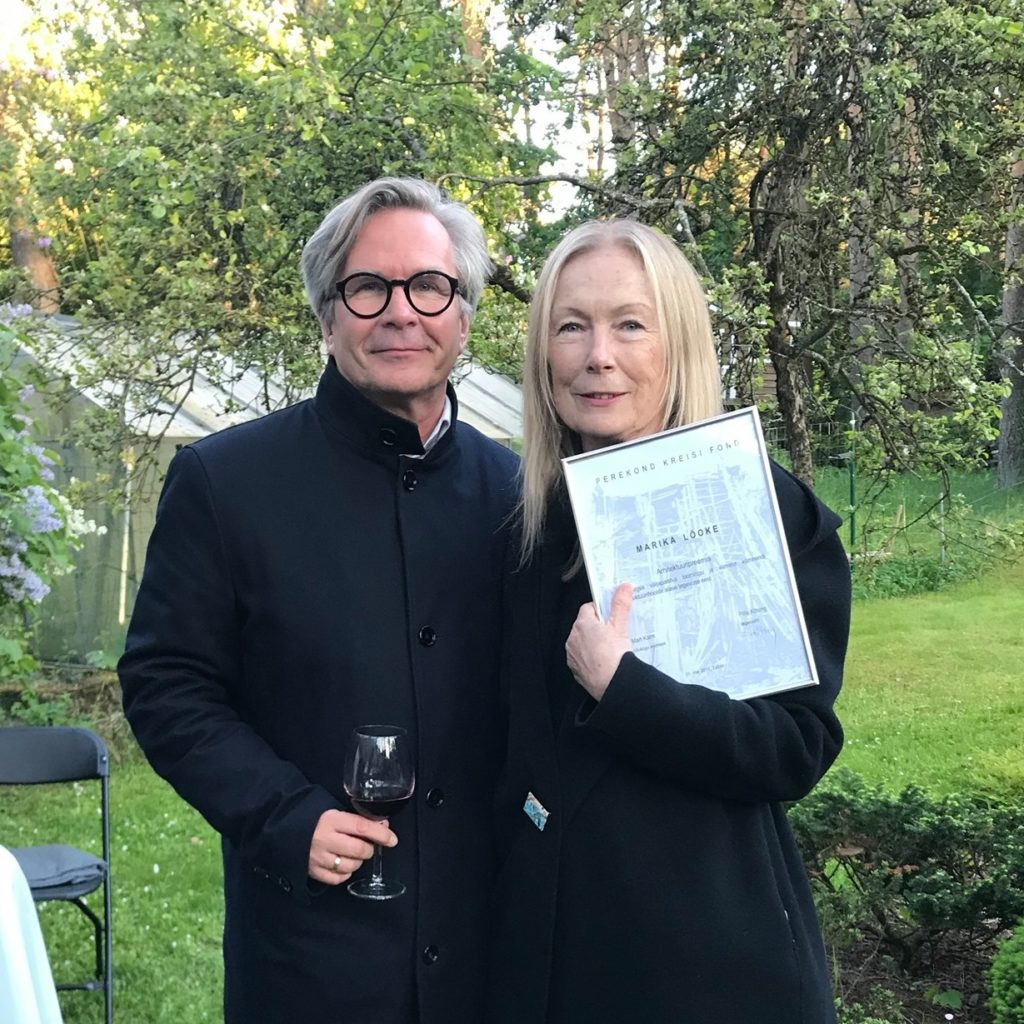
The foundation of the Kreis family is the first foundation by a local family to support architecture that was established by Heljo Kreis in 2012. The aim of the foundation award is to acknowledge noteworthy phenomena, alternative practises and versatile creators who have remained on the margin of the mainstream Estonian architecture.
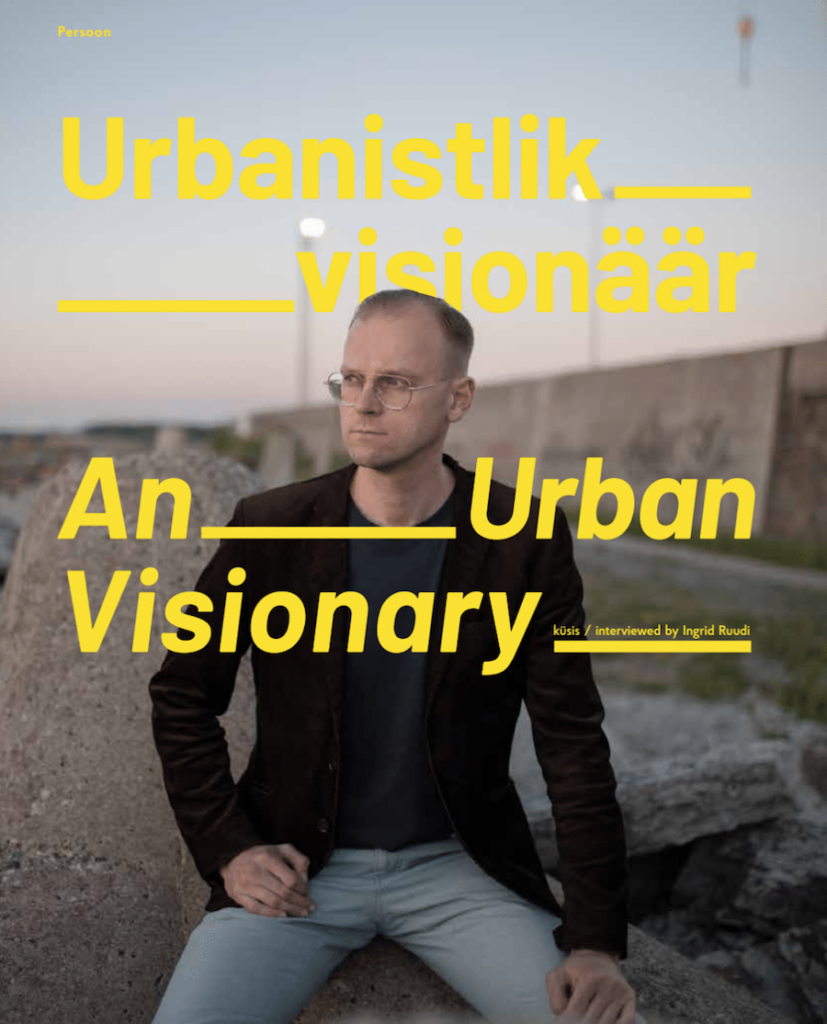
Villem Tomiste is like a figure from the beginning of 20th century Young Estonia movement – genuinely European, deeply urban, and as such, slightly suspicious for the local conservative community. Unlike many architects who preach social benefits, he actually lives by what he promotes in his civic visions – urbanistically to the core, commuting on foot and by tram, avoiding over-consumption, and with a refined aesthetic sensibility. Contemporary spatial culture is, for him, a field of opportunities: extending from urban planning and landscaping projects to dialogues with contemporary music, the visual arts and various exhibition practices.
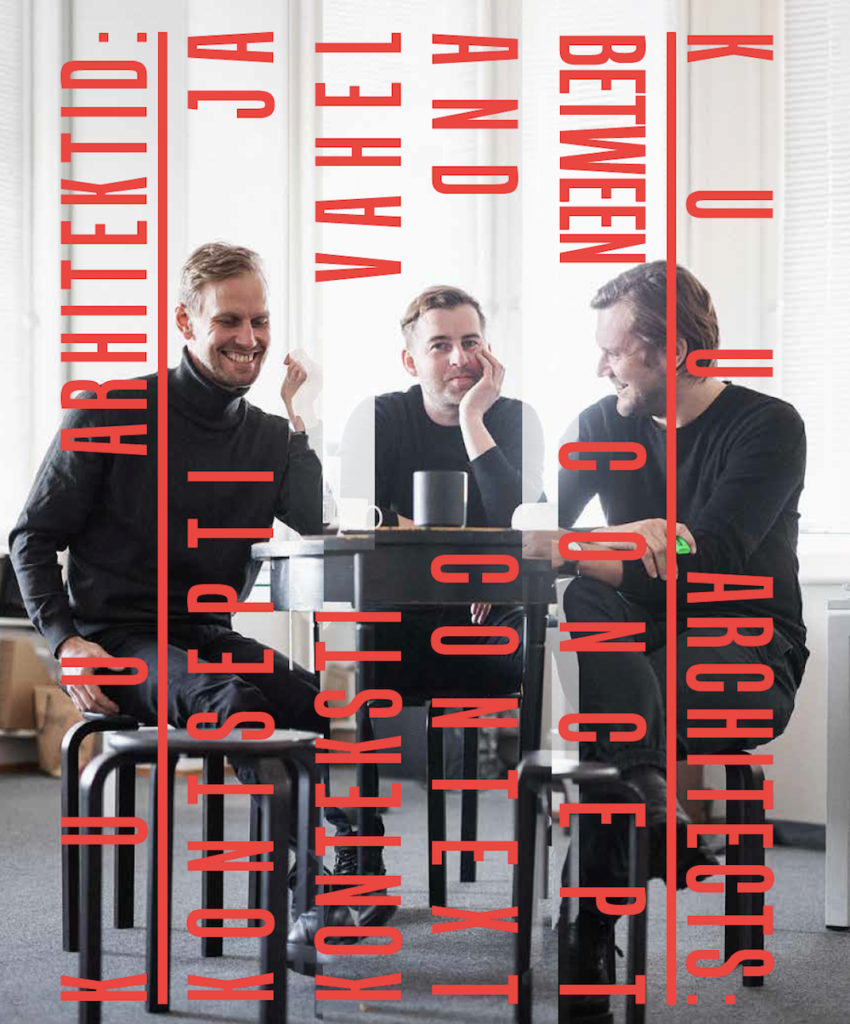
The architecture offices born at the time of economic downturn are inevitably much less inclined to undertake bold experiments than the ones whose beginnings are rooted in more auspicious times. Instead, what becomes crucial then is an ability to make the most out of the limited resources in a nuance-sensitive way. Thus, KUU architects are, in a sense, minimalists, yet they do not seek minimal form, but look for opportunities to efficiently utilise the existing contexts in order to create spaces that empower its users.
Postitused otsas