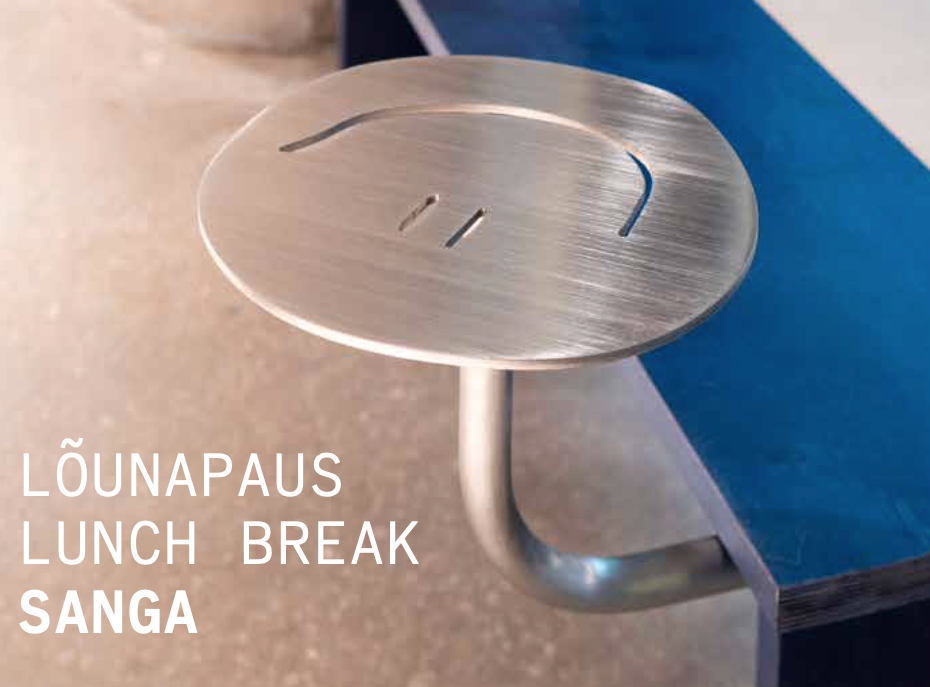
SANGA
Type: eatery
Interior architecture: Veera Gontšugova (barbed project) x Maria Helena Luiga
Graphic design, identity: James Moruzzi (Never Worry Studio)
Building architecture: HG Arhitektuur
Location: Tallinn, Estonia
Area: 120 m2
Project: 2024
Completed: 2025
I have long waited for bread-focused restaurants or kiosks to appear in Tallinn, since good, fresh bread—whether sourdough, baguette, or brioche—is one of my greatest weaknesses. Happily enough, two such places sprang up almost at the same time. In the summer of 2024, the red-and-white Sai! opened on the edge of the Old Town, serving kurja koera võikus (literally ‘angry dog sandwiches’ in Estonian); at the end of the year, it was followed by the predominantly blue-toned Sanga in the Rotermann Quarter.
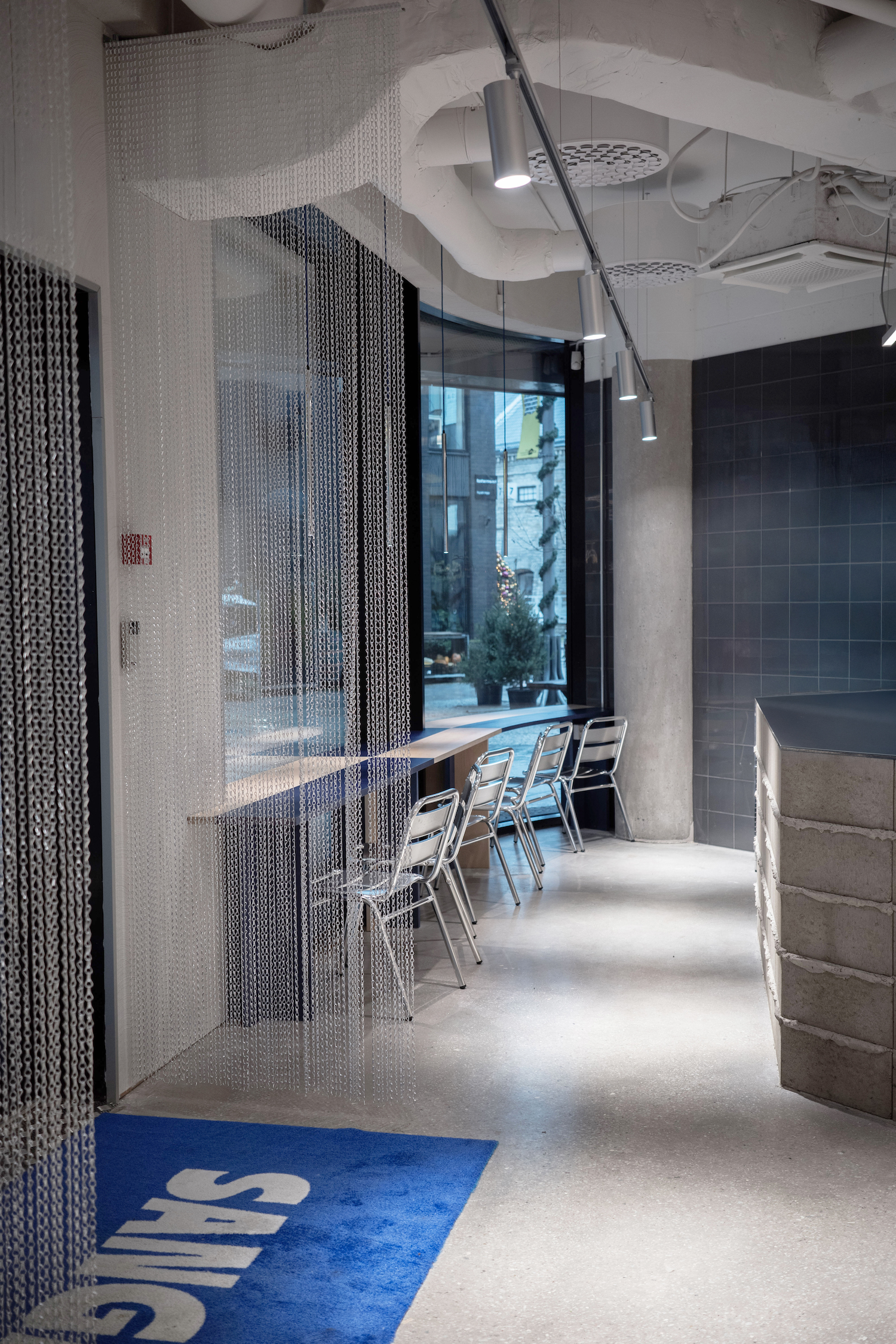
The glass door of the R18 building, designed by HG Arhitektuur, is partly obscured by the columns, but the bolded logo, signage, and blue outdoor furniture make the place easy to find. Upon entering, the visitor is greeted by an airy space, a blue floor mat emblazoned with the Sanga name, and nightclub-like metallic blinds. Architect Maria Helena Luiga and designer Veera Gontshugova have created an environment that brings together modern impulses: visible structures, a mix of custom-made and mass-produced furniture, openness, tables for groups that want to share food, adaptability, Instagrammability, and much more. All this goes very well with the playful visual identity created by the Never Worry Studio from London.
Tables and chairs
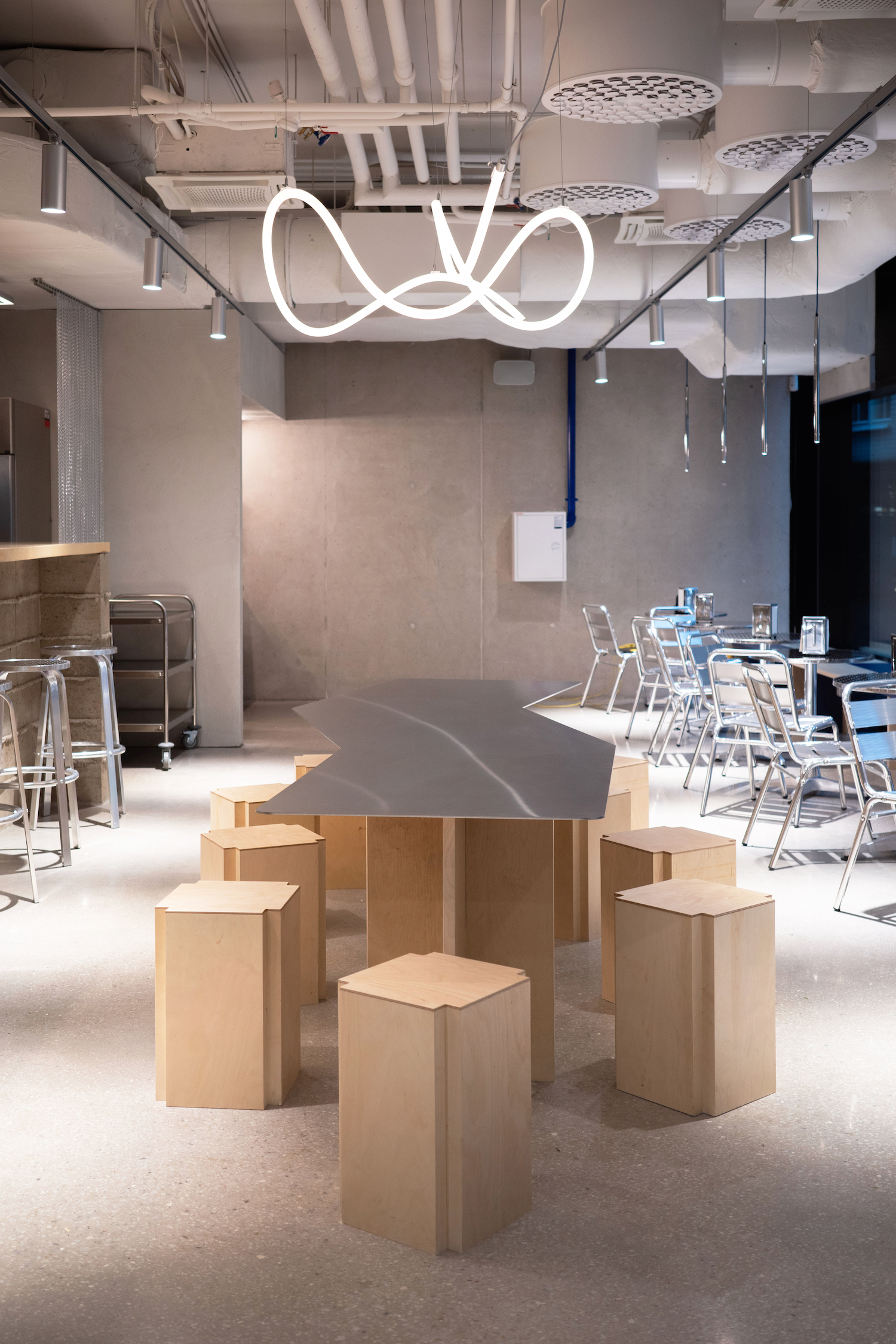
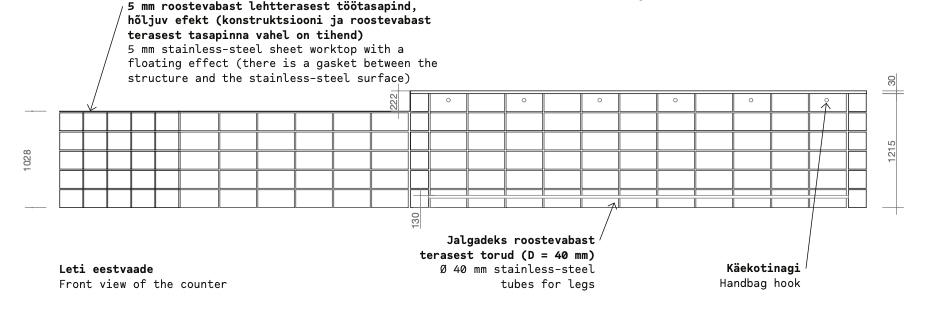
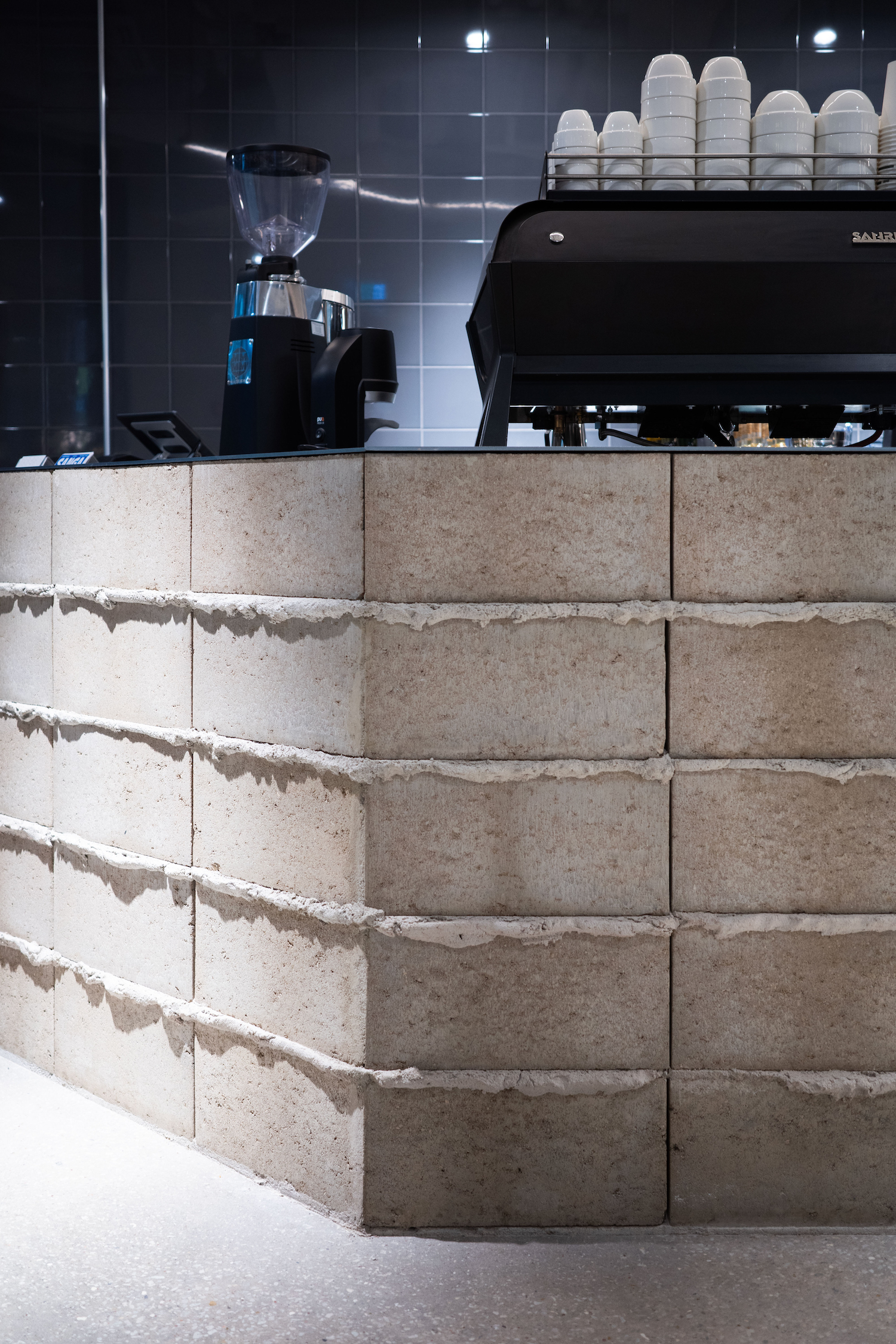
While most eateries stick to two or three types of furniture, Sanga features many more. After choosing my food, I settle on a bench by the window at the back of the room. I count the furniture types and there are plenty: outdoor bistro sets, metallic bar stools, Bolero aluminium chairs, IKEA Kyrre stools (some in brand colours), and a long wooden bench also with some blue in it. At the center, under a tangled neon light, stands a zigzagging communal table with a metallic surface, surrounded by wooden stools designed by Luiga and Gontshugova themselves. This more festive setup is grounded by a robust dark-grey bar counter, a pleasant counterpoint. Juicy mortar oozes from between its stone blocks, reminiscent of my juicy bread dish.
Material and mindfulness
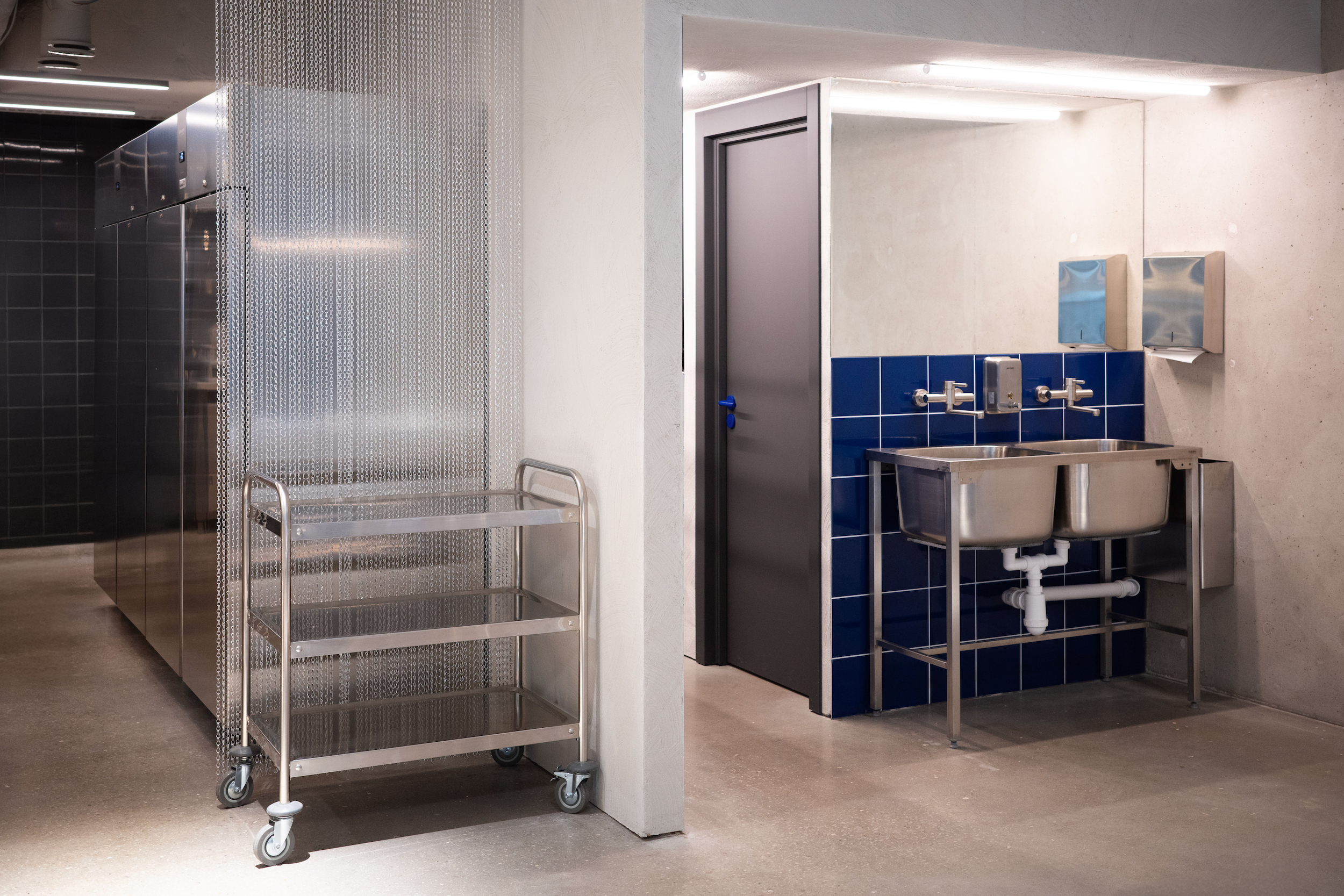
The sandwich, served in a paper box, arrives on an aluminium plate; the latter goes together with the metal table and napkin holder to form a metallic set. As I munch on my aubergine sandwich, I try to figure out what exactly this place is. Is it a diner, a canteen, a bar, a restaurant, or something else altogether? At first glance, it keeps a lean aesthetic: grey, metallic, blue, and light wood tones, clear surfaces. But just like the sandwich, this space is layered. Natural wines on the counter seem to promise a cozy restaurant evening (though the bar closes at 6 p.m. on weekdays). Then again, the boxed sandwiches and diner-style napkin holders on the tables seem to suggest a fast-food place. In any case, I appreciate the playfulness—as well as the sinks. The latter are large and inviting. Handwashing is clearly held in high esteem here.
Ceiling and scent
The ceiling is high and open, revealing the entire landscape of ventilation ducts. The latter does not draw attention and blends with the ceiling seamlessly. I assume that a state-of-the-art ventilation system keeps all the aromas at bay—at least my fairly sensitive nose does not pick up any notable smells.
Feeling
I try to avoid the word ‘võiku’,1 which one also finds in Sanga’s menus and advertisements. As a child of the 1990s, I have a somewhat different understanding of what võiku is. Võiku is a thin slice of bread with a layer of butter and another thin layer of topping of one’s choice. Võiku is something that you might still find at Energia Café. Sanga’s sandwiches are something else. In fact, Sanga’s design is perhaps best summed up by a bite of their sandwich: contemporary, a bit playful, slightly pretentious, layered, and tasty. Disco music is playing from the speakers. I wash my hands. I take pleasure in the fact that I can take my coat off a hanger (instead of letting it dangle on the back of a chair like in a regular fast-food place) and leave.
SANDRA NUUT is a curator working at the Estonian Museum of Applied Art and Design.
HEADER: article header in the magazine, design: Unt/Tammik, photos: Maria Helena Luiga.
PUBLISHED: MAJA 3/4-2025 (121-122) with main topic WORK AND FOOD
1 ‘Võiku’—a diminutive of ‘võileib’ (literally ‘buttered bread’). ‘Võiku’ became common Estonian slang for ‘sandwich’ in the 2000s.—Trans.