The 2010s were a time of glorious abundance. For architects, it was a time of constant commissions and few questions—a time fuelled by extraction and expansion. New towers rose, the old came down. The decade unfolded in the long shadow of the 2008 financial crisis. When housing markets collapsed—first in the United States, then across much of Europe—central banks responded with extraordinary measures. Interest rates sank to historic lows, lending was eased, and capital began to flow.
In Finland, the effects were profound. Between 2010 and 2020, demolition rates doubled and new construction surged. With borrowing costs near zero, investors wary of volatile stock markets turned to real estate. Property investment became a pastime for ordinary citizens, international investors entered the Finnish housing market, and Finland was soon building more housing per capita than any country in Europe, much of it being small urban apartments.1
It was a global story written in Finnish cities: cheap money searching for safe returns, with equities too costly and real estate the next refuge. We saw it up close in our early twenties, while studying architecture.
But when the economy stalls, architects’ work evaporates overnight. Architecture is capital-centric, speculation-driven, and tied to the flows of investment.
By 2022, the spell was broken. Inflation surged across the eurozone. Energy prices soared. Central banks raised interest rates, slowing the housing market and putting construction sites on standby. Apartment prices fell.
In Finland, where the construction industry had played a significant role in fuelling the country’s economy, the reckoning hit especially hard. Since 2022, hundreds of construction companies have filed for bankruptcy. Built on debt financing, the industry faltered. By 2025, it was still struggling, with many people laid off and many without work.
Ruptures
Recessions rupture the familiar, reshaping lives in their aftermath. The path is never easy—economic downturns are tied not only to lost work but also to declining mental health and fractures across entire societies.
In the wake of this particular rupture, we were forced to confront our position as architects. During the abundance of the 2010s, opportunities were endless and studios could be chosen for taste, prestige, or grandiosity. But when the economy stalls, architects’ work evaporates overnight. Architecture is capital-centric, speculation-driven, and tied to the flows of investment2. When that flow dries up, along with speculative capital, the question becomes: is our work even needed?
In our lifetimes, we have witnessed the architecture profession change at speed: digitalisation, automation, algorithmic design tools, and the accelerating power of computation. Each advance has brought its own rupture, reshaping what architects do. And there will be more, in directions we cannot yet predict. If our role is reduced to producing documents for speculative real estate, why wouldn’t capital replace us with software that works faster, cheaper?
If architecture is to remain relevant in a world where human futures seem increasingly uncertain, small adjustments will not suffice. The precarious workers in architecture, construction, and beyond need to demand fundamental change if the building industry is to move toward a lasting future—or any future at all.
If our work was sustained mainly by the demand for small studio apartments, serving as safe havens for investors’ capital, can we really say we were meeting society’s needs?
Disillusionment
By 2023, we were disillusioned with architecture. We were sceptical of new construction and the traditional office or zoning work as meaningful avenues for change. We wanted to forge an alternative path and were fortunate that there are frameworks in Finland to support architects, designers, and artists at the beginning of their careers.
We realised we do not need to wear the heavy cloak of the modern-era architect we came to know through our studies, nor feel pressured to produce reality-bending renderings or chase competition wins. We do not have to participate in the destructive cycles of new construction at all. Our education could be put to work in other ways.
At times, we met doubtful voices asking what place we have in architecture if we do not build. Beneath this lies the belief that an architect’s worth depends on leaving a tangible mark, feeding the ego and what Mierle Laderman Ukeles,3 drawing on psychoanalysis and Freud, calls the death instinct, which destroys life rather than sustains it.
No one gets to decide what architecture must be. Its definition has always shifted—across our own lifetimes, through the centuries, before the Renaissance, and back into Antiquity. It must adapt with the times.
The money question
We have been able to fund our work with grants and small commissions. But the Finnish system of public and private arts funding is quite unique. The Alfred Kordelin Foundation, which granted us €13,000 for our work ‘Geography of Memories’4 was founded in 1918 and once supported many artists, such as the composer Jean Sibelius. Today, Finnish foundations play a decisive role in science, art, and civic life—investing €538 million in 2023 alone, and contributing an estimated €6 billion to research since Finnish independence.5 In an era of shrinking public cultural budgets, these foundations provide continuity and opportunity.
Still, the pursuit of grants and residencies demands relentless effort; calls for applications arrive weekly and the funding is uncertain. It is mostly project-based and intended for launching initiatives rather than sustaining them. Funding for recurring projects or operational funding is rare and extremely competitive. We apply for everything and see which projects take off. Foundations maintain their own methods of gatekeeping and terms for funding, making working with grants by no means free or independent.
One aspect that makes funding our work easier is working outside the construction sector. By adopting the role of an architect who does not build, our practice can be agile. We do not need millions in speculative real estate capital to realise our projects; instead, we can operate within budgets ranging from thousands to tens of thousands. We only need to pay for our work and whatever it is we are producing. For us, it is much easier to get projects off the ground than it is in construction.
However, the truth behind alternative practices is that the work is uncertain. We can take financial risks and survive with small incomes since we do not have any children or mortgages. Life without a steady income is not a possibility for everyone.
But perhaps it is possible to build financial models for alternative practices that move beyond precarity, speculative real estate capital, and institutional gatekeeping. We are interested in exploring the possibilities of crowdfunding community projects, where instead of finding one funder, small sums are pooled from community members to fund work for the benefit of, say, a neighbourhood. Co-ops and coalitions of various alternative practices can provide valid frameworks in some contexts.
Now that the traditional construction sector has failed to deliver on its promise of secure employment and steady income—at least in Finland—architects may be more willing to question the system itself. If our work was sustained mainly by the demand for small studio apartments, serving as safe havens for investors’ capital, can we really say we were meeting society’s needs? Demand alone does not equal societal value or necessity. And the absence of demand—or the unwillingness to pay—for alternative practices does not mean they are not urgently needed.
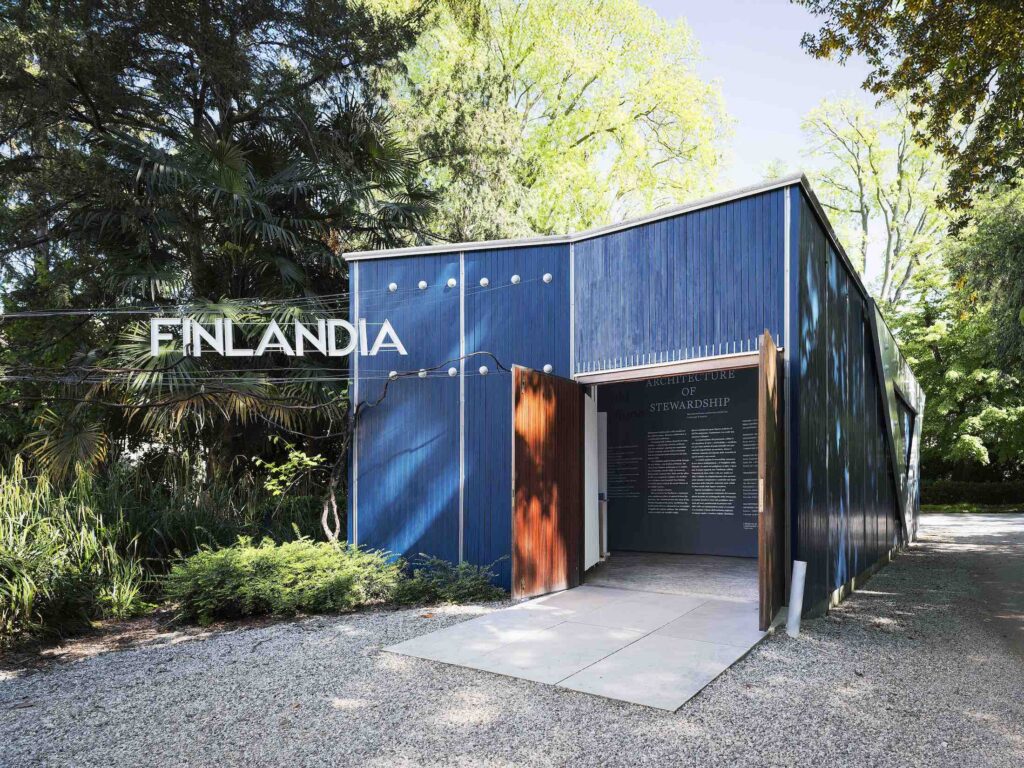
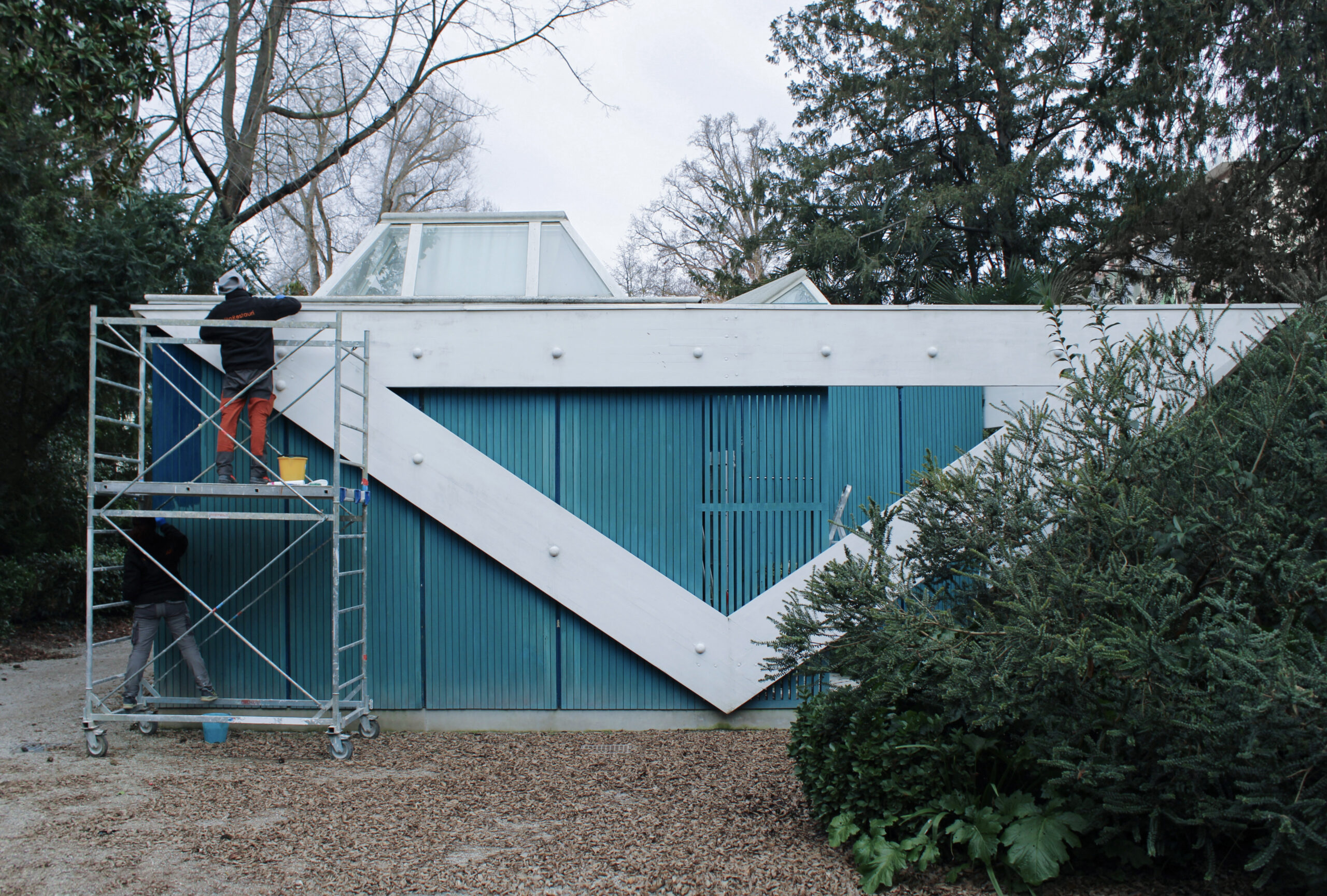
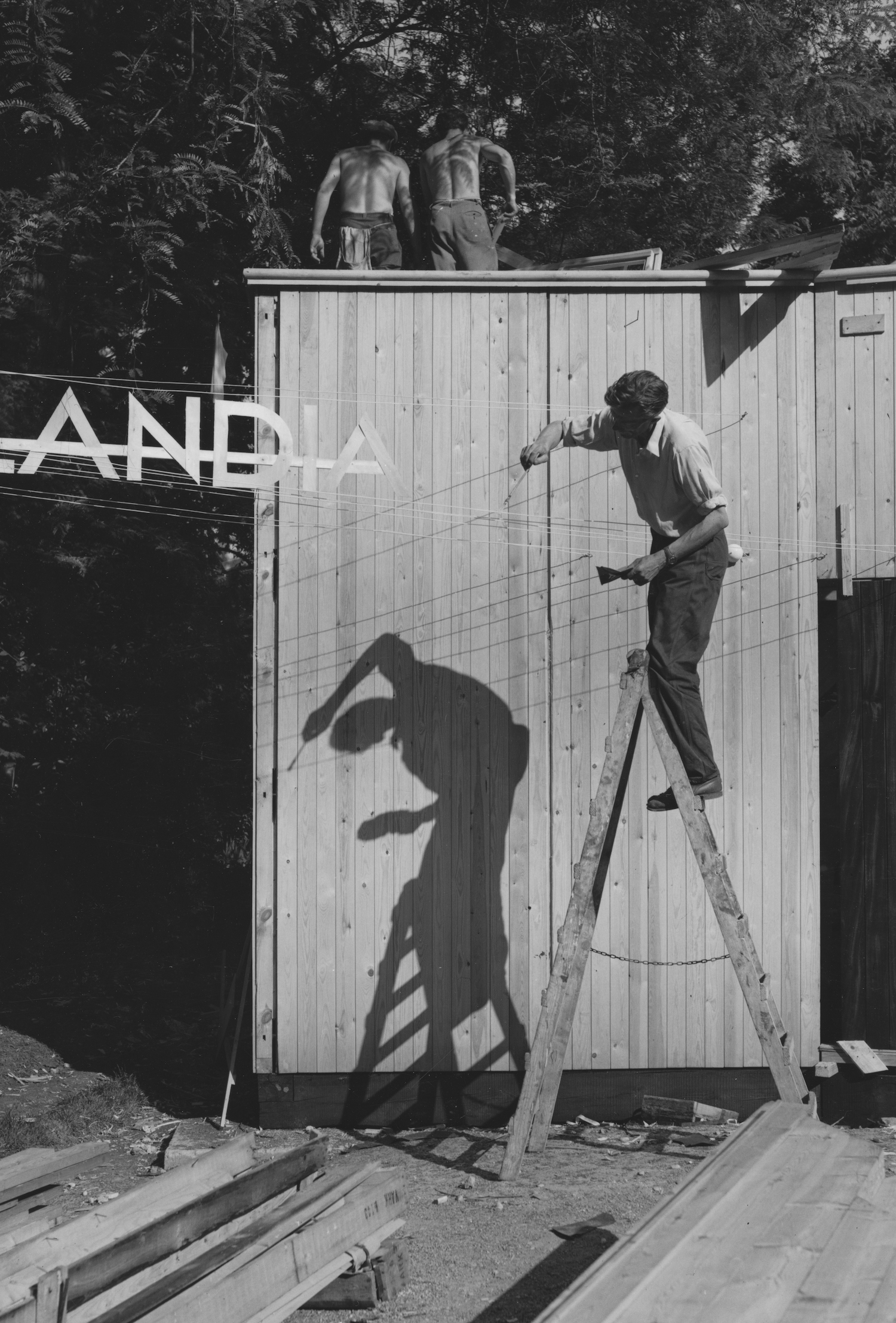
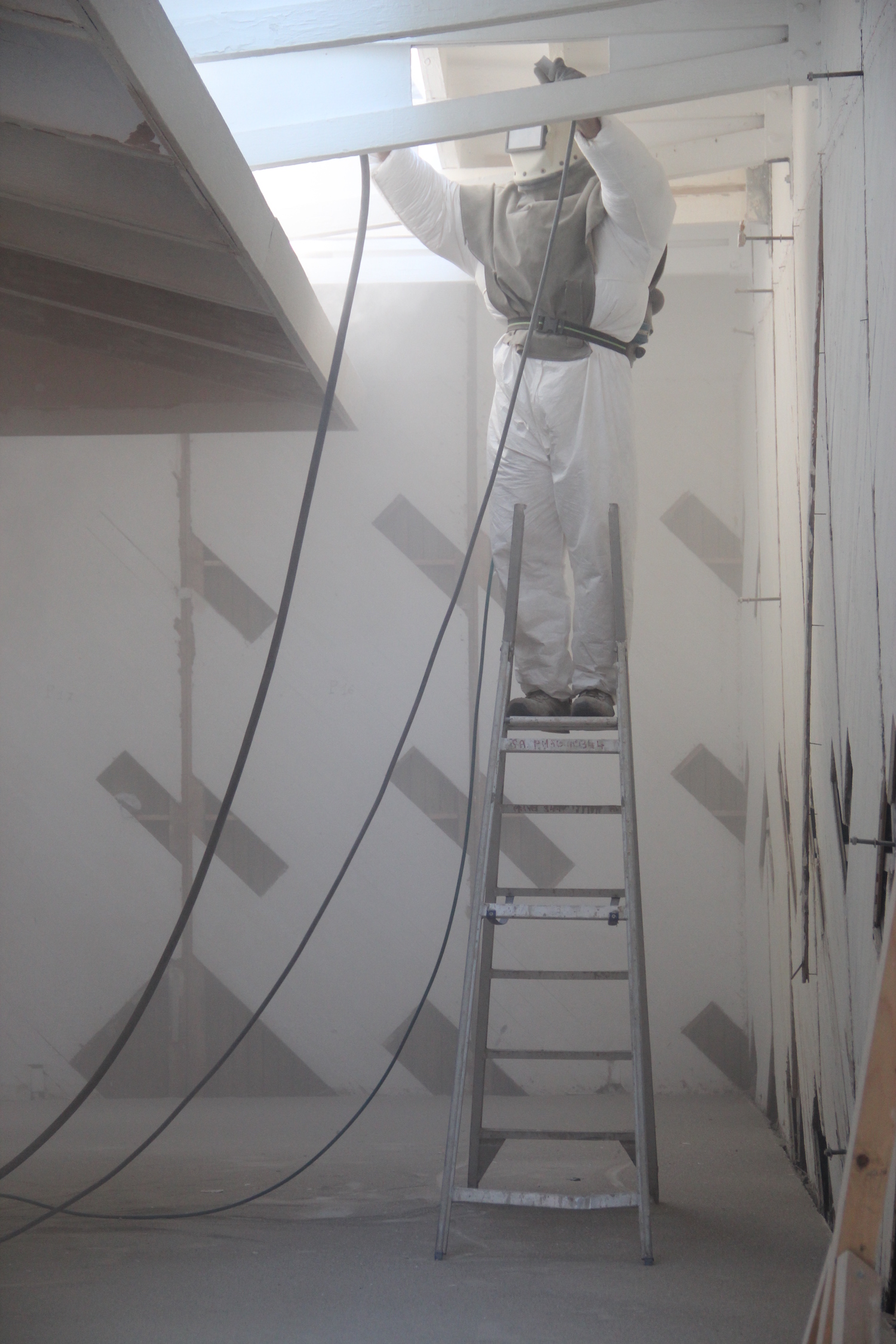
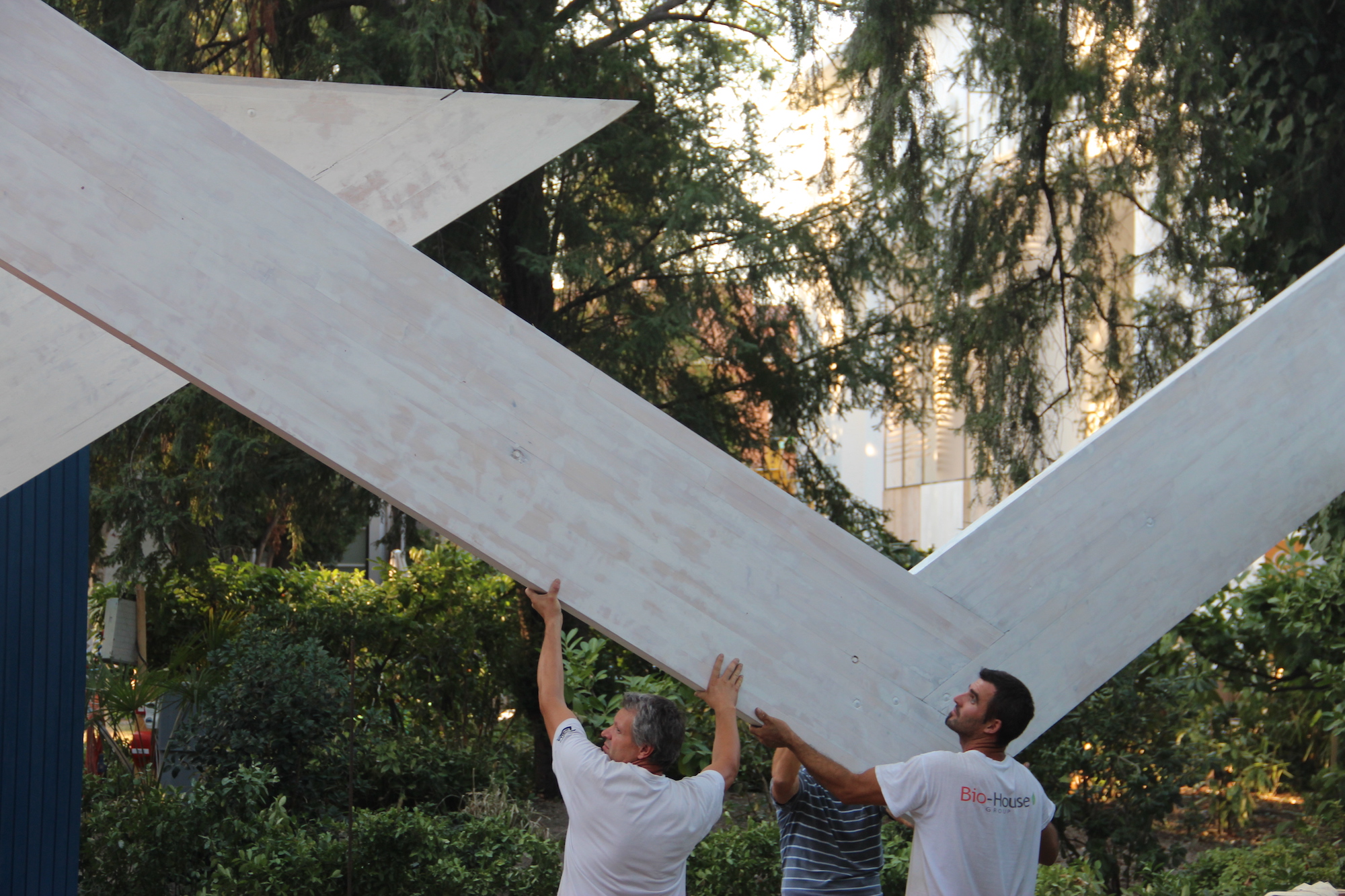
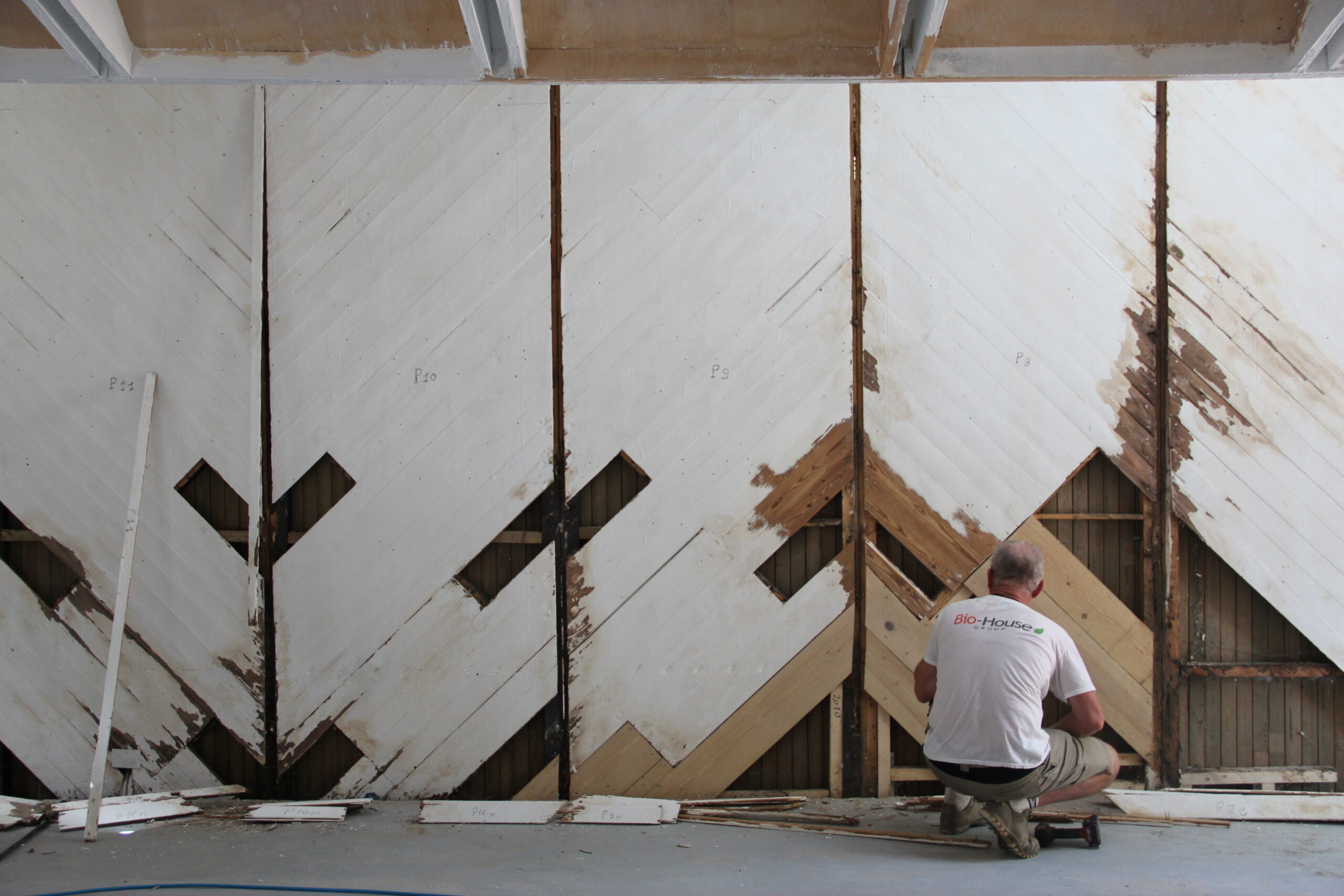
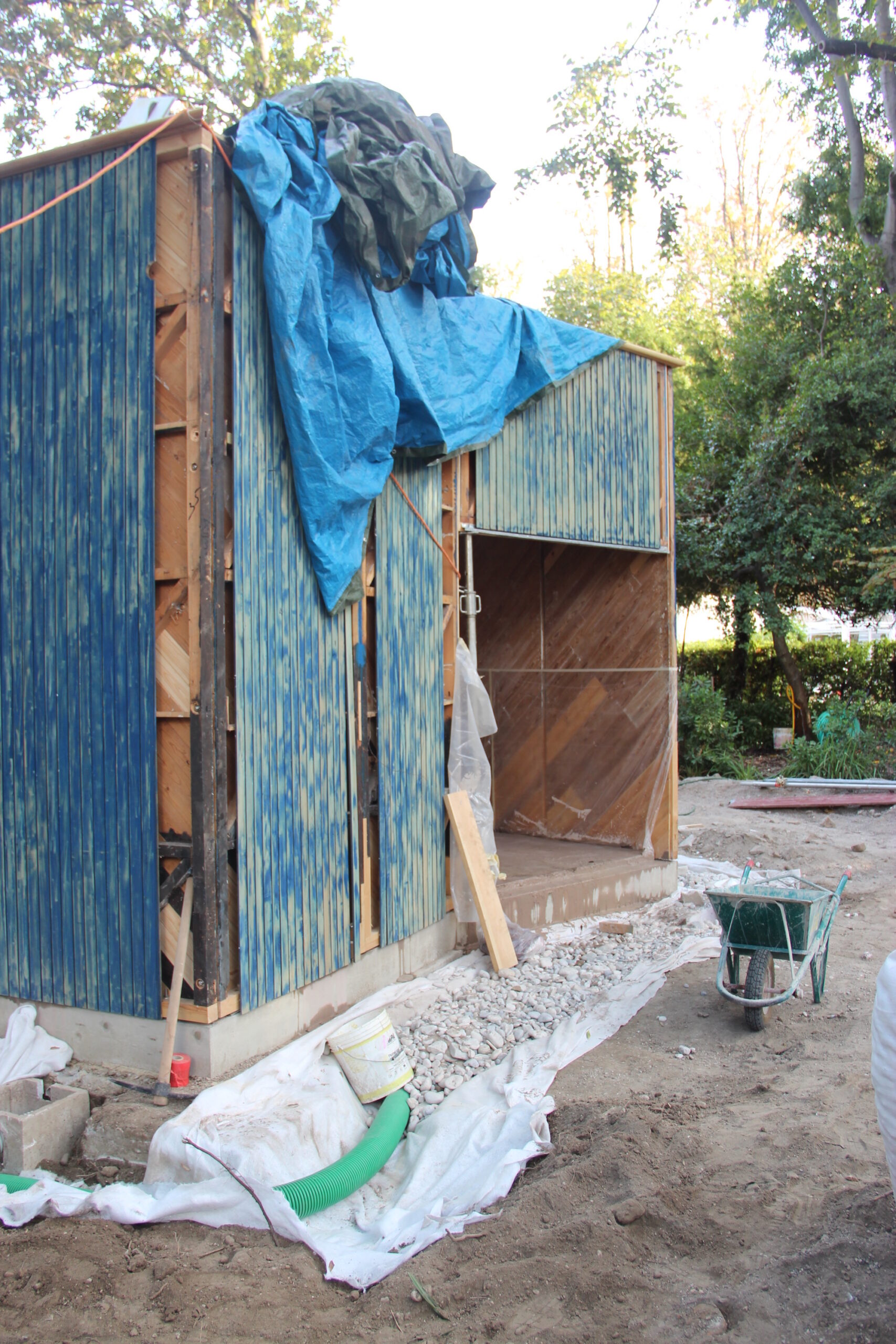
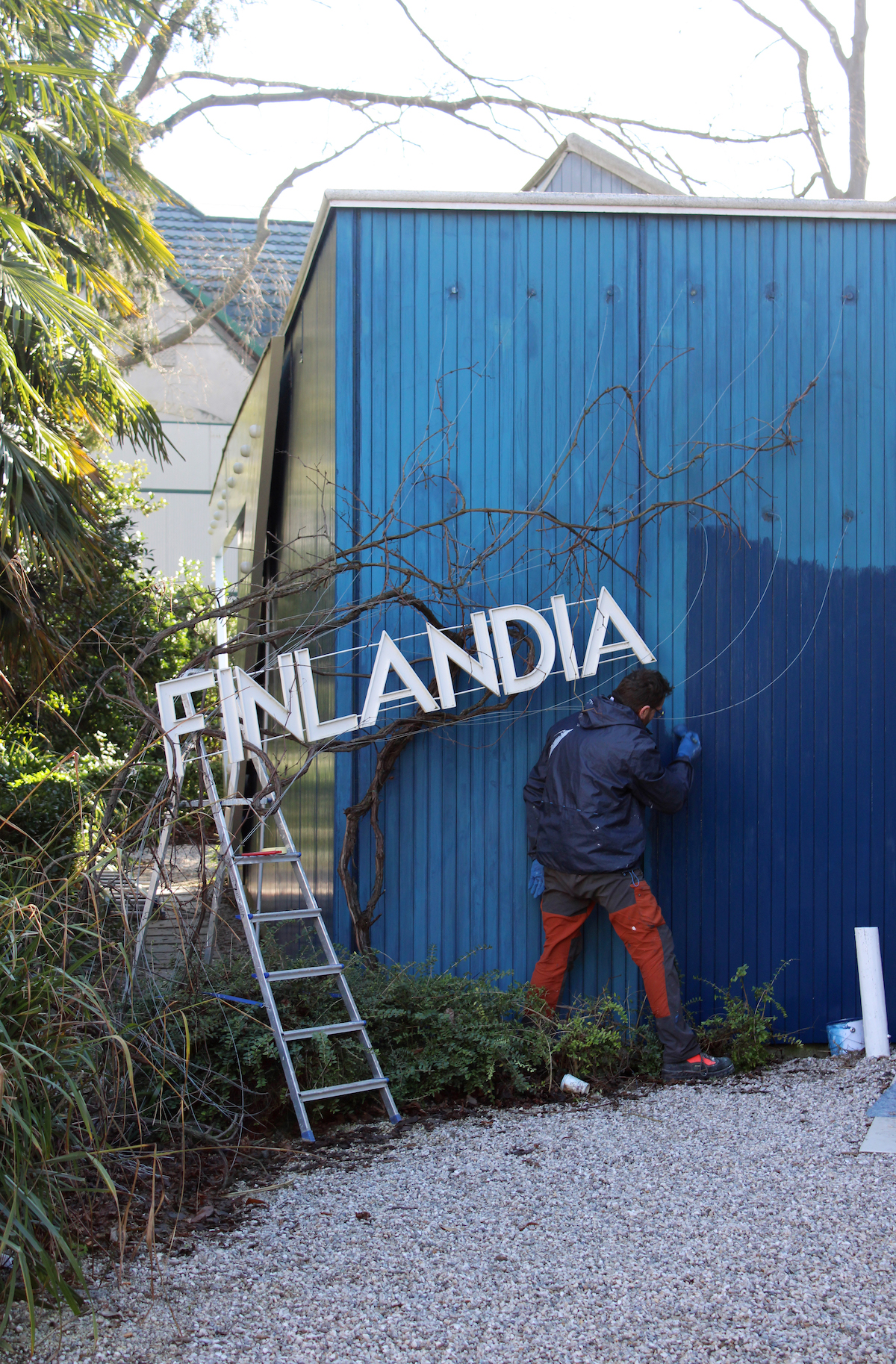
Architecture of Stewardship, the Pavilion of Finland at the 19th International Architecture Exhibition of La Biennale di Venezia, explored architecture as continuous maintenance, conservation, and renovation rather than a finished product. The pavilion demonstrated that architecture is a collaborative effort and questioned whether the original architect of a building or built environment should be considered the sole author. It subverted the iconic mythology of ‘Alvar Aalto’s Pavilion of Finland’ to expose the labour required in the construction and maintenance of our built environment, thus highlighting the need to recognise the network of actors that enable architectural practice.
THE PAVILION OF FINLAND
Organiser: Archinfo
Commissioner: Katarina Siltavuori
Curators: Ella Kaira, Matti Jänkälä
Exhibitors: Merle Karp, Jussi Hertz
Exhibition team: Antti Auvinen, Samuli Saarinen
Production team: Ulla Kallakivi, Miina Jutila, Francesco Raccanelli, Anna Rusi
Supporters: Soome haridus- ja kultuuriministeerium, Soome kultuurifond / Ministry of Education and Culture, Finland, Finnish Cultural Foundation

MATTI JÄNKÄLÄ and ELLA KAIRA are Helsinki-based architects. Their architectural practice, Vokal, focuses on participatory design and examines the forces that drive urban development, ranging from the real estate market to social movements.
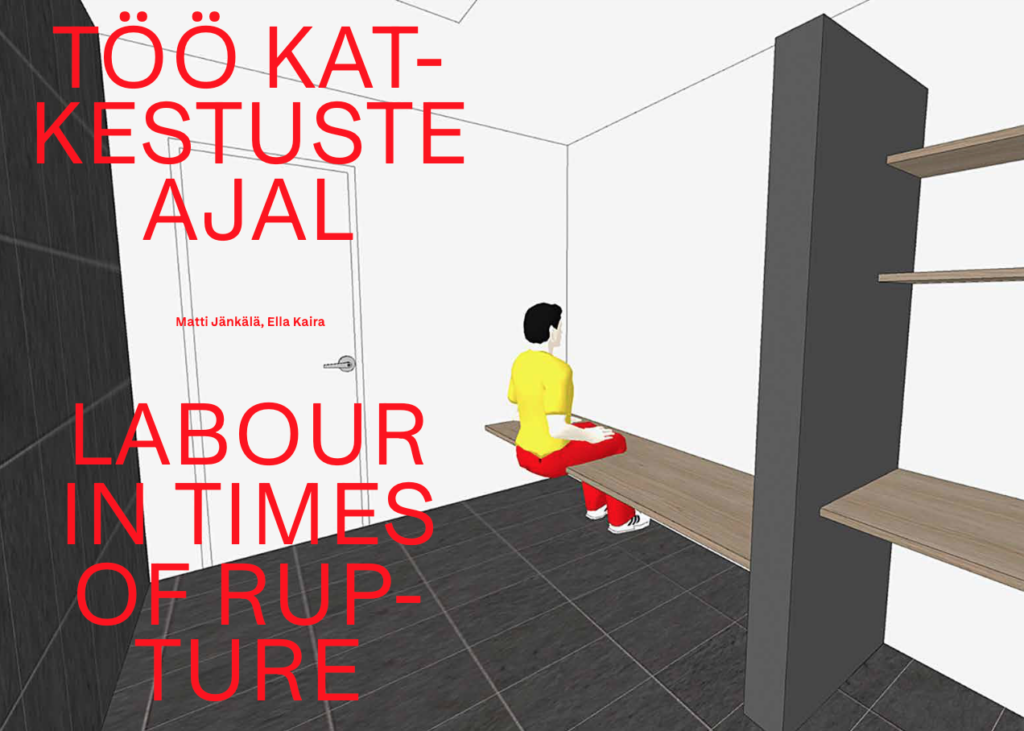
HEADER: article header in the magazine, illustration: Vokal, design: Unt/Tammik.
PUBLISHED: MAJA 3/4-2025 (121-122) with main topic WORK AND FOOD
1 Seppo Mölsä, ‘Analyysi: Miksi 2010-luku on ollu keskisuurten rakennusliikkeiden, aliurakoinnin ja rakennuttajakonsulttien kulta-aikaa?’, Rakennuslehti, 6 July 2018.
2 Angelika Fitz & Elke Krasny, Critical Care: Architecture and Urbanism for a Broken Planet (The MIT Press, 2019)
3 Mierle Laderman Ukeles, ‘Manifesto for Maintenance Art 1969!’, Artforum 10, no. 1 (October 1971): 39–40.
4 ‘Geography of Memories’ is an art and research project that works with local residents to gather memories and the intangible values embedded in Meri-Rastila, a neighbourhood in Helsinki. As the area undergoes significant changes due to urban renewal, major buildings—from schools to the local mall—are being demolished to make way for new constructions. The project was funded by te Alfred Kordelin Foundation and the City of Helsinki, and its results were exhibited in the old Merirasti chapel that has been turned into a cultural centre. See: www.vokal.fi.
5 In 2023, members of the Association of Foundations and Trusts funded science with 295 million euros, art with 85 million euros, and civic activities with 158 million euros. See: https://saatiotrahastot.fi/3-faktaa/.