KALVE
Type: café
Interior architecture: Jānis Andersons, Danna Degle-Uškāne (Field Studio)
Building architecture: Boris Tšernov, 1937
Location: Tallinn, Estonia
Art: Paula Zariņa-Zēmane
Area: 72 m2
Design: 2025
Completed: 2025
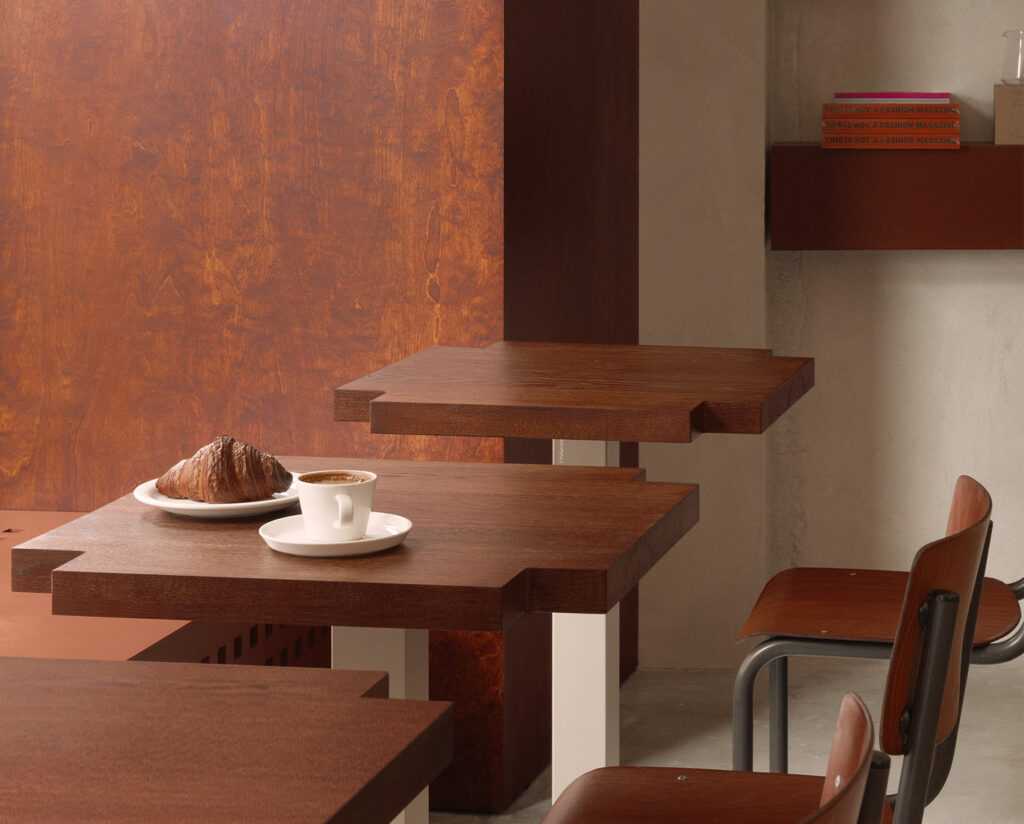
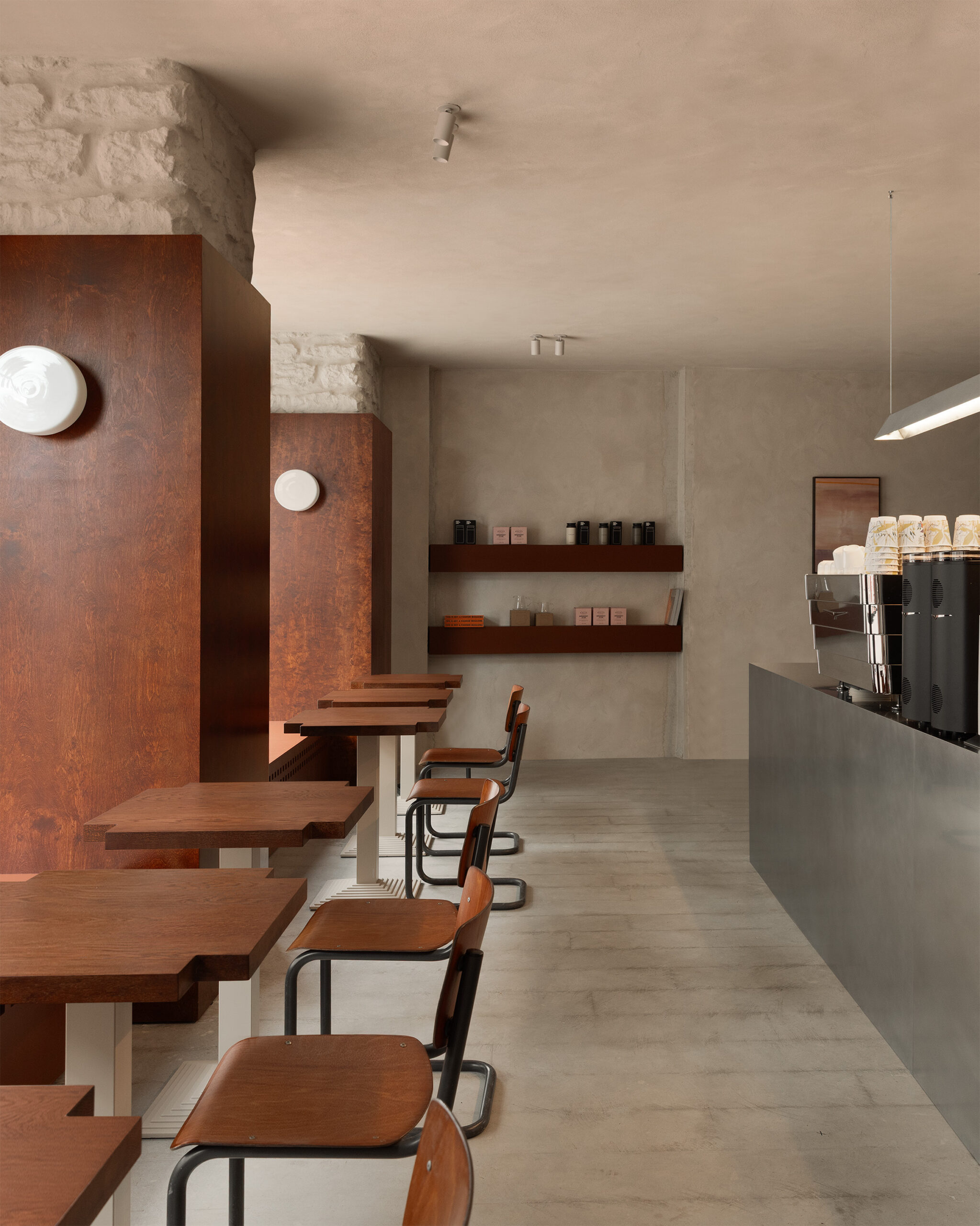
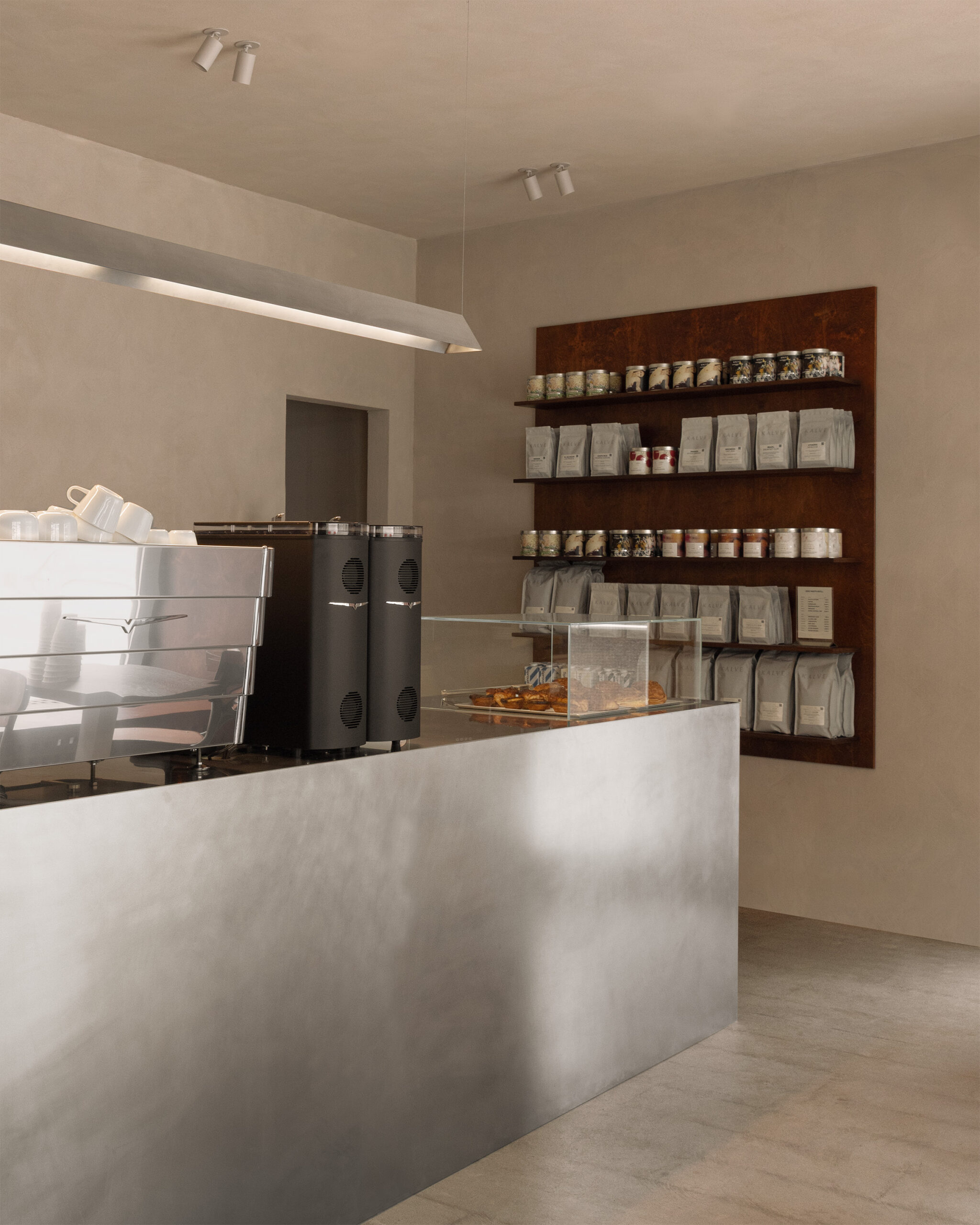
One spot offering coffee, pastries, and tables to sit at has set up shop on Pärnu Road, between a New Age shop and Reval Café. It is situated on the commercial floor of a six-story residential building designed in 1937 by architect Boris Chernov. Entering through a modestly recessed doorway, I find a simple, three-toned interior: grey, walnut brown, and Isabella white. Concrete, wood, plaster, and a bit of metal.
‘Kalve’ means ‘forge’ (or ‘to forge’) in Latvian. Does the café’s Latvian origin somehow suggest itself in the interior, the taste of the coffee, or the coffee cup? I did not quite catch the Latvian feeling* that I am familiar with, but it is easy to imagine a place like this in Riga. In fact, there are six Kalve cafés in Riga, plus three in Tallinn and one in Vilnius—truly a Baltic chain.
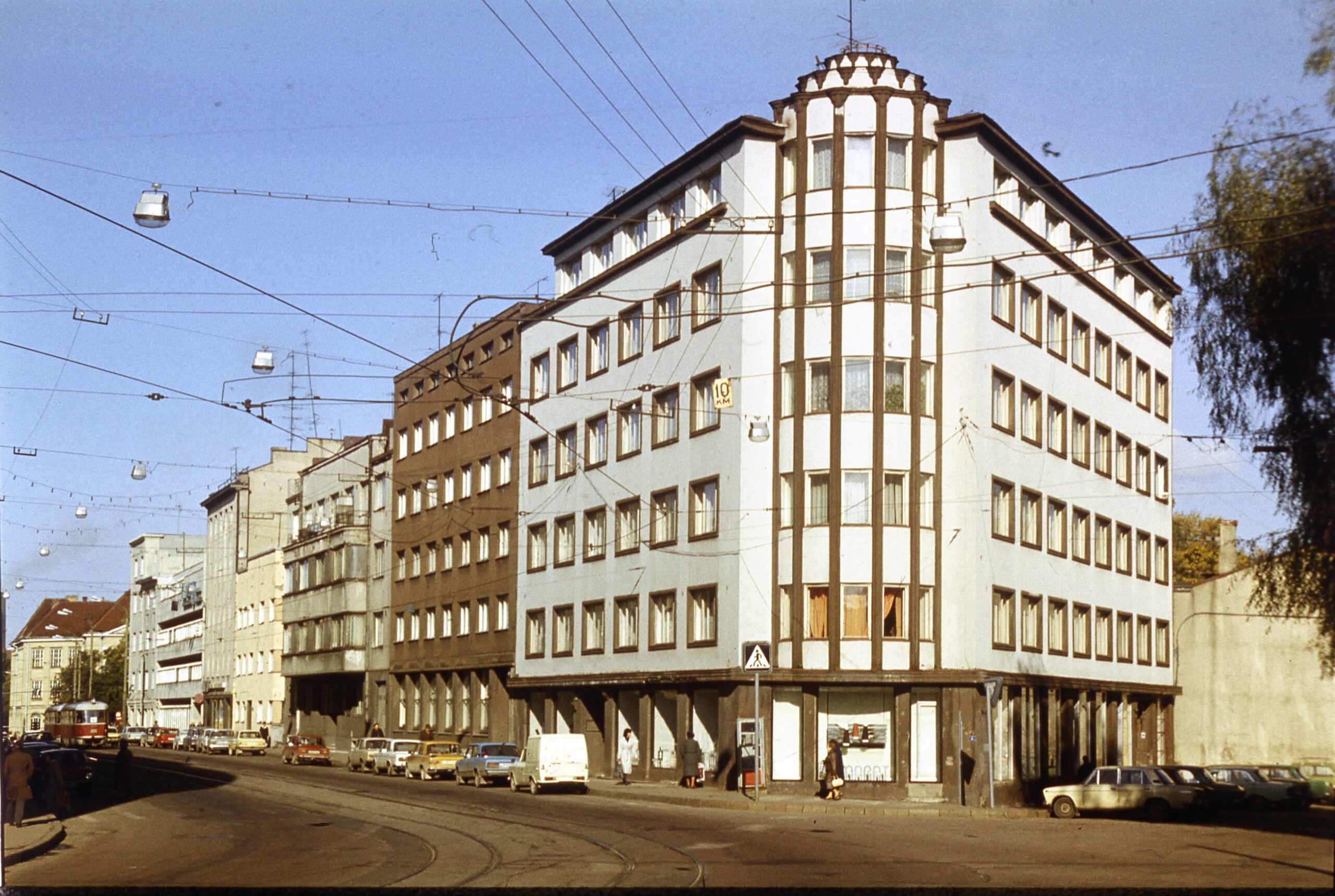
Photo: Museun of Estonian Architecture
The smells are predominantly those of coffee and plaster.
The sounds include quiet music, the hiss and hum of the coffee machine as the barista operates it, the English-language conversation of an earplug-wearing customer, and muffled street noises from Pärnu Road behind the window.
The light pours into the room through large windows as the window glass of the building across the street reflects the morning sun. The satin-matte lacquer on the wooden tabletops reflects it further. The electric lamps are lit and soften both the space and the shadows.
I read the coffee menu and cannot find what I would like—so I start negotiating with the barista. ‘Could I have this kind of, uh, „elongated“ coffee—I mean, like an espresso with some extra water and a longer extraction time—a caffè lungo or café allongé? But definitely not an americano, which is just a big cup of weak dark water.’ I get more or less what I wanted. Alongside it, I take a spanakopita (from the bakers of Karjase Sai).

The café has six window seats, four smaller tables, six tubular chairs with plywood seats, three high tables, and nine stools; in the back room, two larger tables and eight tubular chairs. I choose one of the high tables and wait for a friend. There is also a restroom and, in front of it, a niche with some coat hooks.
The coat hooks go unnoticed at first, so I drape my coat, hat, and bag over an empty stool. The bag slips and falls to the ground, breaking a jar of jam inside that I had brought for a gift. They say broken glass brings good luck! My friend arrives and orders a coffee. We switch seats, try to stretch our legs by sitting on the windowsills, have a quiet chat. In the back room, a woman takes a seat and opens her laptop; another one, with a white coffee cup and a laptop, sits by the door. Still another walks in and orders a coffee to go. A tram passes by. We talk about the lack of coat hooks.
I have known this place for 14 years already. Our office is in the building across the street (built in 1938; architect: Erich Jacoby). When I make coffee in the office kitchen, I often look out the window and watch the life outside. Sometimes I step into the Reval Café on the corner. Our office has three old Bauhaus–Breuer–type chairs from the 1930s—similar to the new ones in Kalve.
I draw some parallels and find myself appreciating the subtle nods by the designers of Kalve to the architectural era of the surrounding buildings.
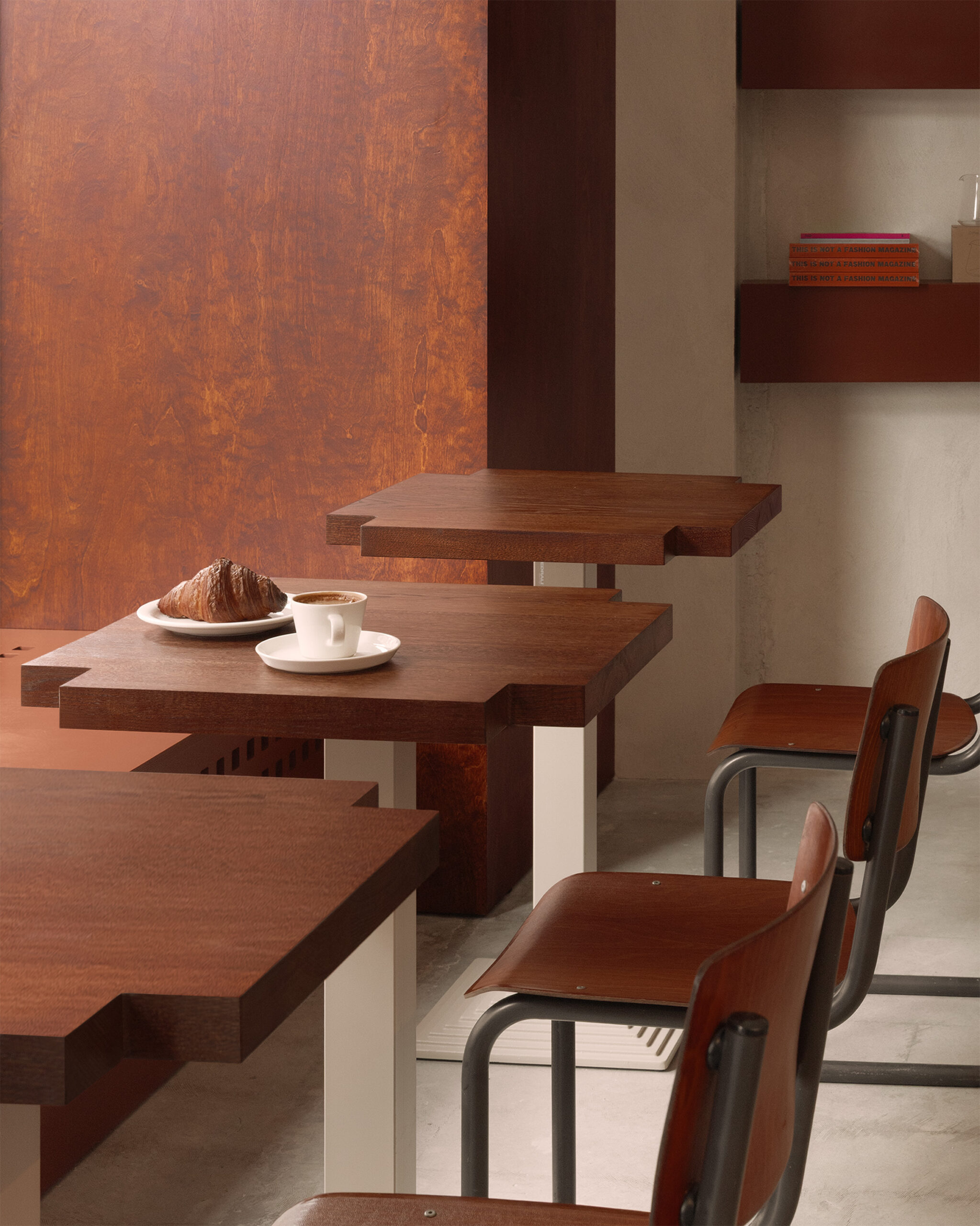
If the price of coffee and pastry is not too steep, the space itself favours quiet, solitary time. I will probably stop by again—most likely alone, with a notebook or book.
* The Latvian feeling—a bit more plentiful, a little more of this and that, some extra cookies and blended tones, slightly higher ceilings, slightly stronger coffee, and most definitely divi saldējumi instead of one ice cream.
MALLE JÜRGENSON is an interior architect at Laika, Belka & Strelka. Professor at Estonian Academy of Arts. Omnivore.
HEADER photo by Jana Klendere
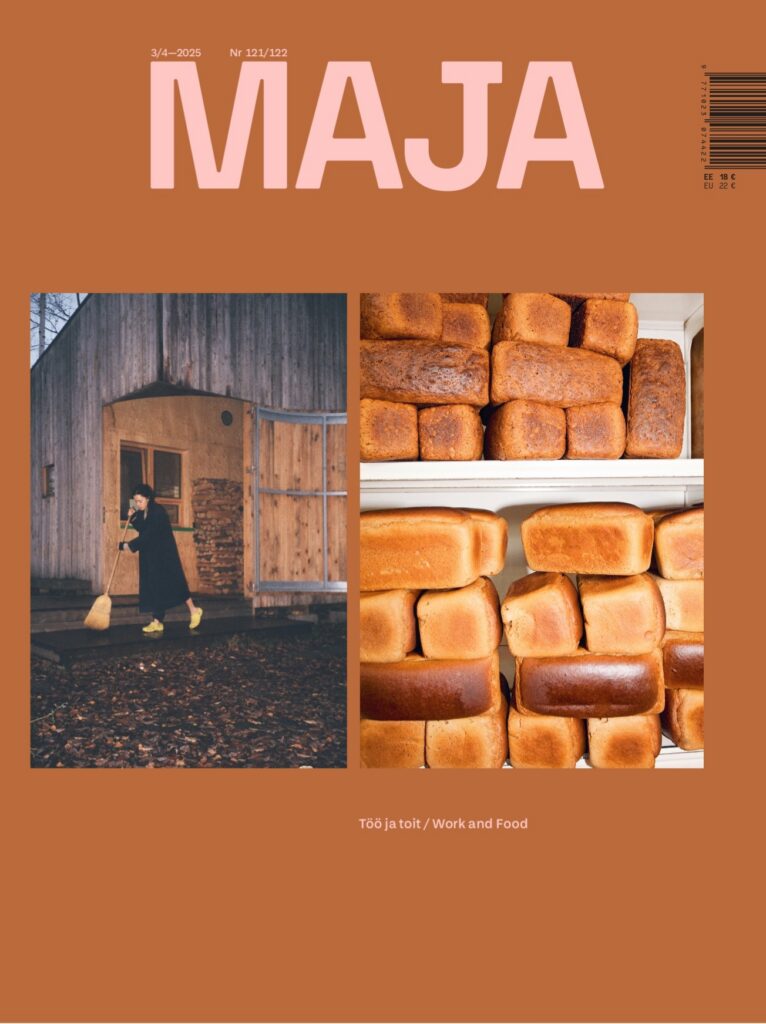
PUBLISHED: MAJA 3/4-2025 (121-122) with main topic WORK AND FOOD