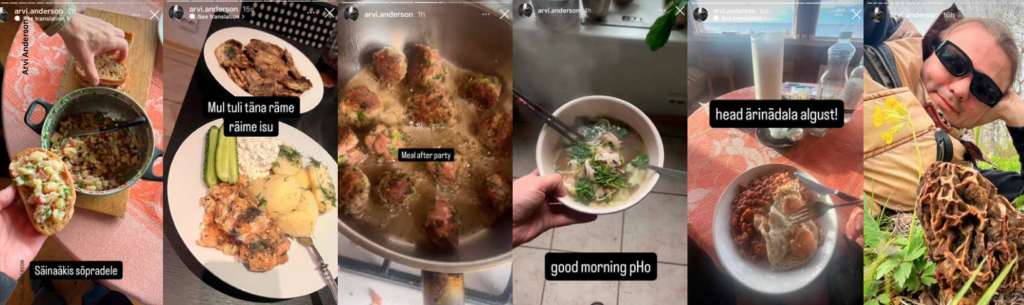
On a cold day like this, it is lovely to have a bowl of phở soup. I have never been to Vietnam myself, but I am happy when the flavours I serve manage to take someone back to a familiar place. A rather affordable way to take a quick trip, right? The flavours of phở are determined by several spices: ginger, star anise, garlic, clove, chili; might as well add some fennel and cumin. Good broth and thinly sliced carrots and chicken (or beef), which are added immediately before serving. At the bottom of the bowl, rice noodles, spinach, kale, coriander, and bean sprouts are already waiting. You finish it off with something sour, such as lime. This time I added a small splash of rice vinegar.
Yes, it is essentially chicken soup, but in my view made distinctive by the spices and the cuts. In a regular chicken soup, the vegetables and chicken come usually in larger chunks or cubes, which require a longer cooking time, whereas in phở, they are sliced thinly, and the other fresh ingredients are delicate as well—the hot broth cooks it all in an instant. Even the chicken does not need to cook for long, and if you slice the meat against the grain, it becomes especially tender. There is no need to keep boiling until everything is uniform.
*
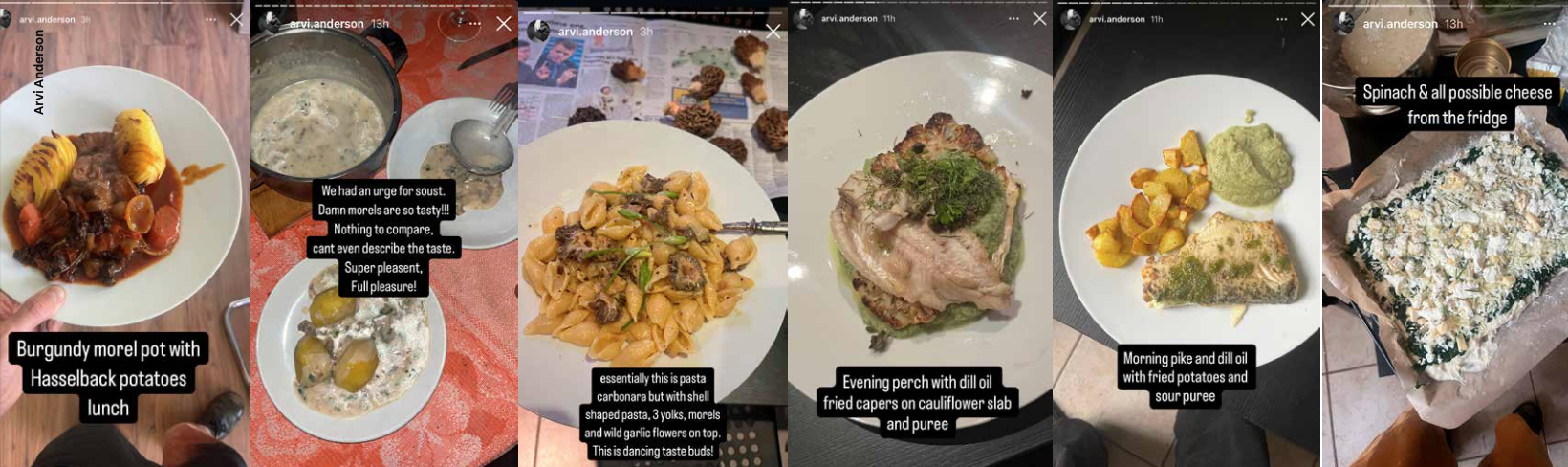
This spring I happened to come across some morel mushrooms. Mushrooms are usually picked in autumn, and I rarely join in. Morels, however, pop up in spring. It is much more fun to pick mushrooms in spring when there are also flowers.
Morels have a curious appearance that provides them with very good camouflage. You cannot really see them right away. But I happened to recall a childhood trip to Helsinki and a dinner reception with God knows how many courses, where several foods previously unknown to me were served, including morels (and boeuf à la tartare, which became an instant favourite). Morels are delicious and do not really taste like mushrooms—they are very aromatic and have a nutty undertone, I would say.
I had a theory that morels grow in very specific types of terrain. With this in mind, after several attempts I reached a good spot. You just need to know the terrain and then you will find them. I found so many that I ended up bringing back whole garbage bags of them. After I had eaten enough, I dried the rest in a big oven at my father’s place.
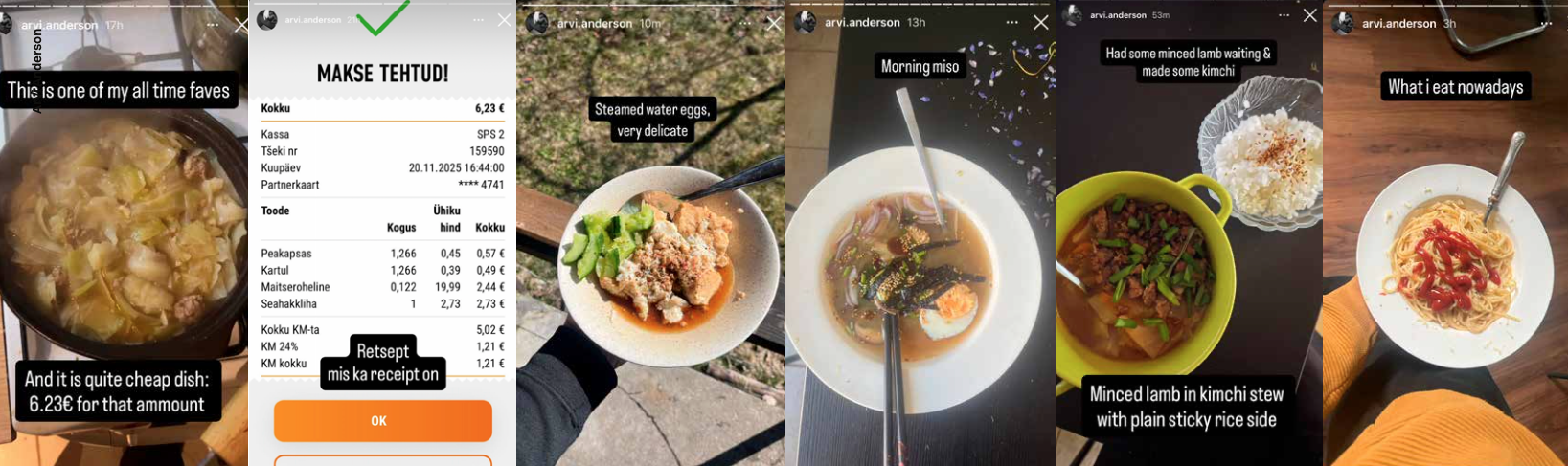
In spring and summer you can find sea kale along our shores. I pick up a few pieces almost every time I go for a walk. I admit it tastes somewhat bitter, although the very early shoots are milder. There was a year when I became interested in fermenting and making kimchi out of it. I gathered sea kale from the beach and also some wild garlic seed heads that appear around the same time. I surmised that the bitterness of the sea kale could be reduced by briefly steaming it. The greenish-grey plant takes on a very cool colour when steamed—deep green, almost neon! I salted the kale together with crushed wild garlic and chili, and left it to ferment. The result was a very interesting variation on kimchi. Marine kimchi. Definitely an acquired taste.
*
Since it is still cold, I have one more recommendation for warming up. If you do not like the traditional sauerkraut, a comforting alternative is kimchi stew. Regular napa cabbage kimchi works great here, especially the older kind that has fermented for a longer time. Just put it in a pot with water or broth and that is pretty much it. I made it with a piece of lamb that I had recently received as a gift, and it worked wonderfully. Cold-weather love in a bowl. It goes well with plain sticky rice.
ARVI ANDERSON is an architect.
PUBLISHED: MAJA 3/4-2025 (121-122) with main topic WORK AND FOOD