Laura Linsi talks to Keiti Lige, Elina Liiva, and Helena Männa to discuss whether the cornerstone in the renovation marathon is the concrete panel—or whether it is strong human relationships instead.
The apartment blocks built from Soviet-era prefabricated concrete panels are in dire need of renovation. Their planned 50-year lifespan has largely run its course, and although this surely does not mean they should be demolished now, they do require immediate care and attention—utilities need to be replaced, energy efficiency improved, structural deterioration halted, etc.
Over the last few years, Maja has looked into the potential of neighbourhood-based renovation1 as well as social issues that might be aggravated by renovation, such as segregation.2 We have also paid attention to prefab apartment buildings as architectural heritage—an aspect that should not be ignored during renovation.3 Keiti Lige, Elina Liiva, and Helena Männa—the authors of the Estonian pavilion Let Me Warm You at this year’s Venice Architecture Biennale—believe that the spatial quality of a renovated building should be at least equal to that of a new development. However, it cannot happen without a client who wants just that.
Let Me Warm You shifts the focus to the people living behind the concrete panels and their interrelationships by asking how to renovate in a way that actually improves the residents’ quality of life.
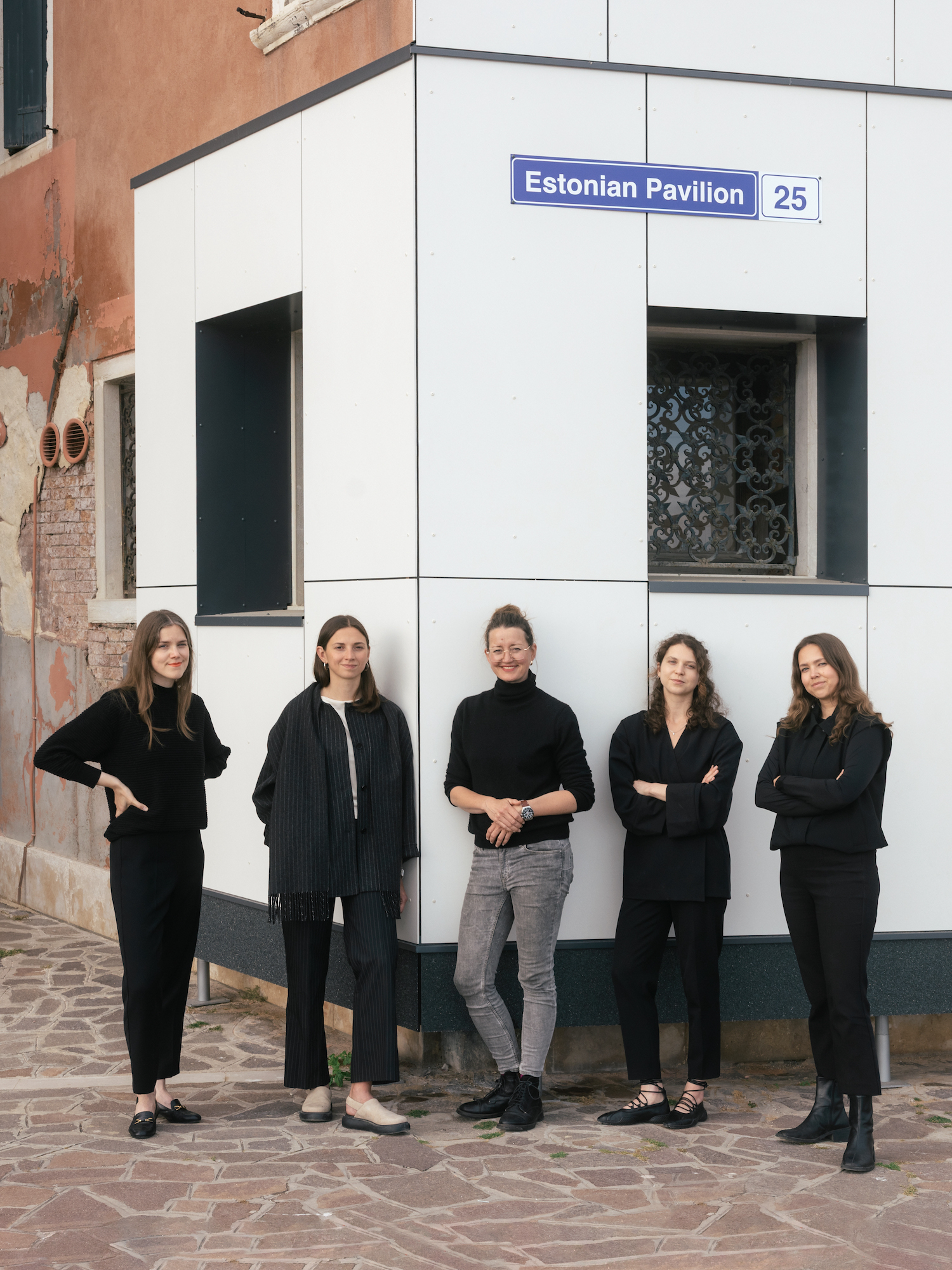
Photo: Joosep Kivimäe
Laura Linsi (LL): The Estonian pavilion Let Me Warm You and its catalogue touch upon issues that are well known to Central and Eastern European apartment block districts. You explore the topic with everyday stories told through a strange distorting mirror—A Script of the Tragicomedy of an Apartment Building. Could you say a few words about what inspired you to take this approach to renovation?
Keiti Lige (KL): Our project brings together two themes—we discuss the spatial paradoxes of mass renovation and the human relationships that underlie them. Over several years, we have developed [as supervisors and researchers at the Estonian Academy of Arts (EKA)—Ed.] architectural solutions for buildings and neighbourhoods undergoing renovation, and also proposed them to apartment associations and potential clients, but we keep running up against the same problem—the solution should be something that the resident or the client actually want.
Elina Liiva (EL): With the exhibition, we are highlighting the contradiction between large-scale international goals, such as achieving climate neutrality,4 and the daily worries of the average apartment block resident who is not constantly thinking about climate issues.
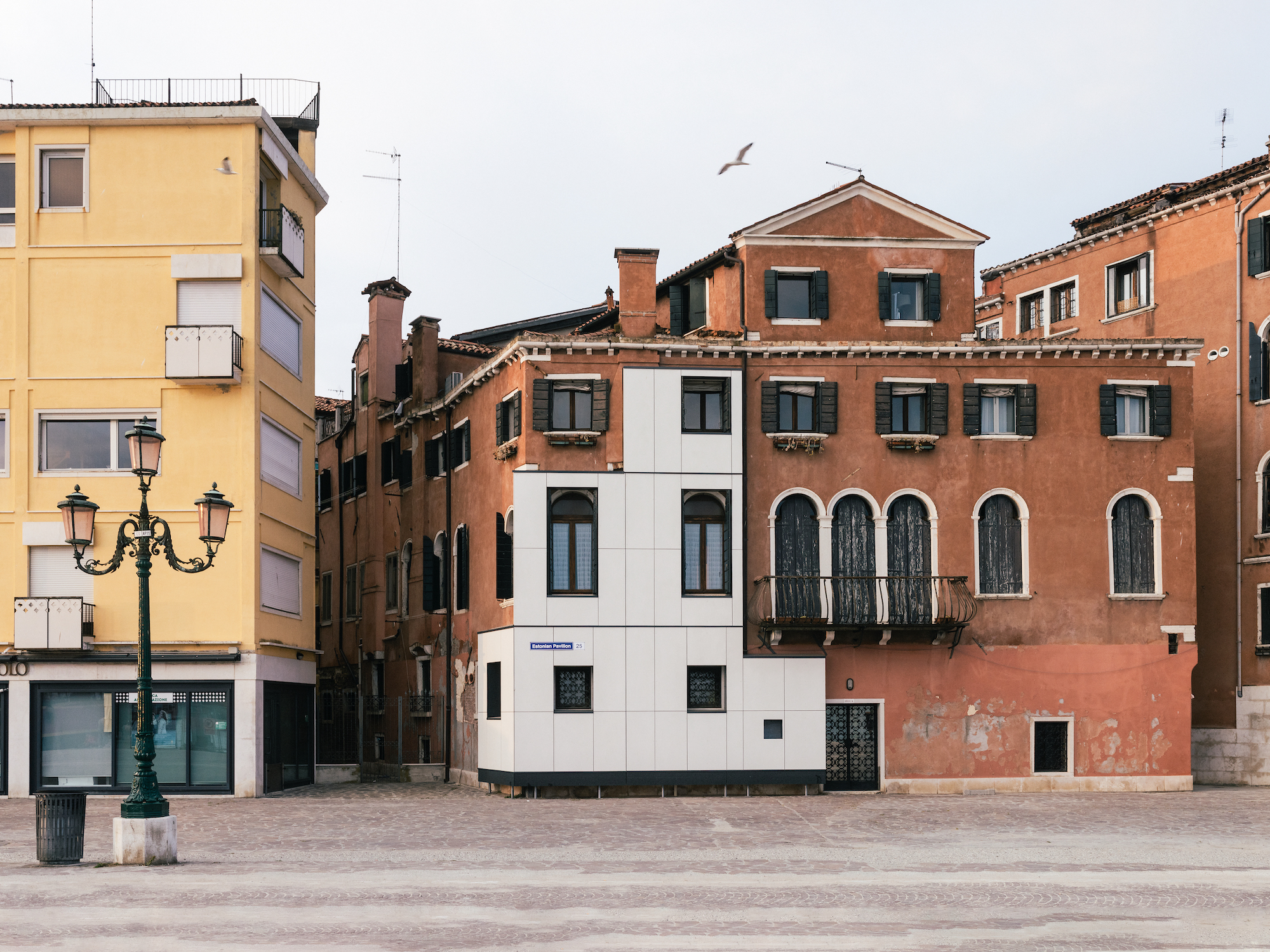
Photo: Joosep Kivimäe
Helena Männa (HM): Why focus on the resident in the first place? We are interested in the culture of collective action. The situation in Estonia is such that 96% of housing is privately owned; thus, a single apartment building slated for renovation might have up to 300 owners who see each other only at infrequent apartment association meetings and then need to decide on what to do. I am afraid that most people tend to have rather negative perceptions of these meetings—they are seen as simply a lot of bickering about what the garbage disposal solution should be or who should clean the stairwell. But now, all of a sudden, they need to decide whether to renovate, and the decision process is led by an apartment association chair who is often not even remunerated for this task. Some charismatic chairs might manage to pull through, while others cannot even get people to show up. The residents need to get together to make big decisions, but they do not even have anywhere to meet—they are forced to use some room in the basement or a classroom in some nearby school.
EL: In general, people living in the apartment buildings in need of renovation do not form strong communities.
HM: They do value their homes, but they see these homes as beginning at their own apartment door.
LL: Helena and Elina, your academic work has focused on shared ownership homes and cooperatives. Could we not say that the apartment association system in Estonia has similarities in its governance? Owners get together to decide the fate of their shared living space. What is so different here?
HM: It is all about motivation. In the case of cooperative action, people have agreed on a common goal—they want to manage their housing collectively. However, current apartment associations suffer from a gap—in some cases, people have been living together for 50 years but never had to make any major decisions together until now. Ave Habakuk pointed out in an article about apartment associations that people do not come together to discuss but only to vote. There is no discussion. It seems that most people consider it a tedious obligation. There is a lack of responsible and prudent behaviour, both at the level of apartment associations and at the level of individual residents.
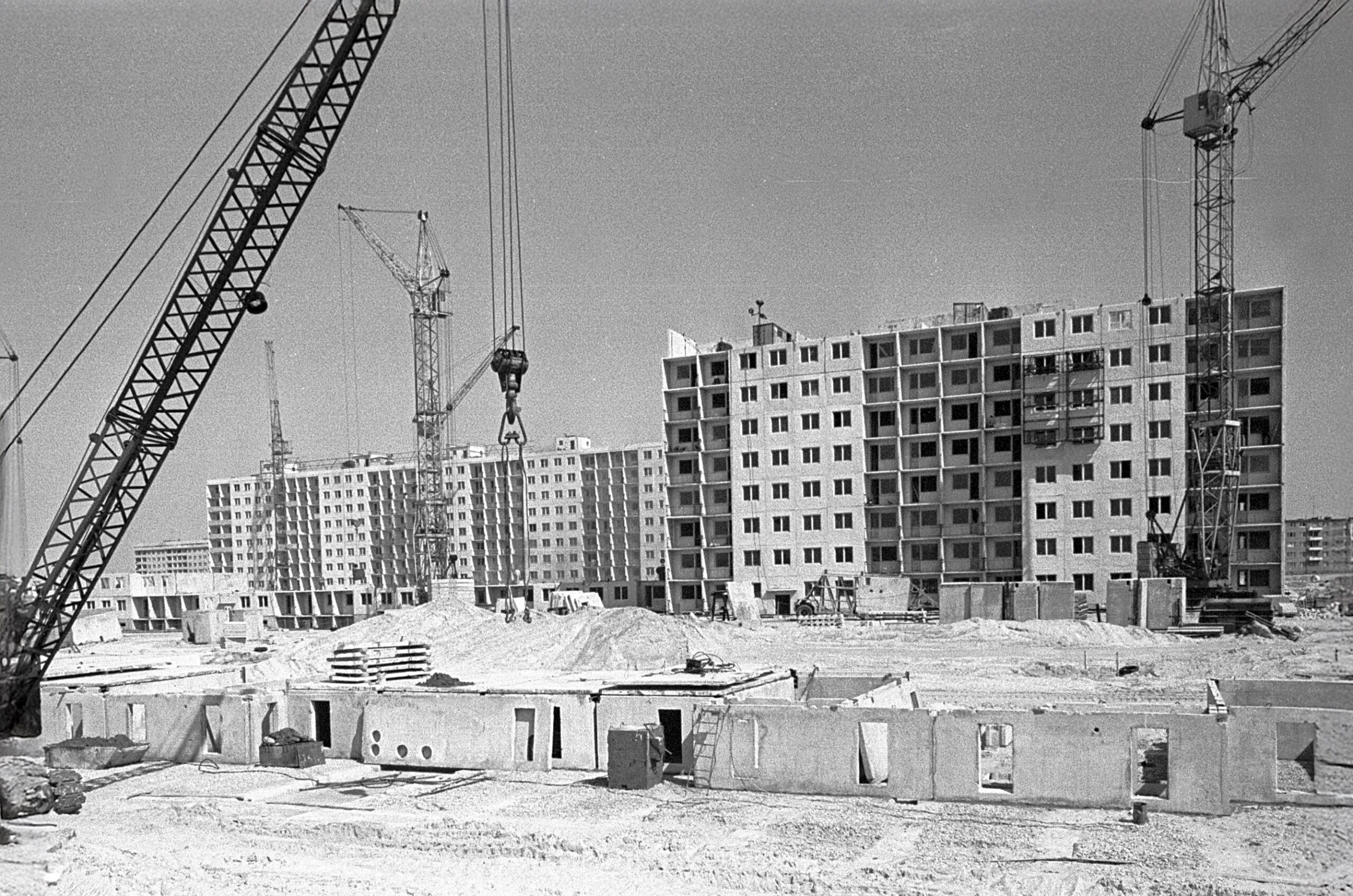
Photo: Viktor Salmre, ERM
LL: How have the residents responded to the architectural solutions you have developed for their buildings in EKA? I imagine that implementing these ideas is mostly hindered by the cost.
HM: Cost is certainly one of the factors. Every apartment association encompasses many different people—some members consider 100 euros to be a huge sum, while others do not. But more important is the lack of motivation. The spatial quality of a renovated building should be equal to that of a new development. Renovation should not be limited to replacing the heating system or adding ventilation in order to receive a better energy label, but also provide an opportunity to reflect or dream a bit—perhaps consider enlarging the windows, doing something with the courtyard, building a rooftop terrace.
EL: What are the boundaries of one’s home? Are they marked by the apartment door, the stairwell, the surroundings of the building? The question is whether people are able to imagine certain spatial solutions or not. In apartment association meetings, people are mostly shown finished designs or even just Excel spreadsheets; there is little discussion of new spatial opportunities. Different options or examples do not get any mention. They only consider the colour of the façade or the type of windows.
KL: In Estonia, 90% of the 14,000 apartment buildings in need of renovation are concrete panel buildings from the 1970s and 1980s. This is where our focus lies. We have now realised that the process should not start with, say, enlarging the windows, but rather building a culture or community. Perhaps it would be better to begin with the shared spaces that lie between the buildings—to introduce new activities, such as a neighbourhood bar, into this monofunctional world. You do not need to make big changes right away—instead, you should encourage and empower the residents simply to dream. Currently, they do not even have a space where they can meet their neighbours. Their first encounter should not be at the apartment association meeting where everyone shows up with their own agendas and fears.
Then again, we also need to think of whether the burden currently placed on apartment associations is fair in the first place. We were interested in whether we could find any alternative renovation models. We talked with developers as well as city and state officials to find possible compromises. The largely underused space between buildings in apartment block districts is often owned by the city and there is little that the residents can do there. One idea that has been floated is to rent or transfer that land to the developer who would then renovate 3–4 nearby buildings in return.
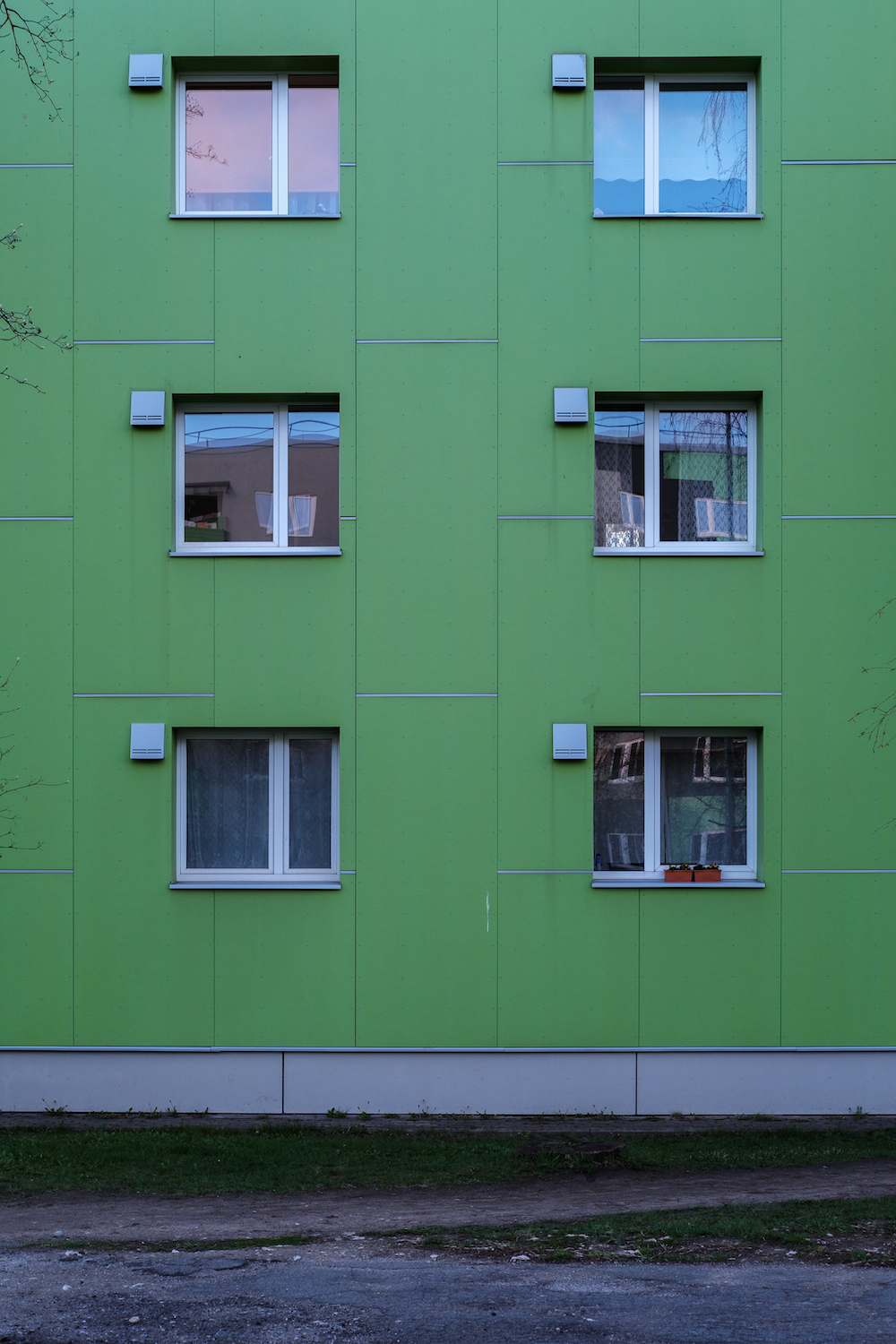
Photo: Päär-Joonap Keedus
LL: Did you find any developers willing to undertake something like this?
HM: The developers are willing only if all the people living there move out. The developers do not want to deal with the apartment associations or the residents. If there are too many parties involved, it becomes too complicated for them.
LL: Are there any construction or spatial planning related obstacles to renovating concrete panel apartment buildings?
KL: Much depends on the building and its construction quality. Every building needs to be reassessed individually. Some buildings allow for additional floors while others do not—for example, the rebars within the concrete panels might already be corroded. Such buildings might very well collapse at some point.
Then again, this provides an argument that is used to sow fear at apartment association meetings. ‘You must agree to renovate,’ they say, ‘otherwise the value of your property will drop’. One resident shared with us how they were pressured into agreeing, all the while being unsure what they were agreeing to. Mistrust, confusion, and fear push people into a corner.
LL: Have you speculated about when renovation becomes a necessity? If the rebars within concrete panels are already corroding, how long until we get to the point at which the structure might no longer hold?
HM: The quality of panel buildings varies widely. They are made from concrete, after all, and if the rebars have not been exposed to moisture, they will hold. About 10–15 years ago, there was much talk in the media about panel buildings having reached the end of their lifespan, and about the need to start demolishing them. However, this has been definitely refuted. The planned lifespan of a building might be 50 years, but after this time has passed, you just need to reassess its condition.
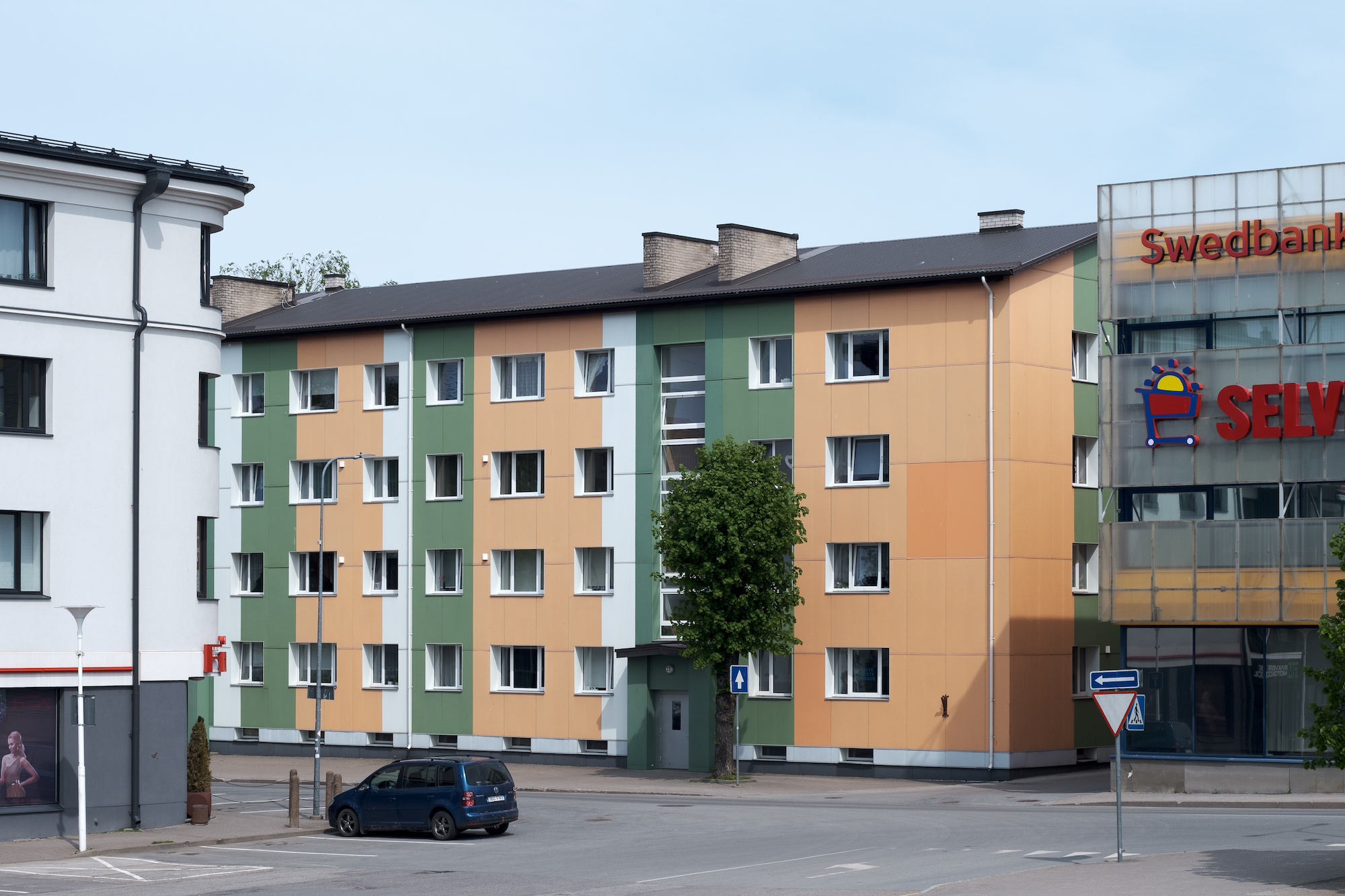
Photo: Päär-Joonap Keedus
LL: It seems to me that Soviet-era apartment buildings carry a certain stigma and this is also one of the reasons why their potential goes unnoticed.
EL: People at large who are not engineers or architects do not generally think about living in a concrete panel building. They are just living in their homes. The stigma is intra-professional.
KL: Most apartments in panel buildings have very good spatial plans—the bedrooms are larger compared to those in new developments; the kitchen is separate from the living room; in Mustamäe, many of the apartments have double aspect, that means sunlight can get in from several directions. The younger generation sees these neighbourhoods rather as affordable places for starting their independent lives. Our project taught us how the residents value these places for what they currently are; for the walks in the nearby nature and the birdsong. The potential of apartment block districts is enormous, as they are situated near the city centre. Instead of developing new residential districts on the outskirts, we should develop the areas within the city. Renovation—using what is already there—is the only way forward.
KEITI LIGE, ELINA LIIVA and HELENA MÄNNA are architects and curators of the Estonian pavilion Let Me Warm You at the 2025 Venice Architecture Biennale.
LAURA LINSI is an architect at LLRRLLRR, a lecturer at the Estonian Academy
of Arts and the University of the Arts London, and the editor-in-chief of Maja.
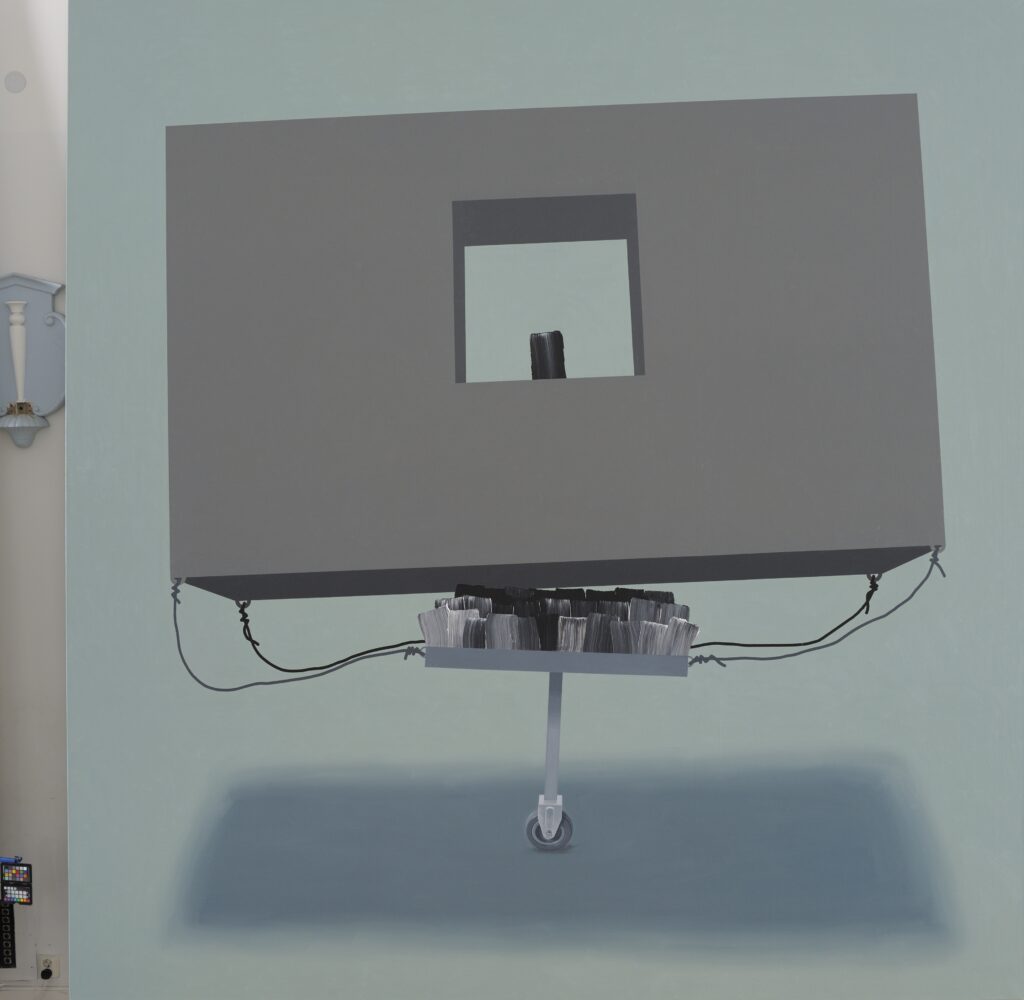
HEADER: Kaido Ole, Suur Sotsiaalne Vaikelu I (The Great Social Still Life in Estonian), 2011, Estonian Art Museum
PUBLISHED: MAJA 2-2025 (120) with main topic CONCRETE
1 Lauri Lihtmaa and Murel Truu, ‘More Efficient Together. Area-based renovation of residential buildings’, Maja 113 (2023).
2 Lauri Lihtmaa, ’Side Effects of the Renovation Wave’, Maja 116 (2024).
3 Diana Drobot and Päär-Joonap Keedus, ‘Architecture in the Renovation Marathon. The race of energy efficiency, modernist heritage, and spatial integrity’, Maja 113 (2023).
4 The European Union aims to achieve climate neutrality by 2050 and is supporting the renovation of apartment buildings for this purpose. Thus, Estonia intends to renovate all the buildings pre-dating the year 2000 by that deadline.—Ed.