Concrete is durable but resource-intensive. Therefore, in the context of climate crisis and resource depletion, we must make sure we use it in an informed and responsible way, writes Kadri-Ann Kertsmik.
At the end of the 19th century, as cities began their rapid growth, a significant shift occurred in the field of construction. Rising land value and the need to use space more efficiently led to the search for solutions that would enable building upwards. One such solution was to reinforce concrete, thus combining the compressive strength of concrete with the tensile strength of steel. The advantages of reinforced concrete, such as structural efficiency, fire and weather resistance, architectural flexibility, and cost-effectiveness, led to the material spreading across the world and often replacing both masonry and steel structures. However, today it is known that building with reinforced concrete requires large quantities of raw materials and its production consumes a lot of energy, meaning that the resulting buildings are among the largest contributors to the negative environmental impact of the construction sector.1
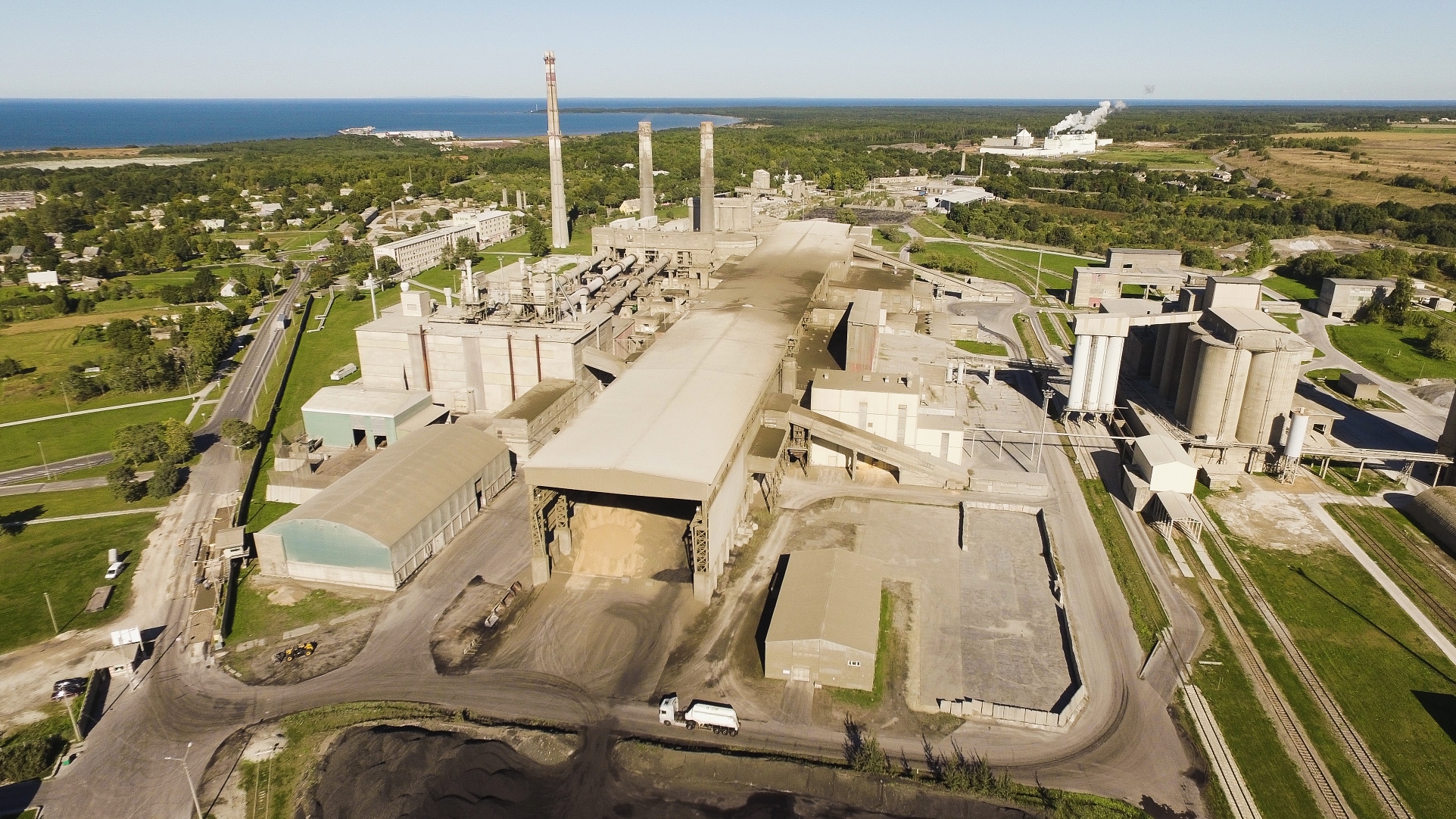
Photo: Kunda Nordic Tsement
The use of reinforced concrete structures continues to be the most common structural solution.2 Over 90% of the 40 built or planned buildings in Estonia that I have analysed for a comprehensive life cycle assessment3 are made of concrete—concrete blocks, autoclaved aerated concrete, monolithic or precast concrete elements. They include 30-storey high-rises, buildings with long spans, and compact office spaces; both over-dimensioned and precisely dimensioned solutions.
The ease of erecting concrete buildings, widespread knowledge of the process, and relatively low construction costs make replacing the combination of concrete and rebars difficult in the current market conditions. Thus, reinforced concrete remains one of the most common structural solutions, especially in dense urban areas. How can we strike a balance between the advantages of reinforced concrete and its significant environmental impact? Should we focus on material recycling, structural optimisation, or wholly new formulas for concrete that would be capable of capturing carbon? Or does the solution lie rather in designing and planning our buildings so that they would remain adaptable even half a century after completion, i.e., after their planned service life?
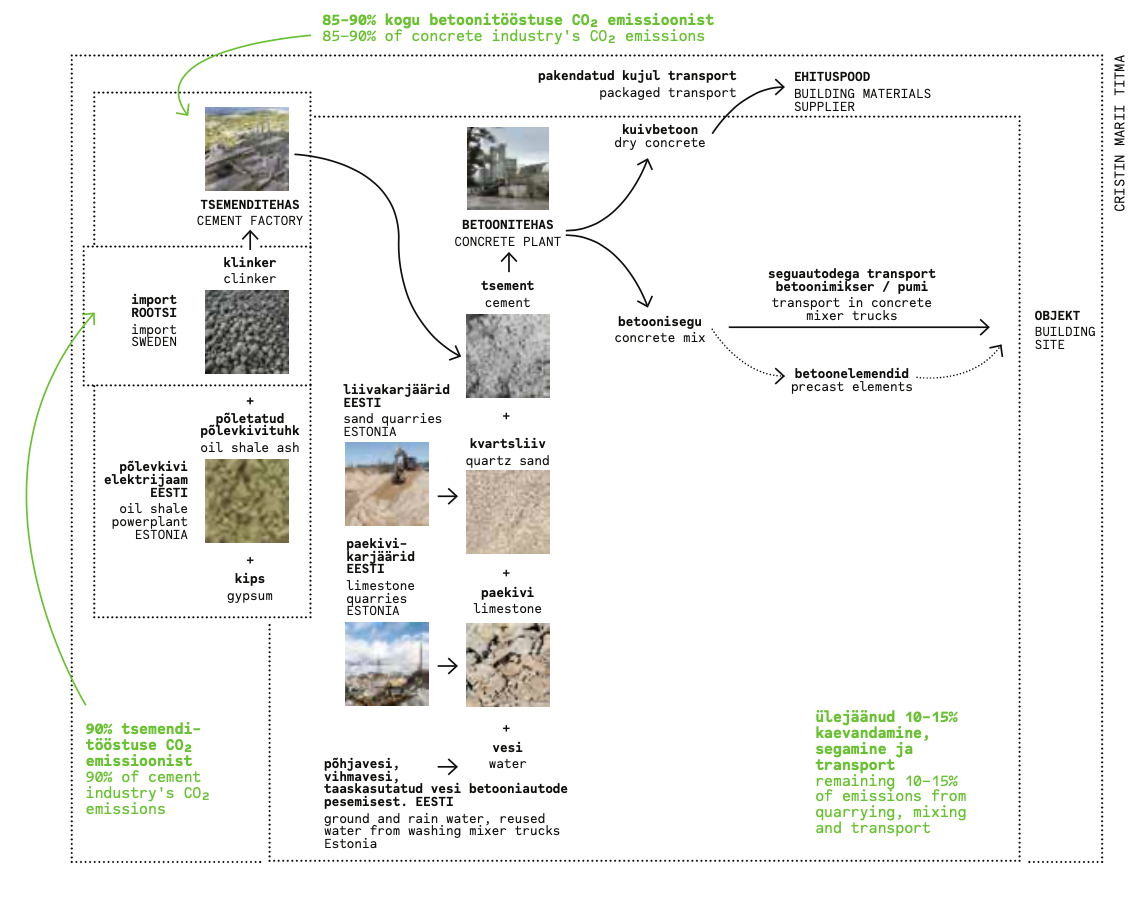
What does concrete consist of?
Concrete production is resource-intensive, requiring not only cement but also large quantities of sand, gravel, and water. These seemingly simple materials are sourced through global supply chains. Take, for example, the controversial megaproject The Line that is being built in the Saudi Arabian desert—the sand for the concrete still needs to be imported from outside the country since desert sand is unsuitable for concrete production. In Estonia, high-quality crushed stone can only be obtained from Harju County,4 and cement is already imported from abroad.
The environmental impact of concrete and concrete products varies by country. In cold climates, for instance, low air temperatures make it necessary to heat spaces where concrete is drying and curing, which means that additional energy is required. In conducting life cycle assessments, I have observed that the numbers for Estonia and Scandinavia could differ by as much as two times. The difference is often determined by the method of clinker production and the energy intensity of the manufacturing process. The nuclear energy used in Finland, hydroelectric energy used in Norway, and wind energy used in Denmark have less environmental impact than the oil shale energy used in Estonia.5 Thus, I have observed that those Estonian producers who get their cement from abroad but maximise their use of renewable energy or increase the share of reusable binders can achieve a significant advantage in the environmental impact calculations of their products. Recently, I worked on a building project that was in the main design phase. A warehouse of over 5,000 m² was to be built mainly from two types of heavy concrete and steel beams. In order to reduce emissions, I suggested increasing the share of recycled materials in the aggregate for the concrete mix and using a lot of reusable steel. This made it possible to cut the building’s carbon emissions by nearly a fifth.
Or does the solution lie rather in designing and planning our buildings so that they would remain adaptable even half a century after completion?
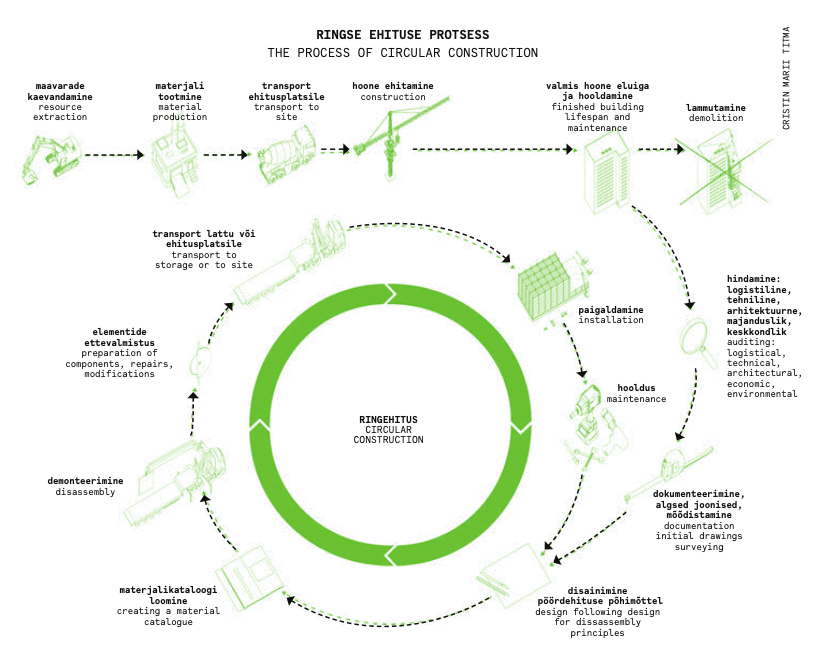
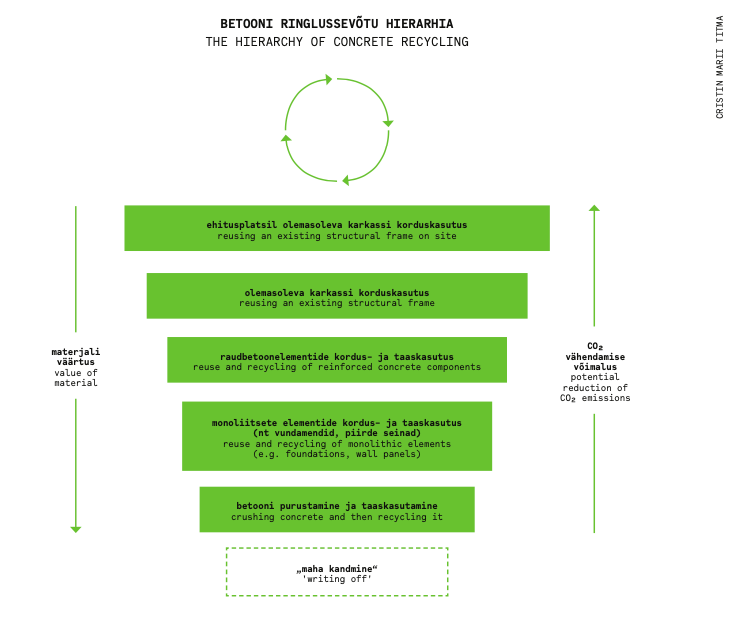
The importance of the designer
Architects and designers play a central role in using concrete more thoughtfully since early-stage decisions on building form, material selection, and structural dimensions strongly affect the building’s lifespan and environmental impact. Although specific building materials are chosen only after the form of the building has been determined, and the suppliers of these materials are chosen even later, in the final construction phase, the decisions with the greatest bearing on the building’s environmental footprint are made during the writing of the brief and in the concept design phase, and concern the building site, the spatial programme, and the load-bearing structures. Thus, tackling a building’s environmental impact should not be left solely to material producers—the greatest influence lies with the authors of the design. We need to reflect on what kinds of buildings we are building, for whom, and how large they need to be.
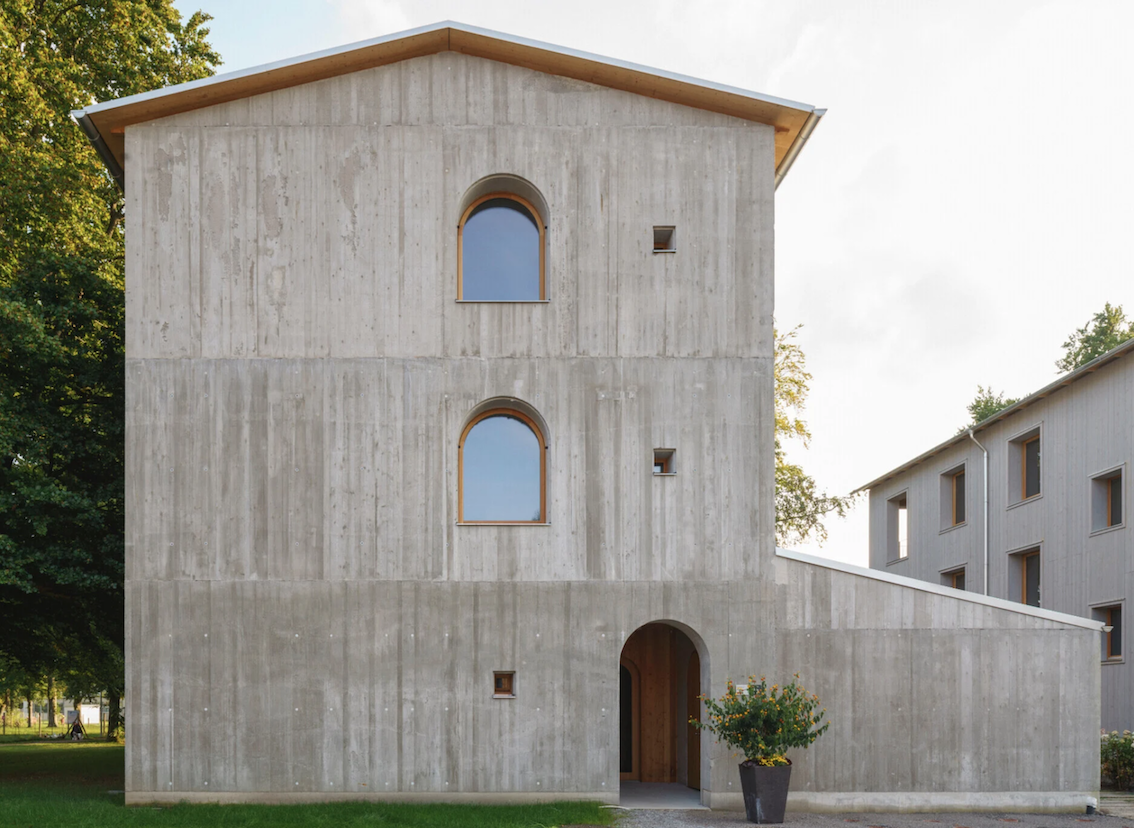
Photos: PK Odessa
The initial service life of a building is estimated to be 50 years—quite a long period that can be difficult to grasp within the few years spent on the design phase. Furthermore, we should keep in mind that the 50-year span represents only the initial usage period, after which the structural components are reassessed, and the building can often remain in use.6 How can a solution built today be adapted to future needs that are not yet known? Concrete structures such as post-and-beam construction systems tend to increase a building’s flexibility, and hence the longevity of the existing structural frame that can be repurposed for rooms with new functions without demolishing the entire building.
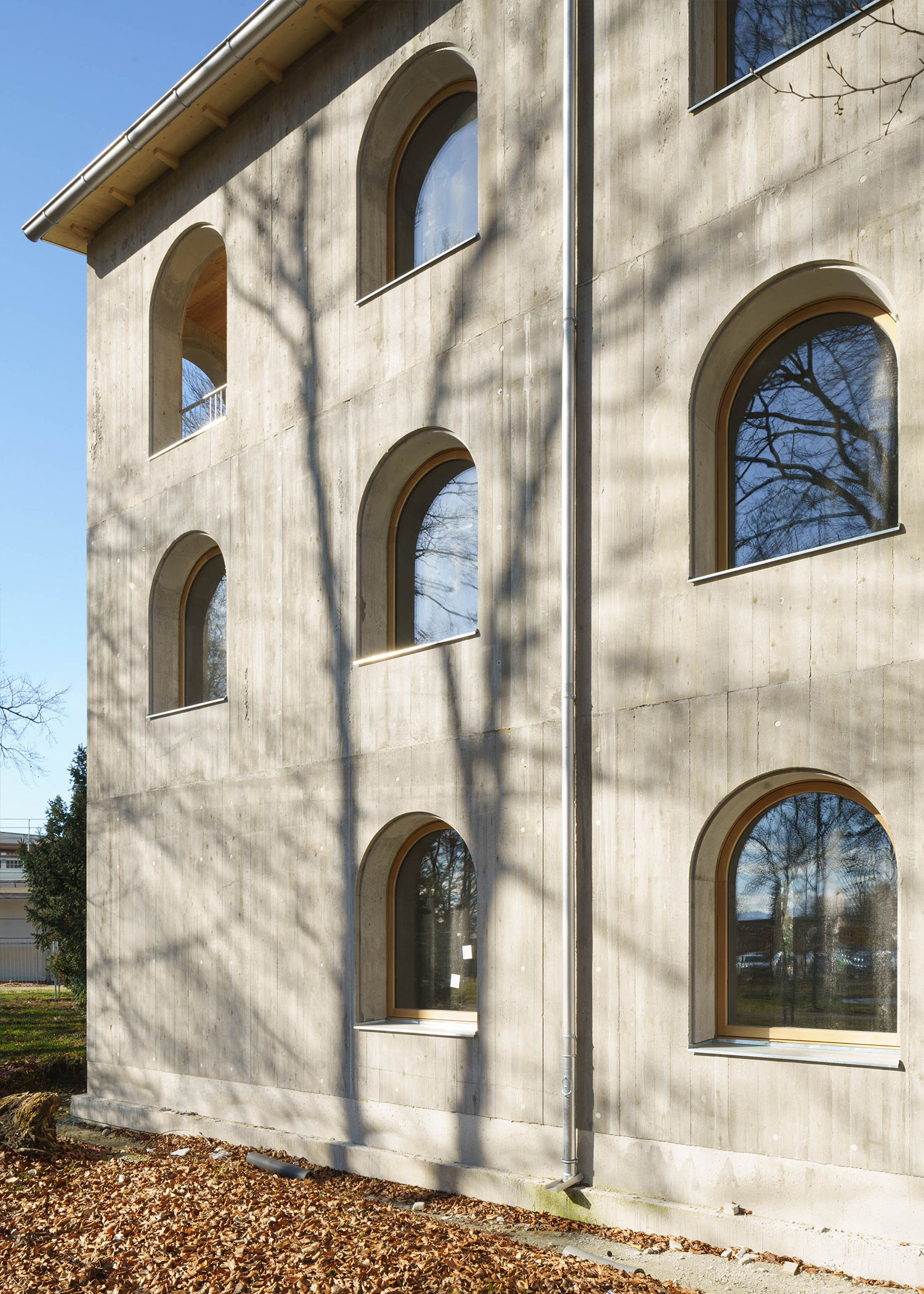
However, even if repurposing the existing concrete building turns out to be impossible, the recovered materials can still be used elsewhere. The fewer materials there are in a structural layer, the easier it is to disassemble it. This highlights one of concrete’s general advantages over composite materials—cast-in-place monolithic concrete, for instance, may be easier to recycle in the future than sandwich panels.7
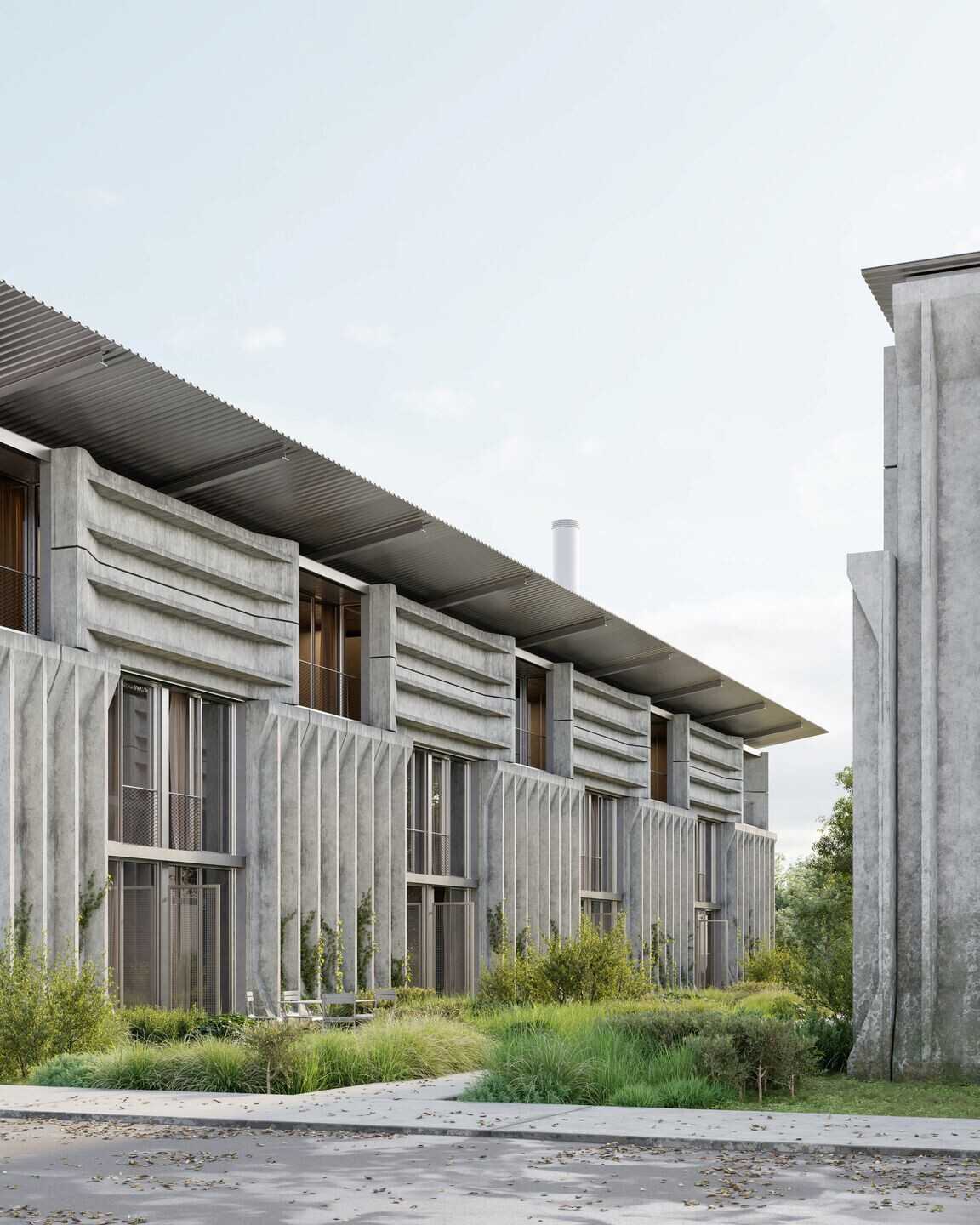
Photos: Parabase
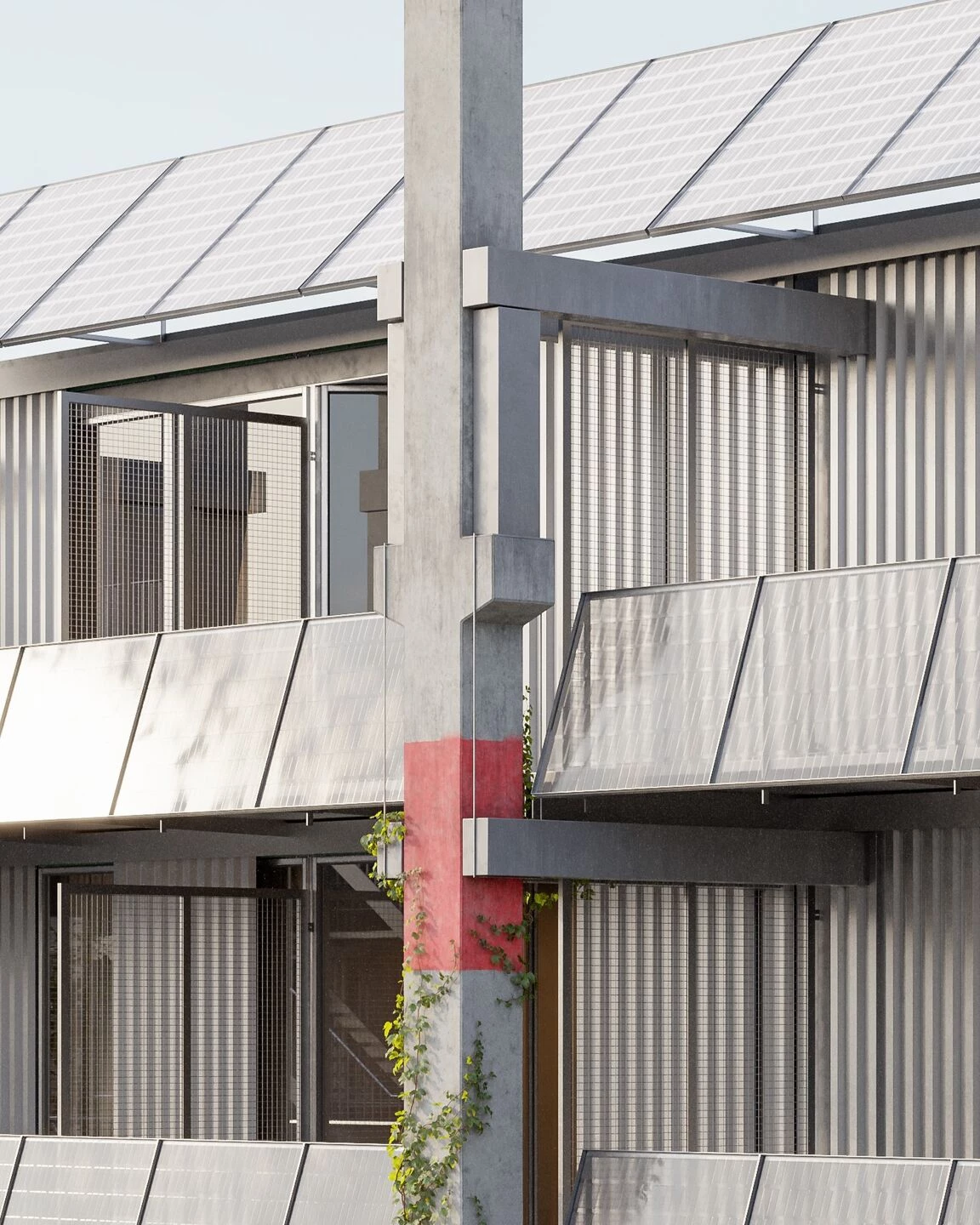
All in all, there are plenty of things that the designer can do in order to reduce the harmful environmental impact of (concrete) buildings.
- Design the building so that its functions could be changed without demolishing the main structure.
- Optimise the use of materials and more specifically concrete so that it is used only where it is truly needed—e.g., in rooms with long spans—while considering lighter alternatives with a smaller carbon footprint elsewhere.
- Foster reuse and recycling by designing buildings with logically removable and reusable parts and materials.
- Analyse the carbon footprint of the project at an early stage, i.e., use life cycle assessment as a design tool.
- Prefer materials that are locally produced and have a smaller environmental footprint.
Limiting the use of construction materials does not mean avoiding construction or renovation but approaching these activities in a more thoughtful and strategic way. If the design process begins with a clear goal to create long-lasting and adaptable solutions, it is possible to reduce carbon emissions and make the built environment more sustainable.
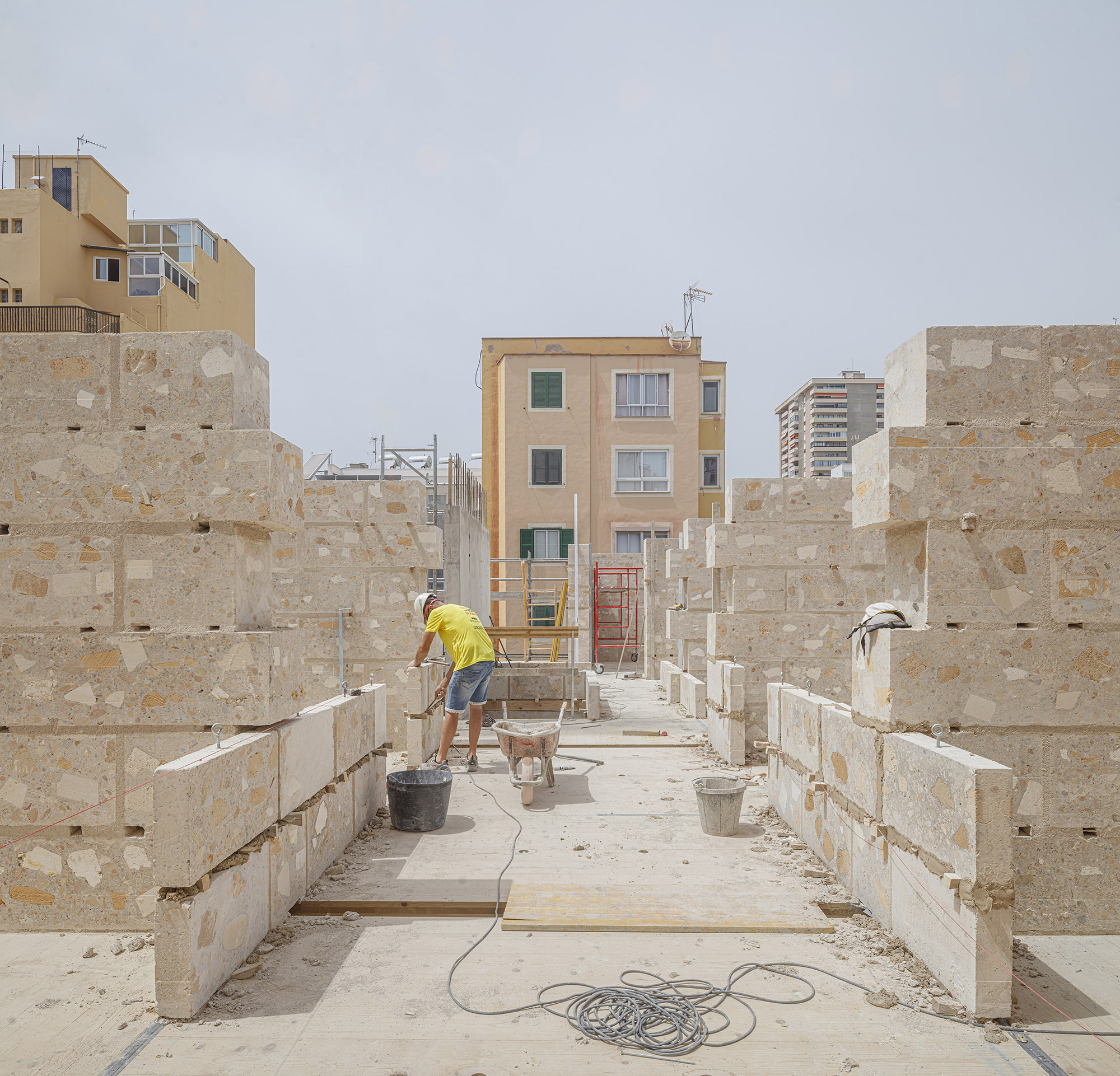
Photo: Adrià Goula
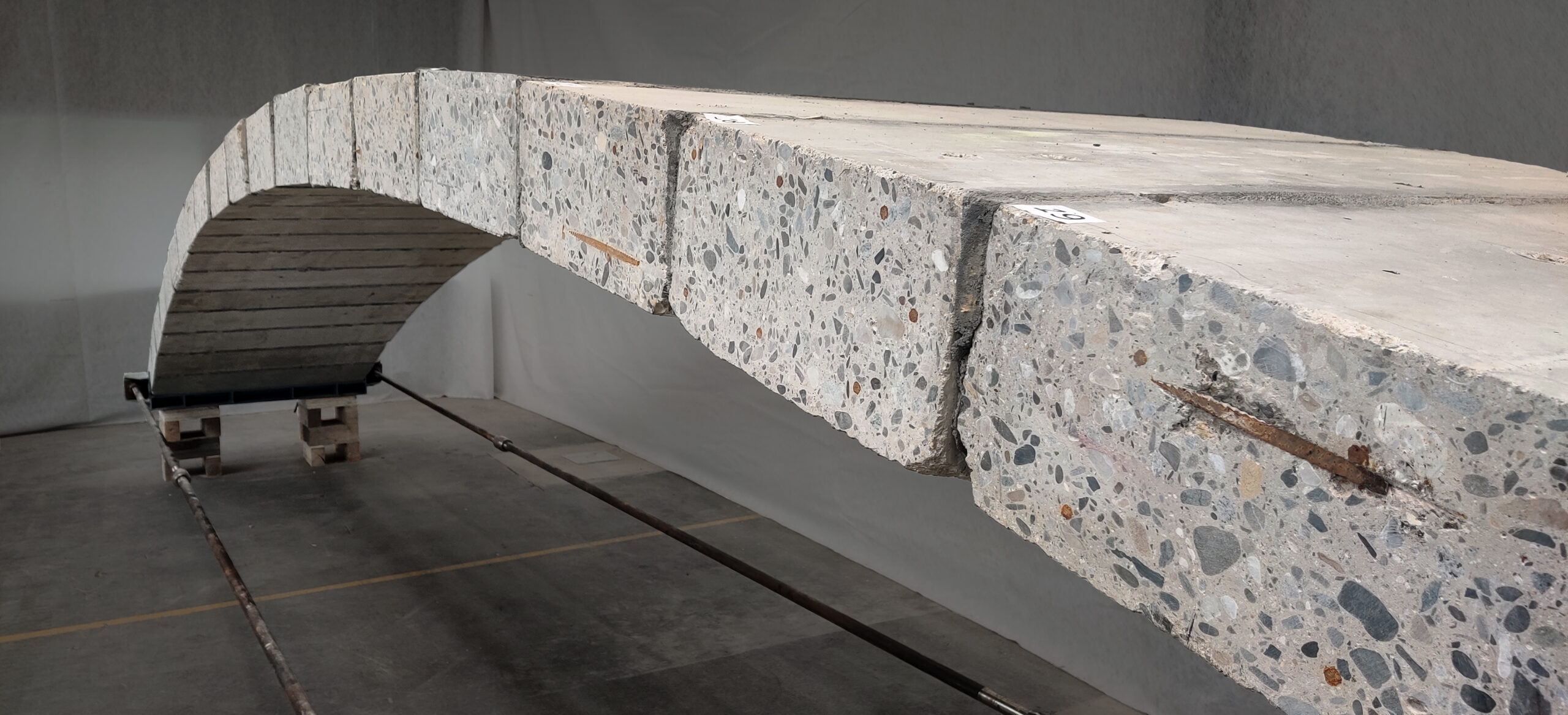
Photos: EPFL

Adapting concrete
The widespread adoption of concrete in both buildings and infrastructure was crucial for the history of modern architecture and urbanisation. Now that the climate crisis and resource depletion force us to make important decisions, we must make sure we use concrete in an informed and responsible way. The future of concrete use is not necessarily only about restrictions and reductions. Truly sustainable solutions are born from combining thoughtful design, innovative material use, and local resources. Every building, whether small or large, can be an example of responsible construction if one focuses on flexibility and adaptability. Thoughtful use of concrete enables us to create durable, environmentally friendly, and functional spaces that respond to our future needs. Architects and engineers can take lead by designing buildings that meet the expectations of both today and tomorrow. This is a challenge that calls for knowledge, creativity, and courage to make informed choices.
MARI-ANN KERTSMIK is an architect. As a practitioner, researcher, and policymak- er, she is helping to create sustainable built environment.
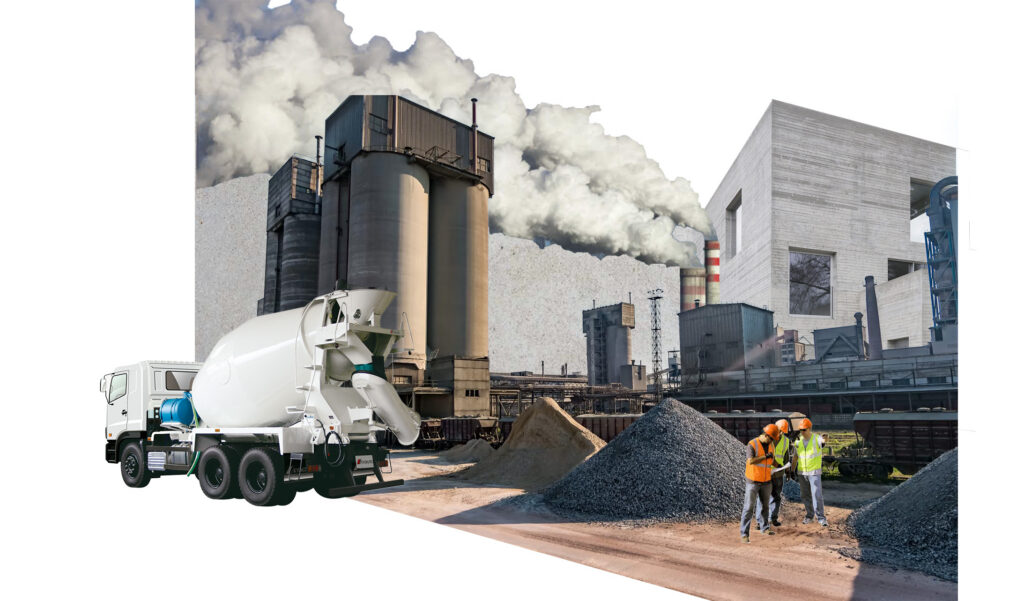
HEADER collage by Cristin Marii Itma
PUBLISHED: MAJA 2-2025 (120) with main topic CONCRETE
1 Nicholas Lippiatt, Tung Chai Ling, and Shu Yuan Pan, ‘Towards Carbon-Neutral Construction Materials: Carbonation of Cement-Based Materials and the Future Perspective’, Journal of Building Engineering 28 (March 2020).
2 Magdalena Osial, Agnieszka Pręgowska, Sławomir Wilczewski, Weronika Urbańska, and Michael Giersig, ‘Waste Management for Green Concrete Solutions: A Concise Critical Review’, Recycling 7 (2022): 37.
3 Life cycle assessment (LCA) consists in assessing the construction materials as well as the energy needed for maintenance, replacement, and use during the building’s initial 50-year service life.
4 ‘Harju maakonna maavarade teemaplaneeringu koostamisega seotud dokumendid’ [‘Documentation for the Thematic Spatial Plan for Mineral Resources in Harju County’], https://www.riigiplaneering.ee.
5 ‘Energeetika’, https://www.kasvuhoonegaasid.ee.
6 W. P. S. Dias, ‘Factors Influencing the Service Life of Buildings’, Engineer: Journal of the Institution of Engineers, Sri Lanka, 46, no. 4 (2013): 1.
7 Fernanda de Andrade Salgado and Flávio de Andrade Silva, ‘Recycled Aggregates from Construction and Demolition Waste Towards an Application on Structural Concrete: A Review’, Journal of Building Engineering 52 (July 2022).