CHARACTERS:
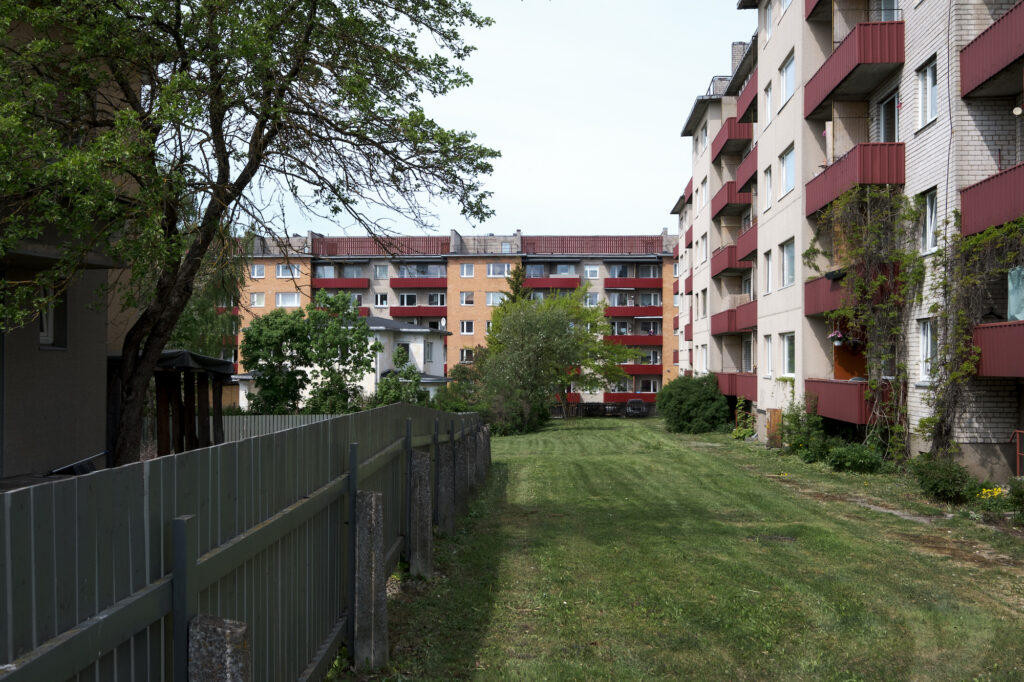
Pensioner: A nostalgia-prone elder of the tenement who wants to keep the costs of living and construction as low as possible. Afraid of change, doubtful of novel solutions. Barely accepts the need for any renovation. As a result, often considered bothersome by the other residents. Chorus: Three residents who represent a chorus. Easily influenced by each other’s opinions. These opinions usually vary from wall to wall—sometimes they are for, sometimes against renovation, depending on their mood or the weather.
City Official: Stands for the interests of the City. Would like these buildings and the city as a whole to be aesthetically pleasing, but usually gets bogged down in bureaucracy or is thwarted by constant lack of funds. This often makes them seem like an obstacle to other people.
Engineer: Hopes to achieve the greatest energy savings possible during the renovation. Employs all of their skills and proficiencies to reach this goal, usually ignoring everything else on the way. The common obstacles to their dreams are the Architect and the economic situation of the
residents.
Architect: Sees great spatial potential in the process of renovation. Very imaginative, especially when thinking of all that could be achieved. Certain about what to do, what the residents need in order to live their best lives. However, often ends up in conflict with the residents who say they are already happy with their homes and do not want any major changes.
Tenement: Represents a group of residents in the abstract as building(s). May be for or against renovation, depending on the text.
Resident: A person living in the tenement. In the texts they
take many forms, representing various types of people.
I FEAR OF CHANGE
The monologue of an elderly resident
Scene: The Pensioner, alone in her apartment, is making coffee while looking at her plants that are planted into butter boxes on the windowsill. Lost in her thought, she is staring out of the window. The chorus in the adjacent apartments sit at their windows and follow along with the Pensioner’s contemplations.
The Pensioner is imagining the next association meeting.
Pensioner: Excuse me. I’d like the floor for a moment, please. If you please. I have something to say… because I live here. I do. Like all of you. I’ve lived here a long time.
Chorus: The longest time, yes, we’ve lived here the longest time. You tell them!
Pensioner: Well… you… you talk about renovation. In these meetings, I mean, you talk about all these… costs and benefits, and you show complicated ‘spreadsheets’ on that screen of yours, and you talk about a… future. A future after this big and expensive undertaking. But uh… what future? What future is there for me?
Chorus: What future lies ahead for us, yes, what future lies ahead? You ask them!
Pensioner: I don’t mean… to be morbid, but you’re asking me to put my last cents into a construction… with a result I may not even see. What benefit is that? I’m barely making ends meet as it is. Do you think the pension is sufficient… for-for anything? And it gets smaller and smaller. All the time, smaller, while everything gets more expensive. I go to the store… and all the prices have
gone up. And… it’s not only me. There are many… old folks. In this building. Some can’t even attend this meeting, that’s how hard it is for us. Struggling to get by. So… even I struggle, yes, it’s my apartment, but I still have to pay so much. On the brink of poverty. My children barely come to visit… and these costs you talk of… the utilities already got more expensive this year, yes, the repair fund increases, yes. The excuse is the same every time—inflation, they say. The real estate market, they say, it’s so ‘volatile’.
Chorus: Very volatile, yes, always told it’s always volatile. You tell them!
Pensioner: My apartment, you see… it’s not even in good condition. Not… after what happened. When my upstairs neighbour went on a vacation, all the while knowing her radiator had a leak. She just left a bowl under the radiator. A bowl! And after a couple of weeks… all that water started dripping from my ceiling, and there was nothing I could do. The neighbour is away, I can’t reach her. I told you then, yes, mister Chairman… and one of you tried to get into her apartment, but you couldn’t get in. Even the police came, yes? Finally, they got in through some relative and the leaking radiator was turned off, but it was too late, yes? My ceiling… already had water damage.
Chorus: Water damage, oh my, there was so much water damage. You tell them!
Pensioner: Who… will fix that first? Who will pay for the repairs? That nasty neighbour, she even came to my door… to curse at me. Said improper things, demanded to know why I poke my nose into other people’s business? Why I cause all this trouble. You remember, at the previous meeting, that woman… she ranted about her rights being violated, how her private space was broken into. And… she refuses to compensate for the damages. Will you take care of that, mister Chairman, before all this talk about… insulation? Renovation? Will you renovate my home first?
Chorus: No renovation, no compensation for us, no-no, only damages. You tell them!
Pensioner: Is this the bright future? The whole building will be… renovated, and I’ll still have water damage in my ceiling… and in the walls. All the while I have to pay more, I…. I have to take on extra burden. Nothing for me, nothing to gain from it. How many years do you think I have? I’ll die from this, I will. Everyone acts like I’m not wanted, but I live here. I live here too. I’m not the only one. There are many of us. We live here. We exist.
II THE FORGOTTEN RESIDENT
A polylogue between the City Official, the Engineer, and the Architect, with one notable absence
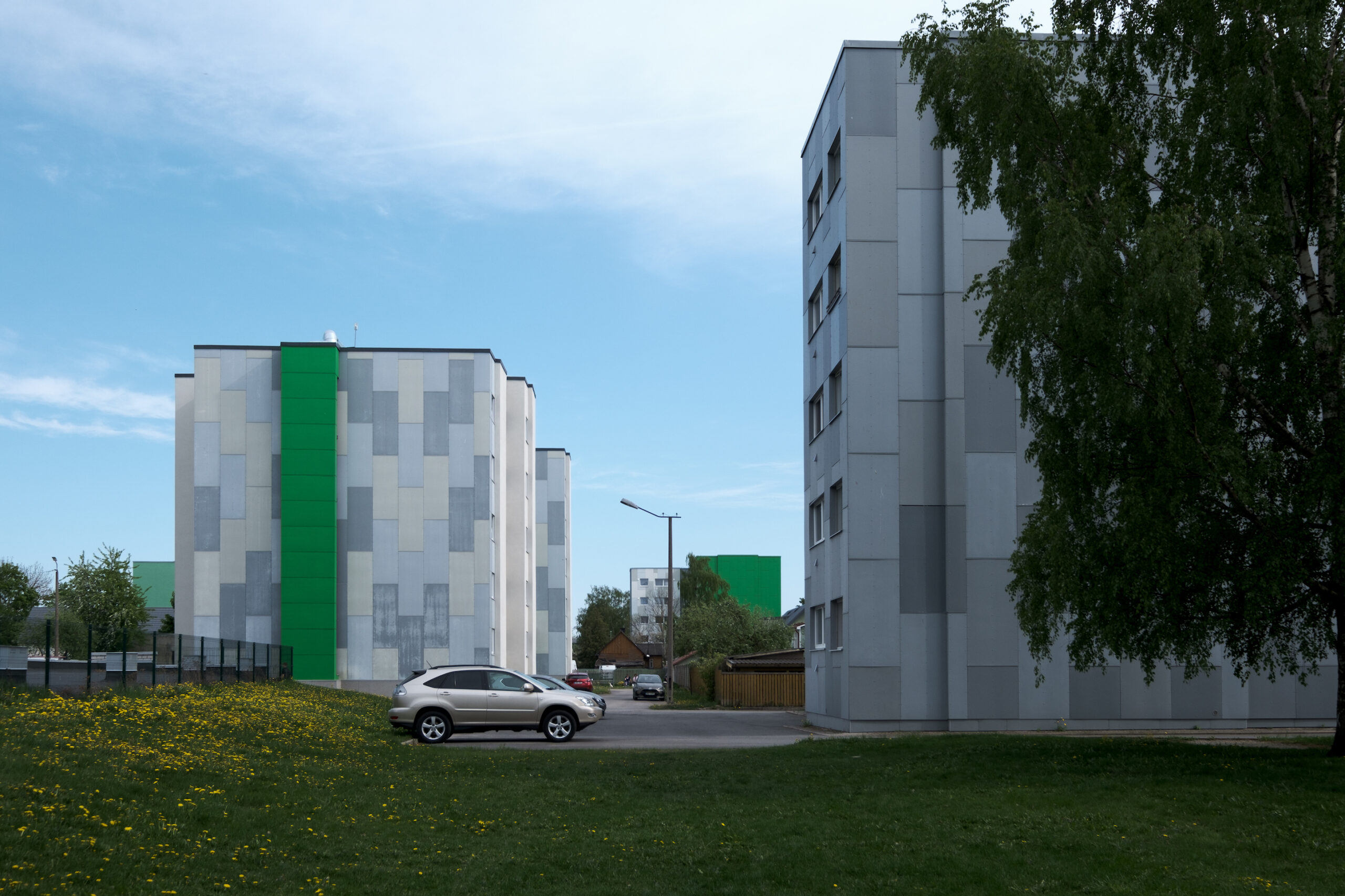
Scene: A fairly jovial group has gathered on the roof of the tenement. They have just explored the surrounding area and every nook and cranny of the building itself. Champagne has been opened, dreams are taking flight. A contract lies on the table in the middle of the group, waiting to be signed, but the pen is
constantly being passed along and around.
City Official: Ah, sorry, it’s still unclear to me—what solutions are you actually offering? We haven’t seen a single plan, design, sketch, draft, scheme, diagram, or model. Where is the documentation?
(The City Official hands the pen to the Architect.)
Engineer: This is innovation, my friends. You can’t create that on paper.
Architect: You have to start somewhere…
Engineer: From reality! See where we are at the moment. First, the building itself—the foundation is sinking. The walls are patterned with cracks. Wind blows in through the seams of the windows. The cellar hasn’t been built out at all. Second, think of the state of the world—an unfolding catastrophe. But! If we improve the energy efficiency of the building by at least 60%, we can stop climate change!
(The Architect hands the pen to the Engineer.)
Do not become discouraged. Every setback is a hidden opportunity!
City Official: Yes, but… the documentation… (The Official gestures vaguely.) It’s hard to understand…
Engineer: Imagination!
City Official: Excuse me?
(The Engineer hands the pen to the City Official.)
Engineer: We just haven’t gone far enough, you see? The doors and windows should be fully automated as quickly as possible. Stairs and elevators, no! Forget atavisms. We will have hovering platforms. Power sources will be placed on the roof—solar panels, wind generators, fusion—this will keep the building operating at peak efficiency. The roof will also function as a communal greenhouse since warm air rises. Of course! We won’t waste the heat—we’ll press it down into the cellar through ducts, so it can rise up again. A total circulation of heat! Our energy class C will be equal to the A of other buildings!
Architect: Ooh. Hang on, there’s potential here. We can organically grow more floors—okay, think about it, spiral-shaped architecture! Steel and glass, so that the sun reflects onto the surrounding landscape. Towers twisting around each other like the branches of a tree… C’est écologique.
City Official: Hmm. This would increase the value of the surrounding real estate and milieu manyfold. Perhaps even… by orders of magnitude!
(The City Official hands the pen to the Architect.)
Architect: Exactly! The aesthetic form and the function will be driven to the maximum…
Engineer: The goal—an ultra-smart-house that regulates everyone and everything automatically and absolutely. The resident won’t ever need to do anything. They don’t need to touch anything or be bothered by anything.
Tenement 1: (Silent grumbling.) Hey, I’m already smart.
City Official: But, uh… this won’t turn out to be too expensive?
Architect: Oh… of course… But let me know when it’s time to pick the colours for the façade, we could play around with those a bit.
(The Architect hands the pen to the Engineer.)
Engineer: I have already tested these solutions in my apartment, do you see? All of it just needs to be… hyperscaled! Imagine the future. Beyond all dreams. Maschinenhaus. A unique organism leading its own life, irrespective of the resident. They whisper lullabies in the night to drive away the nightmares. They
observe our lives like an antediluvian god. Deus e domo. They care about us. This is the next step in human-construction evolution!
(The Engineer places the pen onto the table.)
City Official: Hmh. What can I say… I’ve waited a long while for someone to arrive with good ideas. With a plan like this, everyone wins.
Resident: (Raises hand.) Excuse me… I have a…
City Official: Silence! Don’t you interfere.
(City Official turns to the Engineer and the Architect.)
Well, friends, who will sign first?
MÄRTEN RATASSEPP is a game writer, narrative designer, and literary critic.
ELINA LIIVA is an architect and one of the curators of the Estonian pavilion Let Me Warm You at the 2025 Venice Architecture Biennale.
PHOTOS by Päär-Joonap Keedus
PUBLISHED: MAJA 2-2025 (120) with main topic CONCRETE